Showing posts with label atheistic irrationalism. Show all posts

Wednesday, July 10, 2013

Alvin Plantinga on Why Darwinist Materialism is Wrong: A review of atheist philosopher Thomas Nagel's book Mind and Cosmos


Alvin Plantinga

Thomas Nagel
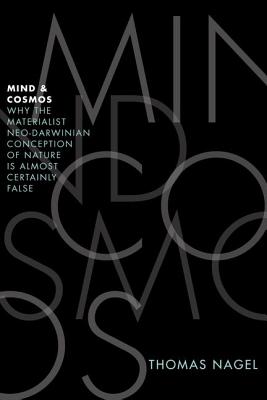

Thomas Nagel is an atheistic philosopher of exceptional intellectual honesty and integrity. At variance with other scientific naturalists, Nagel is not acritical nor credulous when it comes to the problems of materialism and Darwinism. On the contrary, he explicitly submits these fashionable metaphysical assumptions of contemporary atheism to rigurous philosophical criticisms. (Please read this post on Nagel, atheistic wishful thinking and the "Fear of God").

Nagel has shocked the philosophical community with his recent book "Mind and Cosmos", in which he argues that the Neo-Darwinian materialist conception of nature is probably false.

Philosopher Alvin Plantinga wrote a review of this book, published in "New Republic" website:

Why Darwinist Materialism is Wrong
by Alvin Plantinga

ACCORDING TO a semi-established consensus among the intellectual elite in the West, there is no such person as God or any other supernatural being. Life on our planet arose by way of ill-understood but completely naturalistic processes involving only the working of natural law. Given life, natural selection has taken over, and produced all the enormous variety that we find in the living world. Human beings, like the rest of the world, are material objects through and through; they have no soul or ego or self of any immaterial sort. At bottom, what there is in our world are the elementary particles described in physics, together with things composed of these particles.

I say that this is a semi-established consensus, but of course there are some people, scientists and others, who disagree. There are also agnostics, who hold no opinion one way or the other on one or another of the above theses. And there are variations on the above themes, and also halfway houses of one sort or another. Still, by and large those are the views of academics and intellectuals in America now. Call this constellation of views scientific naturalism—or don’t call it that, since there is nothing particularly scientific about it, except that those who champion it tend to wrap themselves in science like a politician in the flag. By any name, however, we could call it the orthodoxy of the academy—or if not the orthodoxy, certainly the majority opinion.

The eminent philosopher Thomas Nagel would call it something else: an idol of the academic tribe, perhaps, or a sacred cow: “I find this view antecedently unbelievable—a heroic triumph of ideological theory over common sense. ... I would be willing to bet that the present right-thinking consensus will come to seem laughable in a generation or two.” Nagel is an atheist; even so, however, he does not accept the above consensus, which he calls materialist naturalism; far from it. His important new book is a brief but powerful assault on materialist naturalism.

NAGEL IS NOT AFRAID to take unpopular positions, and he does not seem to mind the obloquy that goes with that territory. “In the present climate of a dominant scientific naturalism,” he writes, “heavily dependent on speculative Darwinian explanations of practically everything, and armed to the teeth against attacks from religion, I have thought it useful to speculate about possible alternatives. Above all, I would like to extend the boundaries of what is not regarded as unthinkable, in light of how little we really understand about the world.” Nagel has endorsed the negative conclusions of the much-maligned Intelligent Design movement, and he has defended it from the charge that it is inherently unscientific. In 2009 he even went so far as to recommend Stephen Meyer’s book Signature in the Cell: DNA and the Evidence for Intelligent Design, a flagship declaration of Intelligent Design, as a book of the year. For that piece of blasphemy Nagel paid the predictable price; he was said to be arrogant, dangerous to children, a disgrace, hypocritical, ignorant, mind-polluting, reprehensible, stupid, unscientific, and in general a less than wholly upstanding citizen of the republic of letters.

His new book will probably call forth similar denunciations: except for atheism, Nagel rejects nearly every contention of materialist naturalism. Mind and Cosmos rejects, first, the claim that life has come to be just by the workings of the laws of physics and chemistry. As Nagel points out, this is extremely improbable, at least given current evidence: no one has suggested any reasonably plausible process whereby this could have happened. As Nagel remarks, “It is an assumption governing the scientific project rather than a well-confirmed scientific hypothesis.”

The second plank of materialist naturalism that Nagel rejects is the idea that, once life was established on our planet, all the enormous variety of contemporary life came to be by way of the processes evolutionary science tells us about: natural selection operating on genetic mutation, but also genetic drift, and perhaps other processes as well. These processes, moreover, are unguided: neither God nor any other being has directed or orchestrated them. Nagel seems a bit less doubtful of this plank than of the first; but still he thinks it incredible that the fantastic diversity of life, including we human beings, should have come to be in this way: “the more details we learn about the chemical basis of life and the intricacy of the genetic code, the more unbelievable the standard historical account becomes.” Nagel supports the commonsense view that the probability of this happening in the time available is extremely low, and he believes that nothing like sufficient evidence to overturn this verdict has been produced.

So far Nagel seems to me to be right on target. The probability, with respect to our current evidence, that life has somehow come to be from non-life just by the working of the laws of physics and chemistry is vanishingly small. And given the existence of a primitive life form, the probability that all the current variety of life should have come to be by unguided evolution, while perhaps not quite as small, is nevertheless minuscule. These two conceptions of materialist naturalism are very likely false.

But, someone will say, the improbable happens all the time. It is not at all improbable that something improbable should happen. Consider an example. You play a rubber of bridge involving, say, five deals. The probability that the cards should fall just as they do for those five deals is tiny—something like one out of ten to the 140th power. Still, they did. Right. It happened. The improbable does indeed happen. In any fair lottery, each ticket is unlikely to win; but it is certain that one of them will win, and so it is certain that something improbable will happen. But how is this relevant in the present context? In a fit of unbridled optimism, I claim that I will win the Nobel Prize in chemistry. You quite sensibly point out that this is extremely unlikely, given that I have never studied chemistry and know nothing about the subject. Could I defend my belief by pointing out that the improbable regularly happens? Of course not: you cannot sensibly hold a belief that is improbable with respect to all of your evidence.

NAGEL GOES ON: he thinks it is especially improbable that consciousness and reason should come to be if materialist naturalism is true. “Consciousness is the most conspicuous obstacle to a comprehensive naturalism that relies only on the resources of physical science.” Why so? Nagel’s point seems to be that the physical sciences—physics, chemistry, biology, neurology—cannot explain or account for the fact that we human beings and presumably some other animals are conscious. Physical science can explain the tides, and why birds have hollow bones, and why the sky is blue; but it cannot explain consciousness. Physical science can perhaps demonstrate correlations between physical conditions of one sort or another and conscious states of one sort or another; but of course this is not to explain consciousness. Correlation is not explanation. As Nagel puts it, “The appearance of animal consciousness is evidently the result of biological evolution, but this well-supported empirical fact is not yet an explanation—it does not provide understanding, or enable us to see why the result was to be expected or how it came about.”

Nagel next turns his attention to belief and cognition: “the problem that I want to take up now concerns mental functions such as thought, reasoning, and evaluation that are limited to humans, though their beginnings may be found in a few other species.” We human beings and perhaps some other animals are not merely conscious, we also hold beliefs, many of which are in fact true. It is one thing to feel pain; it is quite another to believe, say, that pain can be a useful signal of dysfunction. According to Nagel, materialist naturalism has great difficulty with consciousness, but it has even greater difficulty with cognition. He thinks it monumentally unlikely that unguided natural selection should have “generated creatures with the capacity to discover by reason the truth about a reality that extends vastly beyond the initial appearances.” He is thinking in particular of science itself.

Natural selection is interested in behavior, not in the truth of belief, except as that latter is related to behavior. So concede for the moment that natural selection might perhaps be expected to produce creatures with cognitive faculties that are reliable when it comes to beliefs about the physical environment: beliefs, for example, about the presence of predators, or food, or potential mates. But what about beliefs that go far beyond anything with survival value? What about physics, or neurology, or molecular biology, or evolutionary theory? What is the probability, given materialist naturalism, that our cognitive faculties should be reliable in such areas? It is very small indeed. It follows—in a wonderful irony—that a materialistic naturalist should be skeptical about science, or at any rate about those parts of it far removed from everyday life.

This certainly seems right, and perhaps we can go even further. Perhaps it is not initially implausible to think that unguided natural selection could have produced creatures with cognitive faculties who are reliable about matters relevant to survival and reproduction. But what about metaphysical beliefs, such as theism, or determinism, or materialism, or atheism? Such beliefs have little bearing on behavior related to survival and reproduction, and unguided natural selection couldn’t care less about them or their truth-value. After all, it is only the occasional member of the Young Humanist Society whose reproductive prospects are enhanced by accepting atheism. Given materialist naturalism, the probability that my cognitive faculties are reliable with respect to metaphysical beliefs would be low. So take any metaphysical belief I have: the probability that it is true, given materialist naturalism, cannot be much above .5. But of course materialist naturalism is itself a metaphysical belief. So the materialistic naturalist should think the probability of materialist naturalism is about .5. But that means that she cannot sensibly believe her own doctrine. If she believes it, she shouldn’t believe it. In this way materialist naturalism is self-defeating.

II.
THE NEGATIVE CASE that Nagel makes against materialist naturalism seems to me to be strong and persuasive. I do have the occasional reservation. Most materialists apparently believe that mental states are caused by physical states. According to Nagel, however, the materialistic naturalist cannot stop there. Why not? Because the idea that there is such a causal connection between the physical and the mental doesn’t really explain the occurrence of the mental in a physical world. It doesn’t make the mental intelligible. It doesn’t show that the existence of the mental is probable, given our physical world.

Some materialists, however, seek to evade this difficulty by suggesting that there is some sort of logical connection between physical states and mental states. It is a logically necessary truth, they say, that when a given physical state occurs, a certain mental state also occurs. If this is true, then the existence of the mental is certainly probable, given our physical world; indeed, its existence is necessary. Nagel himself suggests that there are such necessary connections. So wouldn’t that be enough to make intelligible the occurrence of the mental in our physical world?

I suspect that his answer would be no. Perhaps the reason would be that we cannot just see these alleged necessities, in the way we can just see that 2+1=3. These postulated necessary connections are not self-evident to us. And the existence of the mental would be intelligible only if those connections were self-evident. But isn’t this a bit too strong? Why think that the mental is intelligible, understandable, only if there are self-evident necessary connections between the physical and the mental? Doesn’t that require too much? And if intelligibility does require that sort of connection between the physical and the mental, why think the world is intelligible in that extremely strong sense?

Now you might think someone with Nagel’s views would be sympathetic to theism, the belief that there is such a person as the God of the Abrahamic religions. Materialist naturalism, says Nagel, cannot account for the appearance of life, or the variety we find in the living world, or consciousness, or cognition, or mind—but theism has no problem accounting for any of these. As for life, God himself is living, and in one way or another has created the biological life to be found on Earth (and perhaps elsewhere as well). As for the diversity of life: God has brought that about, whether through a guided process of evolution or in some other way. As for consciousness, again theism has no problem: according to theism the fundamental and basic reality is God, who is conscious. And what about the existence of creatures with cognition and reason, creatures who, like us, are capable of scientific investigation of our world? Well, according to theism, God has created us human beings in his image; part of being in the image of God (Aquinas thought it the most important part) is being able to know something about ourselves and our world and God himself, just as God does. Hence theism implies that the world is indeed intelligible to us, even if not quite intelligible in Nagel’s glorified sense. Indeed, modern empirical science was nurtured in the womb of Christian theism, which implies that there is a certain match or fit between the world and our cognitive faculties.

Given theism, there is no surprise at all that there should be creatures like us who are capable of atomic physics, relativity theory, quantum mechanics, and the like. Materialist naturalism, on the other hand, as Nagel points out, has great difficulty accounting for the existence of such creatures. For this and other reasons, theism is vastly more welcoming to science than materialist naturalism. So theism would seem to be a natural alternative to the materialist naturalism Nagel rejects: it has virtues where the latter has vices, and we might therefore expect Nagel, at least on these grounds, to be sympathetic to theism.

SADLY ENOUGH (at least for me), Nagel rejects theism. “I confess to an ungrounded assumption of my own, in not finding it possible to regard the design alternative [i.e., theism] as a real option. I lack the sensus divinitatis that enables—indeed, compels so many people to see in the world the expression of divine purpose.” But it isn’t just that Nagel is more or less neutral about theism but lacks that sensus divinitatis. In The Last Word, which appeared in 1997, he offered a candid account of his philosophical inclinations:
I am talking about something much deeper—namely, the fear of religion itself. I speak from experience, being strongly subject to this fear myself: I want atheism to be true and am made uneasy by the fact that some of the most intelligent and well-informed people I know are religious believers.... It isn’t just that I don’t believe in God and, naturally, hope that I’m right in my belief. It’s that I hope there is no God! I don’t want there to be a God; I don’t want the universe to be like that.
Here we have discomfort and distress at the thought that there might be such a being as God; but this discomfort seems more emotional than philosophical or rational.

So is there a strictly philosophical problem with theism, according to Nagel? As far as I can see, the main substantive objection that he offers is an appeal to that notion of unity. A successful worldview will see the world as intelligible; and intelligibility, as Nagel conceives it, involves a high degree of unity. The world is intelligible only if there are no fundamental breaks in it, only if it contains no fundamentally different kinds of things. Descartes, that great dualist, thought that the world displays two quite different sorts of things: matter and mind, neither reducible to the other. Nagel rejects this dualism: his reason is just that such dualism fails to secure the unity necessary for the world’s being intelligible.

Yet is there any reason to think that the world really is intelligible in this very strong sense—any good reason to think that there is fundamentally just one kind of thing, with everything being an example of that kind, or reducible to things that are? Here three considerations seem to be necessary. First, we need to know more about this requirement: what is it to say that fundamentally there is just one kind of thing? It is not obvious how this is to be understood. Aren’t there many different sorts of things: houses, horses, hawks, and handsaws? Well, perhaps they are not fundamentally different. But what does “fundamentally” mean here? Is the idea that the world is intelligible only if there is some important property that houses, horses, hawks, and handsaws all share? What kind of property?

Second, how much plausibility is there to the claim that this sort of unity really is required for intelligibility? Clearly we cannot claim that Descartes’s dualism is literally unintelligible—after all, even if you reject it, you can understand it. (How else could you reject it?) Is it really true that the world is more intelligible, in some important sense of “intelligible,” if it does not contain two or more fundamentally different kinds of things? I see little reason to think so.

And third, suppose we concede that the world is genuinely intelligible only if it displays this sort of monistic unity: why should we think that the world really does display such a unity? We might hope that the world would display such unity, but is there any reason to think the world will cooperate? Suppose intelligibility requires that kind of unity: why should we think our world is intelligible in that sense? Is it reasonable to say to a theist, “Well, if theism were true, there would be two quite different sorts of things: God on the one hand, and the creatures he has created on the other. But that cannot really be true: for if it were, the world would not display the sort of unity required for intelligibility”? Won’t the theist be quite properly content to forgo that sort of intelligibility?

III.
I COME FINALLY to Nagel’s positive thesis. Materialist naturalism, he shows, is false, but what does he propose to put in its place? Here he is a little diffident. He thinks that it may take centuries to work out a satisfactory alternative to materialist naturalism (given that theism is not acceptable); he is content to propose a suggestive sketch. He does so in a spirit of modesty: “I am certain that my own attempt to explore alternatives is far too unimaginative. An understanding of the universe as basically prone to generate life and mind will probably require a much more radical departure from the familiar forms of naturalistic explanation than I am at present able to conceive.”

There are two main elements to Nagel’s sketch. There is panpsychism, or the idea that there is mind, or proto-mind, or something like mind, all the way down. In this view, mind never emerges in the universe: it is present from the start, in that even the most elementary particles display some kind of mindedness. The thought is not, of course, that elementary particles are able to do mathematical calculations, or that they are self-conscious; but they do enjoy some kind of mentality. In this way Nagel proposes to avoid the lack of intelligibility he finds in dualism.

Of course someone might wonder how much of a gain there is, from the point of view of unity, in rejecting two fundamentally different kinds of objects in favor of two fundamentally different kinds of properties. And as Nagel recognizes, there is still a problem for him about the existence of minds like ours, minds capable of understanding a fair amount about the universe. We can see (to some degree, anyway) how more complex material objects can be built out of simpler ones: ordinary physical objects are composed of molecules, which are composed of atoms, which are composed of electrons and quarks (at this point things get less than totally clear). But we haven’t the faintest idea how a being with a mind like ours can be composed of or constructed out of smaller entities that have some kind of mindedness. How do those elementary minds get combined into a less than elementary mind?

The second element of Nagel’s sketch is what we can call natural teleology.His idea seems to be something like this. At each stage in the development of our universe (perhaps we can think of that development as starting with the big bang), there are several different possibilities as to what will happen next. Some of these possibilities are steps on the way toward the existence of creatures with minds like ours; others are not. According to Nagel’s natural teleology, there is a sort of intrinsic bias in the universe toward those possibilities that lead to minds. Or perhaps there was an intrinsic bias in the universe toward the sorts of initial conditions that would lead to the existence of minds like ours. Nagel does not elaborate or develop these suggestions. Still, he is not to be criticized for this: he is probably right in believing that it will take a lot of thought and a long time to develop these suggestions into a truly viable alternative to both materialist naturalism and theism.

I SAID ABOVE THAT Nagel applauds the negative side of Intelligent Design but is doubtful about the positive part; and I find myself in much the same position with respect to Mind and Cosmos. I applaud his formidable attack on materialist naturalism; I am dubious about panpsychism and natural teleology. As Nagel sees, mind could not arise in our world if materialist naturalism were true—but how does it help to suppose that elementary particles in some sense have minds? How does that make it intelligible that there should be creatures capable of physics and philosophy? And of poetry, art, and music?

As for natural teleology: does it really make sense to suppose that the world in itself, without the presence of God, should be doing something we could sensibly call “aiming at” some states of affairs rather than others—that it has as a goal the actuality of some states of affairs as opposed to others? Here the problem isn’t just that this seems fantastic; it does not even make clear sense. A teleological explanation of a state of affairs will refer to some being that aims at this state of affairs and acts in such a way as to bring it about. But a world without God does not aim at states of affairs or anything else. How, then, can we think of this alleged natural teleology?

When it comes to accommodating life and mind, theism seems to do better. According to theism, mind is fundamental in the universe: God himself is the premier person and the premier mind; and he has always existed, and indeed exists necessarily. God could have desired that there be creatures with whom he could be in fellowship. Hence he could have created finite persons in his own image: creatures capable of love, of knowing something about themselves and their world, of science, literature, poetry, music, art, and all the rest. Given theism, this makes eminently good sense. As Nagel points out, the same cannot be said about materialist naturalism. But do panpsychism and natural teleology do much better?

Nagel’s rejection of theism does not seem to be fundamentally philosophical. My guess is this antipathy to theism is rather widely shared. Theism severely limits human autonomy. According to theism, we human beings are also at best very junior partners in the world of mind. We are not autonomous, not a law unto ourselves; we are completely dependent upon God for our being and even for our next breath. Still further, some will find in theism a sort of intolerable invasion of privacy: God knows my every thought, and indeed knows what I will think before I think it. Perhaps hints of this discomfort may be found even in the Bible itself

Before a word is on my tongue, you know it completely, oh Lord....
Where can I go from your Spirit?
Where can I flee from your presence?
If I go up to the heavens, you are there;
If I make my bed in Sheol, you are there.

This discomfort with theism is to some extent understandable, even to a theist. Still, if Nagel followed his own methodological prescriptions and requirements for sound philosophy, if he followed his own arguments wherever they lead, if he ignored his emotional antipathy to belief in God, then (or so I think) he would wind up a theist. But wherever he winds up, he has already performed an important service with his withering critical examination of some of the most common and oppressive dogmas of our age.

Alvin Plantinga is professor of philosophy emeritus at the University of Notre Dame and is the author, most recently, of Where the Conflict Really Lies: Science, Religion, and Naturalism (Oxford University Press). This article appeared in the December 6,  2012 issue of the magazine under the headline “A Secular Heresy.”

Friday, November 9, 2012

Mariano Grimbank (True Free Thinker) on the decline of online interest on the contemporary new atheism, naturalism and materialism: A reflection on the causes of this internet phenomenon


Mariano Grimbank (aka. True Free Thinker) is a Christian who for years has fought the new atheism on the internet. In the above video, Grimbank presents evidence for the decline of online interest in atheism, naturalism and materialism. From this evidence, we cannot conclude anything about whether the number of atheists have increased or decreased, but certainly we can conclude that the online interest (i.e. the interest shown by people who connect themselves to the internet in order to search information about atheism) has decreased in comparison with previous years.

In my opinion, there are a bunch of factors which could explain this phenomenon:

1-The extremely bad and sophomoric philosophical arguments of the new atheists

In their self-contragutalory, arrogant, ego-centered, "smarter-than-you" kind of mindset common among atheists, specially among the new atheists, they didn't realize that taking a public stance in favor of atheism (in a world in which over 90% of human beings are theists of a kind or another) could backfire: Leading and sophisticated defenders of theism would appear to defend theism and expose the sophomoric fallacies of these new atheist "intellectuals".

The result has been that the main arguments of the new atheists have been shown and exposed to be clearly fallacious and even destructive of science itself (if such arguments were consistently employed), not only by theists, but by sophisticated atheists too. Consider Richard Dawkins' main argument against theism:


2-The moral poverty of atheism as a worldview:

Most people, including atheists, have not reflected objectively on the implications of an atheist worldview for topics like morality, consciousness, free will and so forth. They simply take for granted that all of these phenomena are independent of a God-based worldview (this underlies the common sophomoric objection that "You don't need to be religious to be good", or "atheists can be good too", which is clearly irrelevant and not in dispute: What is in dispute if whether the non-personalistic, purely mechanistic-materialistic and blind naturalistic Darwinian worldview of contemporary atheism can ground person-relative properties and phenomena like free will, rationality, consciousness, objective moral values, moral responsability and so forth, which are clearly spiritual in nature and hence in home with theism but strongly at variance with the naturalistic-materialistic metaphysics of atheism).

And this is NOT an insight discovered by theists or "religious" people, but something fully recognized and conceded by atheists themselves (when they are not doing public relations or propaganda for atheism), as I've shown with irrefutable evidence

So, you can watch (and expect) that Richard Dawkins will concede not having non-arbitrary moral grounds for rejecting rape:


The transcript of the above video:

Justin Brierley: When you make a value judgement don't you immediately step yourself outside of this evolutionary process and say that the reason this is good is that it's good. And you don't have any way to stand on that statement.

Richard Dawkins: My value judgement itself could come from my evolutionary past.

Justin Brierley: So therefore it's just as random in a sense as any product of evolution.

Richard Dawkins: You could say that, it doesn't in any case, nothing about it makes it more probable that there is anything supernatural.

Justin Brierley: Ultimately, your belief that rape is wrong is as arbitrary as the fact that we've evolved five fingers rather than six.

Richard Dawkins: You could say that, yeah

.
End of the transcript.

Sophisticated atheist philosophers have articulated Dawkins' insight in a more careful way. So, atheist philosopher of science Alexander Rosenberg comments: "One source of meaning on which many have relied is the intrinsic value, in particular the moral value, of human life. People have also sought moral rules, codes, principles which are supposed to distinguish us from merely biological critters whose lives lack (as much) meaning or value (as ours)... Scientism must reject all of these straws that people have grasped, and it’s not hard to show why. Science has to be nihilistic about ethics and morality. Alex Rosenberg, in his article "The Disenchanted Naturalistic Guide to Reality". Emphasis in blue added

3-The public debates in colleges and universities (and made public on the internet) among atheists and theists have shown not only the extremely bad arguments of atheists, but the intellectual sophistication of theists, who tend to win those debates.

Theistic debaters like William Lane Craig, John Lennox and others tend to win clearly their debates against the new atheists and other atheist professors.

Craig for example has debated all of the new atheists (Dawkins, Harris, Hitchens, Dennett, Wolpert, etc.), and in some cases has forced them to make painfully ridiculous objections and concessions which reveal their pseudo-intellectualism, irrationality, moral deficiences and dishonest sophistry, for example:


Or (look at Wolpert's arrogance and self-assurance while defending a clearly stupid, inept, mentally retarded argument, which was instrumental in my discovery of Jime's Iron Law):


Or:


How can you expect that such kind of atheists would pose a serious challenge for sophisticated forms of theism? They simply have not the intellectual level nor competence for matching it.

Since most people, including some atheists, are smart enough to realize these expressions of intellectual and moral poverty, many have begun to question the basis of their atheism, or at least, if the "new atheists" are the best representatives of the atheistic worldview. So, the decline of online interest in atheism is not surprising.

If you (like me) think that atheism is false and morally dangerous, you have an ethical obligation to help to support this anti-atheistic cause (regardless of your spiritual or religious beliefs). You have to help that these kinds of atheistic charlatanism, pseudo-intellectualism, irrationalism and sophistry be exposed and widely rejected.

The best way to help this cause is sharing in your blog or website the internet debates between leading atheists and the best theistic debaters, and let the people to draw their own conclusions.

They will see by themselves the intellectual and moral poverty of contemporary atheism.

Friday, March 23, 2012

The Euthyphro Dilemma, God as the greatest possible being and the atheistic (finite and contingent) concept of God as a contingent being

The purpose of this post is to show that many of the objections formulated by atheists against arguments for God's existence, are based on a wrong concept of God (or more exactly, a concept of God that the classical theist rejects).

The main objection used by atheists against the notion that objective moral values can be only plausibly grounded in God is the so-called Euthyphro Dilemma, posed by philosopher Plato against an ethics based on (the finite) gods of Greece (note that these finite gods have nothing to do with the infinite God of classical theism, which is defined as the greatest possible being, i.e. a being with superlative-maximal attributes like necessary existence, eternity, all-knowing, all-powerful,. the ground of reality and so forth).

The way to understand what "the greastest possible being" means is simple: If you can think coherently in a greater being than God, then THAT being would be God!. By "greatest" we're talking about qualitative aspects, not quantitative ones. For example, which is greastest, to be the creator of everything or just of a part of it? Obviously the former, because it entails a greatest and ilimited creative power.

Keep in mind this concept of the greatest possible being, because it is essential to the arguments of this post.

The atheistic objection against moral values dependent on God is often formulated in the form of a question: Is the good good because God wills it, or does God will it because it’s good? If the former, then the good is arbitrary; if the latter, then the "good" is independent of God. And both options are supposed to be problematic for the theist (hence, the "dilemma").

I'm astonished by the constant use of this objection by atheists (as if it were a powerful objection, similar to the "What caused God?" objection), because it reveals their deep misunderstanding of the moral argument for God's existence and is telling of their superficiality and wrong concept of God. They have in their minds a strawman.

Note that the first horn of the dilemma (The good is good because God "wills" it) misconstrues the moral argument. This argument doesn't say that "the good" depends on God's "will", it simply says that it depends ultimately on God. In fact, most contemporary theists hold that "the good" is part of God himself, it is, the "good" is a essential property of God as the greatest possible being. It has nothing to do with God's "will" (hence, the charge of arbitrarity is based on a misunderstanding of the argument and the concept of God). Since God cannot change his nature, he cannot change "the good", and hence what is good or bad is not a matter of God's will even if it depends ontologically on God. Atheists, in their hostility to theism and intellectual superficiality, simply cannot get it.

Note that Plato was justified in formulating this argument against the finite gods of Greece, because these gods were voluntaristic finite gods (the Greeks didn't handled the notion of God as the greatest possible being, creator of all the reality. This is why after Plato, the neo-Platonic thinkers, influenced by classical theism, identified Plato's "Good" with God himself).

Note that the second horn of the dilemma (God wills something because it is good) doesn't imply that the good is independent of God: after all, God can will something because it conforms to God's nature (which is the source of the good). For example, God can will that you love other people or be rational, because it conforms with God's loving and rational nature.

But let that pass and let assume that this horn entails that the good is ontologically independent of God. In this case, the existence of the "good" itself (which is a person-relative property) becomes inexplicable. Person-relative properties are called like that precisely because they're connected or attached or dependent or referred to PERSONS. But the if the "good" itself exists objectively and independently of the most essential, necessary and fundamental person in the universe (God) and hence also independent of finite, contingent, non-necessary, less essential and fundamental persons (us), then it is hard to see exactly how such a property is essentially "person-relative". In fact, it would still exists in the absence of any person whatsoever.

On the other hand, it is not clear why God himself has to be submitted to an external standard that He has not created. It would entail that God is ontologically inferior to the "good" itself (in the sense that God created everything, except the good itself and more importantly God has to be submitted to the that standard of goodness in order to be himself qualify as "good", which is absurd).

Note that in this case, God's goodness is not the source of value, and hence not the creator of value. God's creative powers are limited in a matter so essential as the moral properties of existence, which seem clearly absurd for the greatest possible being which is supposed to be the GROUND OF REALITY.

It is not hard to see why atheists don't understand the above argument: they have a crude concept of God as a finite, contingent, created being (not of God as the greatest possible being) and this is why they keep repeating the Euthyphro Dilemma objection against the moral argument (or the more ridiculous "What caused God?" as an objection against the comsological argument).

Spiritually and intellecually, they are impaired to have a proper understanding of God (which, in passing, provide more evidence for Jime's Iron Law).

Atheists' concept of a finite God is evident in their caricatures and silly questions about God:

- "What caused God?" (which implies that God is a caused or created being or object)

-Dawkins' question "Who designed the designer?" (which implies that God is a designed object similar to my shoes or computer or cell phone)

-Silly comparisons of God with Pink Elephants or Spaguetti Monsters (which obviously are finite entities, unwhorty of being called the greatest possible being).

-Michael Shermer's inept definition of God as a being "relatively superior" than us (what would make any alien civilization more advanced than us to become a DEITY... which if discoveried by SETI or any other scientific means, would destroy Shermer's atheism since in Shermer's definition such aliens would be God and atheism is incompatible with the existence of any god = Shermer's advanced alien beings!).

In classical theism, these questions and caricatures of God make no sense, because God is not in the same category of created, finite, contingent, objects. Atheists simply cannot understand this due to spiritual and intellectual factors.

In classical and philosophical theism, God is the greatest possible being in the sense that he's ontologically above all created reality (including moral reality, if it exists) and whatever exists (moral reality, consciousness, spiritual dimensions, universes, spirits, etc.) is dependent ontologically on God. If something exists which doesn't depend on God, then God wouldn't be the greatest possible being and his creative power would be limted (hence, he would be a finite god).

A fine (and embarrassing) example of this typical misconception about God as a finite being is seen in Victor Stenger's parody of the ontological argument, appealing to a "ontological pizza", which he used in his debate with William Lane Craig. Since Stenger is clearly affected by Jime's Iron Law, he cannot see that he's showing publicly his stupidity, irrationality and misunderstanding of the ontologically argument in that parody:


Stenger's silly parody is actually rooted in his intellectual incapacity for understading what a "greatest possible being" means.

In summary, atheists cannot understand the moral argument because they have a wrong concept of God as a finite, created, designed, contingent, ontologically secondary, purely voluntaristic being. This explains their silly comparisons with Pink Elephants, their "what created God" questions, their "If God arbitrarly commands..." (as if God, who is supposed to be the ultimate rational being, would simply command something "arbitrarily" without connection with other aspects of reality, or with God's ultimate purposes) and so forth.

The Euthyphro Dilemma is an egregious expression of this misconcept of God (which, again, in Plato was justified because he used such dilemma against the Greek gods who were finite and contingent, not against the ultimate God of classical theism. I'm sure that if Plato had been familiar with the concept of God as the greatest possible being, he would have identify his notion of "The Good" with such being as its ontological foundation, as done by neo-Platonic thinkers).

If you understand the concept of God as the greatest possible being, then you have to ask yourself: What God is greatest, a God who is essentially by his own nature the source of all moral value, the ontological ground of all reality, including moral and spiritual realities, the sustainer of everything what exists and the creator of all, or a God who cannot create a moral reality, who is not the source of value, who is not the source of objective purposes or meanings in the universe, and who is subjected and submitted to a mysteriously uncreated external standard of value (not created by God nor by anyone else) that God has to respect in order to qualify himself as "good"?

These are deeper questions that theists have to reflect hard, because it determines which kind of supreme being they have in mind.

Thursday, March 22, 2012

Thomas Nagel on rationality and the location problem for scientific naturalism

I've been discussing the different aspects of the so-called "Location Problem" for scientific naturalism. In this post I'll comment about one aspect: rationality.

Many atheists consider themselves "rationalists", and defenders of rationality. But it is evidence of their irrationality the fact that they don't understand that the basic premises of the impersonalistic naturalistic worldview makes "rationality" almost impossible, since rarionality requires at least two conditions:

1-Consciousness

2-Free will (in order to respect the laws of logic and evidence, and freely choose what's rational over what's irrational)

Both person-relative features are in variance with the impersonalistic fabric of reality essential to naturalism, and in fact provide good evidence for theism.

Moreover, contemporary naturalists are committed to evolutionary theory and this theory itself (independently of the two features mentioned above) support skepticism regarding our rationality and cognitive faculties. As Charles Darwin himself realized: "With me, the horrid doubt always arises whether the convictions of man's mind, which has been developed from the mind of the lower animals, are of any value or at all trustworthy. Would any one trust in the convictions of a monkey's mind, if there are any convictions in such a mind?" (Darwin's letter to William Graham, July 3rd, 1881,)

As philosopher Alvin Plantinga, has argued in this article: "Now what evolution tells us (supposing it tells us the truth) is that our behavior, (per-haps more exactly the behavior of our ancestors) is adaptive; since the members of our species have survived and reproduced, the behavior of our ancestors was conducive, in their environment, to survival and reproduction. Therefore the neurophysiology that caused that behavior was also adaptive; we can sensibly suppose that it is still adaptive. What evolution tells us, therefore, is that our kind of neurophysiology promotes or causes adaptive behavior, the kind of behavior that issues in survival and reproduction.

Now this same neurophysiology, according to the materialist, also causes belief. But while natural selection rewards adaptive behavior (rewards it with survival and repro-duction) and penalizes maladaptive behavior, it doesn’t, as such, care a fig about true belief. As Francis Crick, the co-discoverer of the genetic code, writes in The Astonishing Hypothesis, “Our highly developed brains, after all, were not evolved under the pressure of discovering scientific truth, but only to enable us to be clever enough to survive and leave descendents.

Since natural selection favors useful beliefs (for survival and reproduction) and not true beliefs per se (specially not true beliefs about sophisticated and highly abstract and theoretical topics not directly or indirectly related to survival and reproduction, like mathematics or quantum mechanics), there is not reason to think our cognitive faculties are aimed to the truth (instead of simply being pragmatically useful for crude survival purposes).

Serious and first-rate naturalistic thinkers have realized the problem of rationality in a naturalistic worldview. Leading naturalistic-atheistic philosopher Thomas Nagel, in his book The Last Word, wrote: "The problem then will be not how, if we engage in it, reason can be valid, but how, if it is universally valid, we can engage in it... Probably the most popular nonsubjectivistic answer nowadays is an evolutionary naturalism: We can reason in these ways because it is a consequence of a more primitive capacity of beliefs formation that had survival value during the period when the human brain was evolving. This explanation has always seemed to me to be laughably inadequate... The other well-known answer is the religious one. The universe is intelligible to us because it and our minds were made for each other" (p.75)

What Nagel calls the "religious" option, is more properly called the "theistic" option. In theism, the universe is intelligible because, both the universe and human beings, were created by a rational God. Therefore, it is not surprising that our limited and imperfect cognitive faculties (reason, logic, memories, etc.) FIT the real world in more or less accurate ways. In fact, the latter is precisely what we would expect IF theism were true, because in theism we're created in God's image (i.e. sharing, in a limited form, some of God's superlative personalistic attributes, like rationality, capability to knowledge, moral agency, free will, etc.).

But in naturalism, there is not reason to think that our beliefs fit the real world, instead of being only useful for survival and reproduction, specially if the Darwinian evolutionary theory about the mind is true. As naturalistic philosopher of science and biology, and hard-core defender of Darwinism, Alex Rosenberg recognizes "there is lots of evidence that natural selection is not very good at picking out true beliefs, especially scientific ones. Natural selection shaped our brain to seek stories with plots. The result was, as we have been arguing since Chapter 1, the greatest impediment to finding the truth about reality. The difficulty that even atheists have understanding and accepting the right answers to the persistent questions shows how pervasively natural selection has obstructed true beliefs about reality" (The Atheist's Guide to Reality . p.110)

Note carefully, the argument is NOT that natural selection favors only false beliefs. Rather, the argument (at least as developed by Plantinga) is that natural selection is INDIFFERENT to the truth-value of beliefs, provided these beliefs are useful for survival and reproduction (In Rosenberg's view, the problem is even worst because for him natural selection promotes false beliefs and tends to prevent reaching true beliefs. If Rosenberg is right, then it is very likely that most of the beliefs favored by natural selection be false. But let us be more charitable to naturalism).

And since the number of false beliefs which are pragmatically useful is greater than the number of true beliefs, is obvious that natural selection cannot be very good to choose the truth over falsehood.

This implies skepticism regarding our rationality and cognitive faculties. Philosopher Willliam Lane Craig has summarized this argument here:


And note that in this argument, we have assumed that the person-relative features of "consciousness" and "free will" are compatible with (and fit well in) impersonalistic naturalism. This concession is only for the argument's sake (in order to be charitable with the naturalistic project). But this concession is not justified in a large evaluation of naturalism: If naturalism is true, free will doesn't exist and determinism rules.

As naturalist Richard Dawkins strongly argues: "But doesn't a truly scientific, mechanistic view of the nervous system make nonsense of the very idea of responsibility, whether diminished or not? Any crime, however heinous, is in principle to be blamed on antecedent conditions acting through the accused's physiology, heredity and environment. Don't judicial hearings to decide questions of blame or diminished responsibility make as little sense for a faulty man as for a Fawlty car? Why is it that we humans find it almost impossible to accept such conclusions? Why do we vent such visceral hatred on child murderers, or on thuggish vandals, when we should simply regard them as faulty units that need fixing or replacing? Presumably because mental constructs like blame and responsibility, indeed evil and good, are built into our brains by millennia of Darwinian evolution."

Dawkins clearly perceives the problem of "responsability" and freedom of will (and other "mental constructs" like the "good" or the "evil"), which don't exist in reality, only in our brains. In Dawkins' naturalistic, impersonalistic worldview, we're mere automata governed by physical laws operating on our "physiology, heredity and enviroment".

As consequence, Dawkins' choice of accepting naturalism over theism is ALSO the product of deterministic physical laws, not of Dawkins' free decision to be rational. (Note the irrationalistic implication of Dawkins' own position to favor "reason").

Scientific naturalism is, ultimately, destructive of rationality. It appeals to "reason", "science" and "logic", but its basic impersonalistic premises undercut the possibility that such things do exist.

As consequence, scientific naturalism is essentially and intrinsically irrational.

Friday, March 9, 2012

What part of nothing you don't understand, STUPID? Reflections on 2+2=5 atheist genius Lawrence M. Krauss and evidence for Jime's Iron Law


My personal librery is composed mostly of books written by atheists (just since some recent years, it has become increasingly filled with books by theists, specially Christian theists). As consequence, I'm pretty familiar with atheistic thinking, the main arguments for atheism and the overall atheist minset (which includes a wide spectrum but that you can discern into types when analyzed carefully).

My reading of the atheist literature plus my interaction with online hard-core atheists have lead me to postulate what I've named (inspired by Michael Shermer) Jime's Iron Law, according to which (roughly) hard-core atheists are irrational, in the sense that their thinking is positively illogical, strongly limited and their cognitive faculties are seriously damaged and impaired to track the truth or understand deep questions. I'm seriously convinced that, more or less accurately, this law holds for hard-core atheists in general (I'm sure there are a few exceptions). Note that this law doesn't exclude the irrationality of some non-atheists (my law doesn't say that "only" atheists are irrational; it simply states that, as a rule, hard core atheists are irrational and positively stupid in the literal sense of this word).

A dramatic, irrefutable and devastating confirmation of my law comes from the recent atheistic tendency to conflate "nothing" (=not anything = the absense of existence), with "something which is basic or fundamental" (e.g natural laws, quantum vacuum, quantum particles, entropy, gravity, or any other basic something).

Derek Parfit, a prominent atheist philosopher, wrote:

"No question is more sublime than why there is a Universe: why there is anything rather than nothing" (Derek Parfit, "Why Anything? Why This?" London Review of Books 20/2 (January 22, 1998), p.24.)

Parfit is posing a philosophical question which has been dabated by thousand of years, namely, the question why something exists (instead of not existing at all). Why does being (something) exist instead of non-being (sheer non-existence)?

Do you understand the above question? I've explained this question for children of 10 years old and they grasp it. I must assume that most of my readers understand the question too. So, let's continue.

Philosophers have replied to this question saying that something necessary has to exist (either God or the universe) which contains in its essence the reason of its existence, because it makes no sense saying that something came from absolute non-being (i.e. out of nothing). Some atheists have claimed that the universe has necessary existence (i.e. it cannot not to exist) and hence it is eternal too. But the cosmological evidence has shown that the universe began to exist and hence is not eternal (therefore, it is not necessary either). Hence, the universe is contingent and therefore cries out for an explanation outside itself.

But replying to this question is not my interest in this post. My interest is to reflect in the level of intelligence needed to understand the question (regardless of the answer that we could provide to it).

I submit that any sane, rational, normal intelligent person would understand the question. And I submit too that, in general, hard-core atheists are intellectually unable to fully understand the question, because their minds don't work properly (Jime's Iron Law).

Consider Lawrence M. Krauss's following short video (in which he says that "nothing is unstable"):


Since "unstable" is a property (=a characteristic), it can be only predicated of something. But nothing (in the philosophical sense that Parfit is asking the question) is the DENIAL of something, namely, not anything (=non-being). Now, how the hell can you say that "non-being" is stable or unstable, blue or red, big or small, expensive or unexpensive (adds any property that you want) if, by definition, non-being DOES NOT EXIST? How could you predicate something of absolutely nothing (total non-existence)?

It's very obvious that Krauss has not (and, if Jime's Iron Law is correct, CANNOT) understand the question. The question is simply beyond Krauss' intellectual powers. He BELIEVES he's understanding the question, but actually he doesn't get it at all. This provides a dramatic and painful confirmation of Jime's Iron Law.

But perhaps some of you are thinking that using just one example is not confirmatory at all. But it is not the case. Consider atheist John Loftus' position that "Nothing = Balance of Energy":


Not convinced yet of Jime's Iron Law? Consider leading atheist propagandist Peter Atkins's positive claim "the universe is in fact a big confidence trick. There's truly nothing here":


Still skeptical of Jime's Iron Law? Consider atheist Stephen Hawking (who's considered an intellectual genius, just because most people don't understand quantum mechanics and think Hawking is able to understand profound things that they don't) assertion "Because there is a law like gravity, the universe can and will create itself from nothing" (The Grand Design’, p. 25)

Still unconvinced of Jime's Iron Law? Consider atheist Victor Stenger's claim "Since “nothing” is as simple as it gets, we cannot expect it to be very stable. It would likely undergo a spontaneous phase transition to something more complicated, like a universe containing matter." (Cosmic Evidence’ from "God: The Failed Hypothesis")

I could to continue with tons of further examples, but I think it suffices to prove my point.

Hard-core atheists like Krauss, Stenger, Dawkins, Harris, Hawking, Wolpert, Atkins and many others are fine examples of the solid veracity of my Jime's Law. They're positively stupid, mentally incapable of understanding profound questions and demostrably illogical and irrational. Moreover, their intellectual impairment implies that they CANNOT realize their own limitations and this is why they write entire books defending positions which are obviously absurd, irrational and ridiculous.

Hard-core atheists subjected to Jime's Iron Law will praise these popular books as first-rate scientific contributions and masterpieces by towering intellects, while the rest of the world (rational atheists included) will laugh in their imbecility and the persistent stupidity of "thinkers" like the ones mentioned.

In this recent podcast that I've just heard, philosopher William Lane Craig explains the obvious confusions and fallacies of Krauss's use of "nothing". Craig sympathetically attributes Krauss' use of "nothing" as a product of Krauss' ignorance of philosophy. I think Craig is partially wrong here.

While I agree that Krauss is solidly ignorant of philosophy, I think his use of "nothing" (common among atheists) is not simply a product of ignorance, but that it is a symptom of a deeper phenomenon described by my law: Atheists like Krauss simply cannot (in an intellectual level) understand the actual and philosophically relevant meaning of "nothing".

So, even though Craig is basically correct in his critique of Krauss, he fails to realize the actual cause of Krauss' misleading use of "nothing". This cause has nothing to do with ignorance (even though could be increased by it) but with the hard-core atheist's psychological, intellectual and spiritual structure and limitations.

Only a person armed with Jime's Iron Law will understand what's happening here.

Wednesday, March 7, 2012

The nature of a Cumulative Argument and the existence of God

A Cumulative Argument is an argument composed of several lines of evidence or facts in which each step points out to the same conclusion (where each step, by itself, could be insufficient to prove the conclusion, but adds some support to it) and when you put all the steps together it makes the conclusion, at the end, more likely than the alternatives.

This kind of argument is used by lawyers, historians, scientists and philosophers to support a given case or proposition. This kind of arguments is used, for example, by philosophers of religion to support the existence of God, for example:


It is interesting that no everybody understands the nature of this kind of argument, or its specific application in a given case. The main reason is that people often don't realize the implications of the different alternative hypotheses under examination.

In order to use properly a cumulative argument approach, you need to understand exactly what are the implications (or predictions) entailed by the different hypotheses that you're evaluating. This is the only way to know that the facts or evidence available fit these predictions (and hence, support the one or many of the hypotheses in question) or, on the contrary, they contradict one or many of the hypotheses being tested.

When you consider the two competing worldviews widely accepted by most scholars as the two more likely and living alternatives (theism and naturalism, most scholars preferring the latter), you have to know exactly which facts or evidence would you expect to find in the world if each of these alternatives were correct.

1)The theistic hypothesis: Essential to this hypothesis is the existence of a all-powerful spiritual person called God. This hypothesis entails at least:

-The ground of reality is a PERSON (God), not some impersonal reality (matter, particles, forces, quantum fluctuations, etc.). This implies that the fabric of reality essentially includes, in addition to brute/mechanical matter, person-relative phenomena and properties (consciousness, free will, moral values and obligations, rationality, intelligence, etc.). Creation is person-relative in the sense that has features which essentially fit or are related to persons proper.

Whatever evidence is available supporting the existence of these person-relative properties or entities is, therefore, evidence for theism. (So, you get arguments for God's existence based on morality, consciousness, rationality, free will, etc.).

-That person is the creator of everything which exists (apart of himself). As consequence, this creator is the creator of the universe too. This implies the temporal beginning of the universe.

Hence, whatever evidence is available supporting the temporal beginning of the universe is evidence for theism.

2)The naturalistic hypothesis: Essential to this hypothesis is the existence of brute matter or a purely mechanical (impersonal) physical world. This entails:

-Persons are not essential in this worldview, they're mere accidents of the evolution of matter. They could or couldn't exist, and the fact that persons exist is, at most, a cosmic accident.

Naturalist Richard Carrier informs us: "In our worldview, we are just another tiny byproduct of nature, special in no sense to anyone but among ourselves, subject to a plethora of ramdom accidents and forces, and there is no perfect or supreme being at all, least of all us" (Sense and Goodness without God, p. 259)

-If (for accident), persons happen to exist, they're purely material or physical and as consequence absolutely under the control of impersonal forces and physical laws which control matter in general.

Naturalist Richard Dawkins informs us: "As scientists, we believe that human brains, though they may not work in the same way as man-made computers, are as surely governed by the laws of physics. When a computer malfunctions, we do not punish it. We track down the problem and fix it, usually by replacing a damaged component, either in hardware or software... But doesn't a truly scientific, mechanistic view of the nervous system make nonsense of the very idea of responsibility, whether diminished or not? Any crime, however heinous, is in principle to be blamed on antecedent conditions acting through the accused's physiology, heredity and environment. Don't judicial hearings to decide questions of blame or diminished responsibility make as little sense for a faulty man as for a Fawlty car?"

-The inmediate consequence of the above naturalistic implications is the impossibility of free will and hence of moral responsability. In fact, morality itself (including moral values and obligations), not being part of the physical world, cannot exist. At most, could exist people with BELIEFS about morality (beliefs about abortion, beliefs about rape, beliefs about homicide, etc. which when are shared by a community or society at large cause the illusion of objectivity), but not morality in any objective sense.

-The universe has to be eternal, or if began to exist, uncaused from "nothing".

The evidence for the beginning of the universe has to be explained away or seen as skepticism on behalf of (non-proven) theories which preserve the eternity of the universe. (Note that naturalists are eager to embrace theories like Darwinian evolution in the name of "respect for science", but they become surprisingly skeptics about mainstream scientific theories about the beginning of the universe... a curious and selective way of being "scientifc").

If all of these fail, the naturalist will say that the universe began "from nothing" (and when pressed to articulate exactly his idiosyncratic position, he'll confess that by "nothing" he actually meant "something fundamental" like the quantum vacuum, the law of gravity, entropy, a hot and dense primitive state, etc. all of which are PART of the universe and certainly not "nothing". The verbal sleight of hand won't change the facts.).

And, when they're monumentally ignorant of philosophy and intellectually mediocre (and think their readers are at the same level of mediocrity and ignorance), they will say things like "Nothing is unstable" (abscribing the property of "unstability" to nothing, which implies that nothing is somehting after all... namely, something with the property of being unstable. Feel free to laugh harder).


In conclusion:

If you find evidence for:

-The beginning of the universe

-The existence of (not purely automata) persons

-The existence of consciousness

-The existence of objective moral values

-The existence of free will and rationality

-The existence of some objective purpose or meaning in the fabric of reality

You will know that you have evidence that not fit well with the naturalistic worldview, but fits perfectly (because they're entailed by) the theistic worldview. Hence, these facts (if they exist)
are evidence for theism and against naturalism.

And when you put together some of these facts, you'll get a powerful cumulative case for theism.

Monday, March 5, 2012

The atheist sophistry of Lawrence M. Krauss, his book A Universe from Nothing and the Magic of David Copperfield


It's fashionable among atheists to claim that the universe "came from nothing". This claim is often made when they're pushed against the corner by the cosmological evidence for the beginning of the universe.

I have no problem with atheists who, wholly based on faith and wishful thinking, actually think (and want to believe) that the universe came literally from nothing, in order to avoid theism. I fully respect the atheist right to hold to this belief (even thought I think it's irrational).

My problem is with atheists who, in order to defend their faith, intentionally mislead the public, conflating "nothing" (=non-existence = total absence of reality) with "something fundamental" (=natural laws, law of entropy, quantum vacuum, law of gravity, etc.). In this group, belong atheistic physicists Victor Stenger, Stephen Hawking and Lawrence Krauss and bunch of hard-core internet atheistic irrationalists.

Consider for example online atheist genius and intellectual superstar John Loftus:


Rational, sane and honest people, regardless of whether they're atheists, theists, pantheists or agnostic, have the moral responsability to expose this kind of charlatanism, sophistry and misdirection and give it a proper butt-kicking debunking.

In his lastest book "A Universe from Nothing", atheist physicist known worldwide as "Mr. 2+2=5 atheist genius" (see the reason of his nickname here) tries to defend the view that the universe came to being from "nothing". But when you read the book, you realize that by "nothing" Krauss is not referring to "non-being" or to "total absence of reality", but to something fundamental from which the universe began. In other words, Krauss' actual position is that the universe come from something (not from nothing).

Let's read Krauss's own words because they're a masterpiece of atheistic irrationality, first-rate illogical thinking and cognitive malfunctioning: "For surely "nothing" is every bit as physical as "something" , specially if it is to be defined as the "absence of something" . It then behooves us to understand precisely the physical nature of both of these quantities". (p. xiv)

Some comments:

1-If "nothing" is as physical as something, then the statement "The universe came from nothing" is misleading, because far from coming from literally nothing, it came from something physical.

2-If nothing is as physical as something, then what the hell is the ontological difference between nothing and something?

3-Krauss misrepresents the concept of "nothing", defining it as "the absence of something", when the proper concept is "the total absence of EVERYTHING". It is in this sense that something cannot come from nothing.

4-But even in Krauss' idiosyncratic definition of nothing as "absence of something", it is hard to see how something could come from that absense: things come from other things, not from the missing parts of that thing. It is the thing itself, its properties and potentialities, which explains the coming to being of other things.

Consider an infectious disease. It is the existence of microbes (and their active pathogenic properties) which explain such disease, not the absence of such microbies. So, it cannot be claimed that infectious diseases come from nothing even in Krauss' misdefinition, they come from something (=microbes). The absence of microbes actually imply the absence of infectious diseases, not the positive presence of them.

Again, Krauss' fallacy is to use the language of nothing to refer to SOMETHING (in this sense, he's acting like the Jesus Seminar scholars who use the language of Christianity but change the meaning of that language in order to defend atheistic or religious pluralistic positions ).

Philosopher Edward Feser comments on the charlatanism, dishonesty, stupidity and intellectual mediocrity of atheists like Krauss: "You might as well say: “Let me explain how this whole house is held up by nothing. Consider the floor, which is what I really mean by ‘nothing.’ Now, the rest of the house is held up by the floor. Thus, I’ve explained how the whole house is held up by nothing!” Well, no you haven’t. You’ve “explained” at most how part of the house is held up by another part, but you’ve left unexplained how the floor itself is held up, and thus (since the floor is itself part of the house) you haven’t really explained at all how the house as a whole is held up, either by “nothing” or by anything else. Furthermore, you’ve made what is really just sheer muddleheadedness sound profound by using “nothing” in an eccentric way.

The “scientific” “explanations” of the origin of the universe from “nothing” one keeps hearing in recent years are really no less stupid than this “explanation” of the house. They aren’t serious physics, they aren’t serious philosophy, they aren’t serious anything except seriously bad arguments, textbook instances of the fallacy of equivocation."

It is not surpirsing that Richard Dawkins wrote the afterword of Krauss' book, after all, Dawkins is more or less in the same level of intellectual mediocrity, stupidity and unsophistication than Krauss, specially when addressing philosophical questions like "Why is there something rather than nothing" (which is the subtitle of Krauss' book):


Astronomer Sir Martin Rees, in a kudos of the book, realizes the fallacy and in order to avoid being part of such a misdirection, comments: "In this clear and crisply written book, Lawrence Krauss outlines the compelling evidence that our complex cosmos has evolved from a hot, dense state and how this progress has emboldened theorists to develop fascinating speculations about how things really began."

But a "hot, dense state" is not nothing. It is SOMETHING. However, Krauss and a whole army of atheists are intellectually unable to understand it. This is one of the most compelling evidences for my claim that these people are irrational and stupid.

Consider Sam Harris' self-defeating kudos of Krauss book "As it turns out, everything has a lot to do with nothing—and nothing to do with God"

But if everything has a lot to do with nothing and nothing to do with God, then everything has a lot to do with God!

The only way to understand Harris in a no self-defeating way, is to argue that the first "nothing" is not the same than the second "nothing", where the latter cannot be read as "something to do with God", but as "without connection whatsoever with God". But this is to concede that Krauss' use of "nothing" is misleading, provided it refers to something (e.g. an original hot, dense state or to any other kind of basic physical something).

As consequence, I think Sam Harris is being intentionally dishonest in his support of Krauss' book, since he understand the difference between something and nothing.

People like Dawkins, Harris, Krauss and others are simply cranks, intentionally dishonest and misleading sophists who are misleading a public composed mostly of atheists and haters of religion, who are equally unable of rational thinking like them.

As atheist philosopher Daniel Came from Oxford University comments, new atheists like Krauss "seek to replace one form of irrationality with another"

They deserve butt-kicking debunking.

Finally, it has been said that "something coming from nothing" is worst than magic, because at least in magic you have a magician who's doing the trick. But something coming from nothing (in the literal and proper sense of nothing) cannot be explained in any possible way, because the entity responsible of the coming to being doesn't exist either.

Enjoy the following tricks by David Copperfield, in which perhaps you cannot identify exactly how the trick is done, but at least you fully know that Copperfield (and his team) are, somehow, the cause of the amazing effects that you're watching (you won't buy into the idea that such effects "come from nothing", will you? Well, perhaps you will provide you're an atheist...):


Tuesday, December 20, 2011

Agnostic New Testament scholar and historian Bart Ehrman humilliates The Infidel Guy about the existence of Jesus


No competent New Testament scholar or scientific historian denies the historical existence of Jesus. However, some people like the atheist ideologues and propagandists Richard Carrier and Jesus Seminar "scholar" Robert M. Price have defended or believed the view that Jesus didn't exist (the so-called Jesus Myth Hypothesis).

For example, in this article in infidel.org, Richard Carrier wrote "Jesus might have existed after all. But until a better historicist theory is advanced, I have to conclude it is at least somewhat more probable that Jesus didn't exist than that he did. I say this even despite myself, as I have long been an opponent of ahistoricity."

Carrier is academically trained as an historian; and that an historian like him consider that Jesus' non-existence is more probable than his existence, is actually solid evidence of Carrier's professional incompetence in his own field of academic training. As agnostic historian and New Testament scholar Bart Ehrman comments in the above audio, no serious scholar or historian believes in the non-existence of Jesus; the historical evidence for Jesus's existence is stronger than the evidence for many of the ancient historical people who everybody agree have existed. As consequence of this evidence, this Jesus Myth view is overwhelmingly rejected by New Testament scholars and historians (atheist, agnostic, jewish, liberal, conservative Christians, etc.) alike.

As consequence, implied by Ehrman's own argument, people like Carrier or Price are not and cannot be serious nor competent scholars. They're propagandists for atheism, and their propaganda includes the suppression or intentional distortion of the historical evidence for Jesus' existence in order to support their emotional and ideological hostility towards Christianity.

In the above audio, you can hear The Infidel Guy (who's not a trained historian, but untrained atheist believer) being humilliated and refuted by Bart Ehrman about the existence of Jesus and the falsehood of the Jesus Myth Hypothesis.

You have to understand that many radical, hard-core atheists are irrational, in the sense that their cognitive faculties don't work properly in order to discover the truth or evaluate the evidence. Wishful thinking is one of their main traits. Another one is their overall stupidity. The above audio is a fine example of this.

They are not reliable as sources of information, because their intellectual faculties are seriously distortioned and damaged by atheistic prejudices, dogmas, spiritual/emotional impairments and ideological commitments.

 
ban nha mat pho ha noi bán nhà mặt phố hà nội