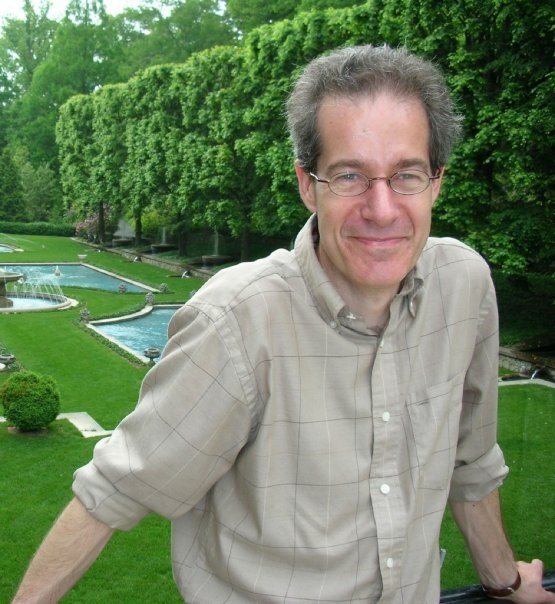
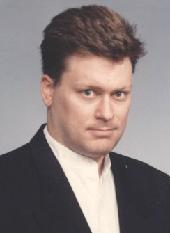
In a previous post, I published a review by skeptic Gerald Woerlee of Chris Carter's book Science and Near-Death Experience, with Carter's reply. Now, Woerlee has published another Amazon review, this time of Carter's first book titled Science and Psychic Phenomena (previously published as Parapsychology and the Skeptics). I'll publish this review, with Carter's reply. Draw your own conclusions (but read the book first!).
Gerald Woerlee's review
I purchased this book with my usual open mind when I read of this work being a definitive end to all discussion of the reality of the paranormal / psychic phenomena. Unfortunately I received a rude shock upon reading the blurb on the back cover....
"Carter reveals how the doctrine of materialism - in which nothing matters but matter - has become an infallible article of faith for many scientists and philosophers, much like the convictions of religious fundamentalists. Consequently, the possibility of psychic abilities cannot be tolerated because their existence would refute materialism and contradict a deeply ingrained ideology. By outlining the origin of this passionate debate, Carter calls on all open-minded individuals to disregard the church of skepticism...."
I began to suspect the worst. Was this book no more than a heated polemic by a true member of the congregation of the Church of Paranormalia? The foreword written by Rupert Sheldrake did little to reassure me, for here I read much the same:
"From my own experience talking to scientists and giving seminars in scientific institutions, dogmatic skeptics are a minority within the scientific community. Most scientists are curious and open-minded, if only because they themselves or people they know well have had experiences that suggest the reality of psi phenomena. Nevertheless, almost all scientists are aware of the taboo, and the open-minded tend to keep their interests private, fearing scorn or ridicule if they discuss them openly with their colleagues." (Page xii)
This opinion was supported by the statistics presented on pages 131-132 where two surveys of 500 to 100 scientists during the 1970's revealed that the majority (56-67%) believed ESP to be an established fact or likely probability. This type of statistic is similar to stating that one hundred thousand lemmings can't be wrong. However, undeterred by this foolishness, I continued bravely in the true spirit of skepticism as defined by Chris Carter on page 43:
"Many writers have pointed out that true skepticism involves the practice of doubt, not of simple denial,..."
I consider myself a true skeptic, even though many label me a pseudoskeptic - whatever that may be. Chris Carter's discussions of the various experiments and discussions employed to convince the reader of the reality of the phenomena discussed reminded me strongly of my own beliefs in the reality of these phenomena until I passed 40 years of age. A referral back to a previous mindset. Fascinating to read, and mull over how I too once thought in a similar manner, spending many hours working out possible drug combinations to pharmacologically enhance paranormal perceptive abilities.
Carter spares no effort to convince the reader of the reality of these phenomena. Throughout the book he derides "establishment" science, and the "fear" most scientists seem to have to express their true belief in psychic phenomena. Such statements seem to be standard in this type of work, and remind me strongly of similar even more rabid statements in "The Spiritual Brain", a book written by Mario Beauregard and Denyse O'Leary. This sort of polemic does nothing to advance the cause of Chris Carter. Instead, such statements generally repel the true skeptic and other open-minded readers, by informing them of the equally intransigent attitudes of the "Church of Paranormalia".
The book deviates from its course of attempting to convince readers of the reality of psychic phenomena, by dragging in some of the other "usual suspects" as a sort of smokescreen to hide the poverty of convincing material: the mystery of consciousness, and quantum mechanics. My only thought on reading this was, "Oh dear....":
1. Consciousness is not understood. True. But that does not mean it is something mysterious and located outside the body. It is simply not understood as yet. To explain it otherwise is to use the tired old "God of the gaps" explanation as first formulated by the evangelist Henry Drummond during 1904, and dismissed by him as a sad form of reasoning.
2. Quantum mechanics is a possible mechanism proposed for paranormal perception, and as such is irrelevant in a book whose purpose is to demonstrate the reality of these phenomena.
Then we come to the main problem of this book. On pages 111 and 133 Chris Carter states that parapsychological research is underfunded. Again the usual suspects are trotted out, especially on page 133, where we read:
"Psychologist Sybo Schouten compared the funding directed toward parapsychology over the one hundred years spanning 1882 to 1982 and found that it was approximately equal to the expenditures of two months of conventional psychological research in the United States in 1983."
The implication is evident. Parapsychology is underfunded, which is why no unequivocal and conclusive proof has been provided sufficient to convince even skeptics. I find this very curious. Recent polls reveal that about 50% people in modern Western countries believe in paranormal phenomena, and about 10-15% of all people in modern Western countries claim to have experienced paranormal perceptions. This means paranormal perceptions such as:
"Carter reveals how the doctrine of materialism - in which nothing matters but matter - has become an infallible article of faith for many scientists and philosophers, much like the convictions of religious fundamentalists. Consequently, the possibility of psychic abilities cannot be tolerated because their existence would refute materialism and contradict a deeply ingrained ideology. By outlining the origin of this passionate debate, Carter calls on all open-minded individuals to disregard the church of skepticism...."
I began to suspect the worst. Was this book no more than a heated polemic by a true member of the congregation of the Church of Paranormalia? The foreword written by Rupert Sheldrake did little to reassure me, for here I read much the same:
"From my own experience talking to scientists and giving seminars in scientific institutions, dogmatic skeptics are a minority within the scientific community. Most scientists are curious and open-minded, if only because they themselves or people they know well have had experiences that suggest the reality of psi phenomena. Nevertheless, almost all scientists are aware of the taboo, and the open-minded tend to keep their interests private, fearing scorn or ridicule if they discuss them openly with their colleagues." (Page xii)
This opinion was supported by the statistics presented on pages 131-132 where two surveys of 500 to 100 scientists during the 1970's revealed that the majority (56-67%) believed ESP to be an established fact or likely probability. This type of statistic is similar to stating that one hundred thousand lemmings can't be wrong. However, undeterred by this foolishness, I continued bravely in the true spirit of skepticism as defined by Chris Carter on page 43:
"Many writers have pointed out that true skepticism involves the practice of doubt, not of simple denial,..."
I consider myself a true skeptic, even though many label me a pseudoskeptic - whatever that may be. Chris Carter's discussions of the various experiments and discussions employed to convince the reader of the reality of the phenomena discussed reminded me strongly of my own beliefs in the reality of these phenomena until I passed 40 years of age. A referral back to a previous mindset. Fascinating to read, and mull over how I too once thought in a similar manner, spending many hours working out possible drug combinations to pharmacologically enhance paranormal perceptive abilities.
Carter spares no effort to convince the reader of the reality of these phenomena. Throughout the book he derides "establishment" science, and the "fear" most scientists seem to have to express their true belief in psychic phenomena. Such statements seem to be standard in this type of work, and remind me strongly of similar even more rabid statements in "The Spiritual Brain", a book written by Mario Beauregard and Denyse O'Leary. This sort of polemic does nothing to advance the cause of Chris Carter. Instead, such statements generally repel the true skeptic and other open-minded readers, by informing them of the equally intransigent attitudes of the "Church of Paranormalia".
The book deviates from its course of attempting to convince readers of the reality of psychic phenomena, by dragging in some of the other "usual suspects" as a sort of smokescreen to hide the poverty of convincing material: the mystery of consciousness, and quantum mechanics. My only thought on reading this was, "Oh dear....":
1. Consciousness is not understood. True. But that does not mean it is something mysterious and located outside the body. It is simply not understood as yet. To explain it otherwise is to use the tired old "God of the gaps" explanation as first formulated by the evangelist Henry Drummond during 1904, and dismissed by him as a sad form of reasoning.
2. Quantum mechanics is a possible mechanism proposed for paranormal perception, and as such is irrelevant in a book whose purpose is to demonstrate the reality of these phenomena.
Then we come to the main problem of this book. On pages 111 and 133 Chris Carter states that parapsychological research is underfunded. Again the usual suspects are trotted out, especially on page 133, where we read:
"Psychologist Sybo Schouten compared the funding directed toward parapsychology over the one hundred years spanning 1882 to 1982 and found that it was approximately equal to the expenditures of two months of conventional psychological research in the United States in 1983."
The implication is evident. Parapsychology is underfunded, which is why no unequivocal and conclusive proof has been provided sufficient to convince even skeptics. I find this very curious. Recent polls reveal that about 50% people in modern Western countries believe in paranormal phenomena, and about 10-15% of all people in modern Western countries claim to have experienced paranormal perceptions. This means paranormal perceptions such as:
- telepathy,
- clairvoyance,
- precognition,
- retrocognition,
- and psychokinesis,
are very common indeed. This was also known by the founders of the British Society for Psychical Research in 1882, and the founders of the similar American Society for Psychical Research in 1885. The founders of these societies believed that because these phenomena and experiences were so common, that scientific proof of the reality of these phenomena was a mere formality and rapidly achieved. But what is the current situation 130 years later, after vast effort by capable scientists, and rigorously controlled studies? The reality of paranormal phenomena is still doubtful and unproven. Expensive funding is not needed to prove the reality of something as ostensibly common as paranormal sensory abilities. The reality of these sensory abilities should be clearly evident after 130 years. This is why hard-headed financers of such research understandably say the following; "130 years of research has failed to convincingly demonstrate the reality of what you claim are really very common sensory abilities. This means a number of things:
- paranormal sensory abilities and psychic phenomena do not exist,
- people have been using the wrong testing procedures for 130 years,
- these sensory abilities and phenomena are very different to what people have defined and believe them to be."
This is why the funding of parapsychological research is drying up. This is why chairs of parapsychology are disappearing from universities all over the world. And this book by Chris Carter does nothing to dispel these facts.
Furthermore, as I pointed out in a book, "Mortal Minds" during 2003, the world about us provides abundant proof of the absence of paranormal perceptions. Many hundreds or even thousands of books teach people how to develop their supposedly dormant paranormal senses. Equally many people and organizations offer courses teaching people to develop these same supposedly dormant paranormal senses. So many people believe paranormal senses can be developed. According to the World Health Organization, there are about 314 million people alive on this world with a visual impairment, of which 45 million are totally blind (WHO statistics). According to the World Health Organization statistics, there are about 278 million people alive on this world with moderate to profound hearing loss in both ears (WHO statistics). Yet blind and deaf people are not offered courses to train any dormant paranormal sensory abilities. Nor do blind and deaf people spontaneously develop any dormant paranormal sensory abilities. So ages-old common knowledge teaches us that deaf and blind people live in a dark and silent world. Their information about this world, and their perceptions of this world, are derived only from their remaining physical senses, modified by their memories of the world as they experienced it when they still possessed the ability to see and hear. The blind and the deaf are living proof that people possess no paranormal sensory abilities, and this knowledge supplements the lack of conclusive proof of more than 120 years of research into paranormal sensory abilities. Blind and deaf people prove popular belief in paranormal abilities to be no more than a deeply rooted ancient delusion!
True, studies revealing the absence of "something", do not mean that "something" is absent. Nonetheless, such studies do reveal that if such perceptive abilities do exist, they function entirely differently than defined. This means that paranormal abilities such as telepathy, clairvoyance, precognition, etc.: if they exist, definitely do not possess the properties defined by parapsychology as it now exists. So if there is anything at all, then it is a form of anomalous perception, and definitely part of the normal perceptive abilities of humans and the laws of statistics and chance. Such is the attitude of the founders of chairs of "anomalous psychology", a way of looking at these poorly understood apparent aberrations in normal physical perceptive abilities.
It would have been better had Carter simply acknowledged these basic facts. "Science and Psychic Phenomena" would then have made a true contribution to the study of such fascinating poorly understood possible perceptive anomalies. Ultimately, I can only concur with Shaun Mason, one of the 2009 reviewers of the first edition of this book:
"The day that ESP is proven to exist under scientific conditions with no chicanery, parlor tricks, or stage magic, you won't have to read about it in obfuscated rhetoric by pseudoscientists like this, it will be unavoidable front-page news. Despite all the claims in this book, that day has not arrived. Save your money."
Chris Carter's reply
I will start with the quote with which Gerry ends his review of my book:
"The day that ESP is proven to exist under scientific conditions with no chicanery, parlor tricks, or stage magic, you won't have to read about it in obfuscated rhetoric by pseudoscientists like this, it will be unavoidable front-page news. Despite all the claims in this book, that day has not arrived. Save your money."
This is an obviously naïve view of the way that science - or any human enterprise for that matter - actually works. Here is an excerpt from my book that illustrates the issue involved here:
"As our theories change, what was once considered extraordinary can become quite ordinary-as, for instance, has happened with the acceptance of meteorites, continental drift, and quantum mechanics. What makes the claims of the psi researchers so extraordinary to the skeptics is the supposed inconsistency of psi with all of modern science. This misconception, probably more than any other factor, explains the continuing refusal of the skeptics to accept the best of the latest evidence as conclusive, even when they have run out of counterexplanations.
It also explains why the controversy has continued for as long as it has. In any other field, the debate would have ended long ago. Back in 1951, the psychologist Donald Hebb wrote:
`Why do we not accept ESP as a psychological fact? Rhine has offered enough evidence to have convinced us on almost any other issue. . . . Personally, I do not accept ESP for a moment, because it does not make sense. My external criteria, both of physics and of physiology, say that ESP is not a fact despite the behavioral evidence that has 186 Would the Existence of Psi Contradict Established Science? been reported. I cannot see what other basis my colleagues have for rejecting it . . . Rhine may still turn out to be right, improbable as I think that is, and my own rejection of his view is-in the literal sense-prejudice.'
Four years later, in 1955, George Price wrote that `Believers in psychic phenomena . . . appear to have won a decisive victory and virtually silenced opposition. . . . This victory is the result of careful experimentation and intelligent argumentation. Dozens of experimenters have obtained positive results in ESP experiments, and the mathematical procedures have been approved by leading statisticians.'
Yet later in the same article, after writing that "ESP is incompatible with current scientific theory, he offers his conclusion:
`My opinion concerning the findings of the parapsychologists is that many of them are dependent on clerical and statistical errors and unintentional use of sensory cues, and that all extrachance results not so explicable are dependent on deliberate fraud or mildly abnormal
mental conditions.'
Here we have two skeptics in effect admitting that if this were any other field of inquiry - that is, one with results less threatening to a worldview based on seventeenth-century science - then the experimental data would have carried the day by 1950." [Carter, p. 186]
Gerry delivers what he plainly considers to be a coup de grace:
"Furthermore, as I pointed out in a book, "Mortal Minds" during 2003, the world about us provides abundant proof of the absence of paranormal perceptions. Many hundreds or even thousands of books teach people how to develop their supposedly dormant paranormal senses. Equally many people and organizations offer courses teaching people to develop these same supposedly dormant paranormal senses. So many people believe paranormal senses can be developed. According to the World Health Organization, there are about 314 million people alive on this world with a visual impairment, of which 45 million are totally blind (WHO statistics). According to the World Health Organization statistics, there are about 278 million people alive on this world with moderate to profound hearing loss in both ears (WHO statistics). Yet blind and deaf people are not offered courses to train any dormant paranormal sensory abilities. Nor do blind and deaf people spontaneously develop any dormant paranormal sensory abilities. So ages-old common knowledge teaches us that deaf and blind people live in a dark and silent world. Their information about this world, and their perceptions of this world, are derived only from their remaining physical senses, modified by their memories of the world as they experienced it when they still possessed the ability to see and hear. The blind and the deaf are living proof that people possess no paranormal sensory abilities, and this knowledge supplements the lack of conclusive proof of more than 120 years of research into paranormal sensory abilities. Blind and deaf people prove popular belief in paranormal abilities to be no more than a deeply rooted ancient delusion!"
Gerry wrote above that "many people believe paranormal senses can be developed." What many people believe is in this context completely irrelevant. Whether or not psi abilities are capable of being developed is an empirical matter, and thus can only be determined by controlled observation and experiment.
Regardless, he goes on to conclude that "The blind and the deaf are living proof that people possess no paranormal sensory abilities." But again, whether or not the blind and deaf have greater telepathic or clairvoyant abilities than the unimpaired is an empirical question, and thus cannot be settled with a priori arguments. At the present time no research has been conducted into this matter, and so the question remains unanswered.
As Gerry pointed out, parapsychology is a poorly funded branch of science, and if it were not for the campaigns of ridicule carried out by "skeptical" materialist organizations such as CSI/CSICOP, then funding would be available to answer questions such as this.
For the record I should reveal that "Gerry" is in fact Gerald Woerlee, a fanatical materialist and militant atheist, author of the book The Unholy Legacy of Abraham.
Why are there so many "skeptics" such as Gerald Woerlee eager to debunk not just reports of psychic phenomena, but also phenomena such as the near death experience?
As I discuss in my book, this militant opposition is something peculiar to Western societies, and it is basically due to the historical conflict in the West between secular and religious members of society.
Genuine skepticism plays an important role in science; but genuine skepticism involves the suspension of belief, not the refusal of belief. So, individuals such as Woerlee are not genuine skeptics, but rather pseudo-skeptics strenuously defending the theory of materialism from the data which refute it. As Karl Popper stressed, science progresses with the refutation of theories; it follows from this that defending a theory by strenuously denying the data which refute it must be one of the defining characteristics of pseudo-science.
Essentially, this debate is not primarily about evidence. Rather, the debunkers and deniers are defending an out-moded world view in which psychic phenomena and out-of-body experiences are simply not allowed to exist. It is essential to realize that most of the deniers and phony-skeptics are militant atheists and secular humanists. For instance, the world's leading "skeptical" organization, The Committee for the Scientific Investigation of Claims of the Paranormal (CSICOP) was founded in 1976 by atheist philosopher Paul Kurtz, at a meeting of the American Humanist Association. For various reasons, these people have an ideological agenda which is anti-religious and anti-superstitious. One of the main pillars of their opposition to religion and superstition is the doctrine of materialism: that is, the doctrine that all events have a physical cause, and that the brain therefore produces the mind. If they conceded the existence of psychic abilities such as telepathy, and of the Near Death Experience as a genuine separation of mind from body, then this pillar of their opposition to religion would crumble. Hence, their dogmatic denial of the evidence that proves materialism false.
The words of C. D. Broad, the Cambridge philosopher of science, are appropriate here. In his 1962 "Lectures in Psychical Research," Broad wrote: "Anyone who at the present day expresses confident opinions, whether positive or negative, on ostensibly paranormal phenomena, without making himself thoroughly acquainted with the main methods and results of the careful and long-continued work may be dismissed without further ceremony as a conceited ignoramus."
And it should be noted that Woerlee and I have tangled before. In fact, his "review" of my book is obviously a petty attempt at revenge. I embarrassed him recently in The Journal of Near Death Studies, Fall 2011 issue 30(1), in which he tried and failed to discredit the famous Pam Reynolds near death experience.
Chris Carter
Sources
Hebb, D. O. "The Role of Neurological Ideas in Psychology." Journal of Personality 20 (1951): 39-55.
Price, George R. "Science and the Supernatural." Science 122, no. 3165 (1955): 359-67.
"The day that ESP is proven to exist under scientific conditions with no chicanery, parlor tricks, or stage magic, you won't have to read about it in obfuscated rhetoric by pseudoscientists like this, it will be unavoidable front-page news. Despite all the claims in this book, that day has not arrived. Save your money."
This is an obviously naïve view of the way that science - or any human enterprise for that matter - actually works. Here is an excerpt from my book that illustrates the issue involved here:
"As our theories change, what was once considered extraordinary can become quite ordinary-as, for instance, has happened with the acceptance of meteorites, continental drift, and quantum mechanics. What makes the claims of the psi researchers so extraordinary to the skeptics is the supposed inconsistency of psi with all of modern science. This misconception, probably more than any other factor, explains the continuing refusal of the skeptics to accept the best of the latest evidence as conclusive, even when they have run out of counterexplanations.
It also explains why the controversy has continued for as long as it has. In any other field, the debate would have ended long ago. Back in 1951, the psychologist Donald Hebb wrote:
`Why do we not accept ESP as a psychological fact? Rhine has offered enough evidence to have convinced us on almost any other issue. . . . Personally, I do not accept ESP for a moment, because it does not make sense. My external criteria, both of physics and of physiology, say that ESP is not a fact despite the behavioral evidence that has 186 Would the Existence of Psi Contradict Established Science? been reported. I cannot see what other basis my colleagues have for rejecting it . . . Rhine may still turn out to be right, improbable as I think that is, and my own rejection of his view is-in the literal sense-prejudice.'
Four years later, in 1955, George Price wrote that `Believers in psychic phenomena . . . appear to have won a decisive victory and virtually silenced opposition. . . . This victory is the result of careful experimentation and intelligent argumentation. Dozens of experimenters have obtained positive results in ESP experiments, and the mathematical procedures have been approved by leading statisticians.'
Yet later in the same article, after writing that "ESP is incompatible with current scientific theory, he offers his conclusion:
`My opinion concerning the findings of the parapsychologists is that many of them are dependent on clerical and statistical errors and unintentional use of sensory cues, and that all extrachance results not so explicable are dependent on deliberate fraud or mildly abnormal
mental conditions.'
Here we have two skeptics in effect admitting that if this were any other field of inquiry - that is, one with results less threatening to a worldview based on seventeenth-century science - then the experimental data would have carried the day by 1950." [Carter, p. 186]
Gerry delivers what he plainly considers to be a coup de grace:
"Furthermore, as I pointed out in a book, "Mortal Minds" during 2003, the world about us provides abundant proof of the absence of paranormal perceptions. Many hundreds or even thousands of books teach people how to develop their supposedly dormant paranormal senses. Equally many people and organizations offer courses teaching people to develop these same supposedly dormant paranormal senses. So many people believe paranormal senses can be developed. According to the World Health Organization, there are about 314 million people alive on this world with a visual impairment, of which 45 million are totally blind (WHO statistics). According to the World Health Organization statistics, there are about 278 million people alive on this world with moderate to profound hearing loss in both ears (WHO statistics). Yet blind and deaf people are not offered courses to train any dormant paranormal sensory abilities. Nor do blind and deaf people spontaneously develop any dormant paranormal sensory abilities. So ages-old common knowledge teaches us that deaf and blind people live in a dark and silent world. Their information about this world, and their perceptions of this world, are derived only from their remaining physical senses, modified by their memories of the world as they experienced it when they still possessed the ability to see and hear. The blind and the deaf are living proof that people possess no paranormal sensory abilities, and this knowledge supplements the lack of conclusive proof of more than 120 years of research into paranormal sensory abilities. Blind and deaf people prove popular belief in paranormal abilities to be no more than a deeply rooted ancient delusion!"
Gerry wrote above that "many people believe paranormal senses can be developed." What many people believe is in this context completely irrelevant. Whether or not psi abilities are capable of being developed is an empirical matter, and thus can only be determined by controlled observation and experiment.
Regardless, he goes on to conclude that "The blind and the deaf are living proof that people possess no paranormal sensory abilities." But again, whether or not the blind and deaf have greater telepathic or clairvoyant abilities than the unimpaired is an empirical question, and thus cannot be settled with a priori arguments. At the present time no research has been conducted into this matter, and so the question remains unanswered.
As Gerry pointed out, parapsychology is a poorly funded branch of science, and if it were not for the campaigns of ridicule carried out by "skeptical" materialist organizations such as CSI/CSICOP, then funding would be available to answer questions such as this.
For the record I should reveal that "Gerry" is in fact Gerald Woerlee, a fanatical materialist and militant atheist, author of the book The Unholy Legacy of Abraham.
Why are there so many "skeptics" such as Gerald Woerlee eager to debunk not just reports of psychic phenomena, but also phenomena such as the near death experience?
As I discuss in my book, this militant opposition is something peculiar to Western societies, and it is basically due to the historical conflict in the West between secular and religious members of society.
Genuine skepticism plays an important role in science; but genuine skepticism involves the suspension of belief, not the refusal of belief. So, individuals such as Woerlee are not genuine skeptics, but rather pseudo-skeptics strenuously defending the theory of materialism from the data which refute it. As Karl Popper stressed, science progresses with the refutation of theories; it follows from this that defending a theory by strenuously denying the data which refute it must be one of the defining characteristics of pseudo-science.
Essentially, this debate is not primarily about evidence. Rather, the debunkers and deniers are defending an out-moded world view in which psychic phenomena and out-of-body experiences are simply not allowed to exist. It is essential to realize that most of the deniers and phony-skeptics are militant atheists and secular humanists. For instance, the world's leading "skeptical" organization, The Committee for the Scientific Investigation of Claims of the Paranormal (CSICOP) was founded in 1976 by atheist philosopher Paul Kurtz, at a meeting of the American Humanist Association. For various reasons, these people have an ideological agenda which is anti-religious and anti-superstitious. One of the main pillars of their opposition to religion and superstition is the doctrine of materialism: that is, the doctrine that all events have a physical cause, and that the brain therefore produces the mind. If they conceded the existence of psychic abilities such as telepathy, and of the Near Death Experience as a genuine separation of mind from body, then this pillar of their opposition to religion would crumble. Hence, their dogmatic denial of the evidence that proves materialism false.
The words of C. D. Broad, the Cambridge philosopher of science, are appropriate here. In his 1962 "Lectures in Psychical Research," Broad wrote: "Anyone who at the present day expresses confident opinions, whether positive or negative, on ostensibly paranormal phenomena, without making himself thoroughly acquainted with the main methods and results of the careful and long-continued work may be dismissed without further ceremony as a conceited ignoramus."
And it should be noted that Woerlee and I have tangled before. In fact, his "review" of my book is obviously a petty attempt at revenge. I embarrassed him recently in The Journal of Near Death Studies, Fall 2011 issue 30(1), in which he tried and failed to discredit the famous Pam Reynolds near death experience.
Chris Carter
Sources
Hebb, D. O. "The Role of Neurological Ideas in Psychology." Journal of Personality 20 (1951): 39-55.
Price, George R. "Science and the Supernatural." Science 122, no. 3165 (1955): 359-67.
Jime's additions:
-Insider's confession by a former skeptic about organized skepticism.
-My posts on Jime's Iron Law about the cognitive faculties of hard-core atheistic materialists.
You have to keep in mind that a consequence of Jime's Iron Law is the hard-core atheist's simplistic and illogical mindset and full unability to grasp complicated arguments (specially if they're posed against atheism or materialism). As an example of this, Woerlee misrepresents one of Carter's arguments for consciousness being (ontologically) independent of the brain as an "God of the gaps" argument.
According to Woerlee's misinterpretation of Carter's case: "Consciousness is not understood. True. But that does not mean it is something mysterious and located outside the body. It is simply not understood as yet. To explain it otherwise is to use the tired old "God of the gaps" explanation as first formulated by the evangelist Henry Drummond during 1904, and dismissed by him as a sad form of reasoning."
If you have read carefully Carter's book, you know that nowhere Carter is arguing FROM the lack of understanding of consciousness TO the conclusion that consciousness is "mysterious" or "located outside of the body". It would be a massively stupid argument that not intelligent person (let alone, a Oxford-trained philosopher like Carter) would defend. (Note: Richard Dawkins is a trained scientist from Oxford, but he has defended massively stupid arguments... see here for evidence).
On the contrary, Carter is arguing from what IS POSITIVELY KNOWN about consciousness (from quantum mechanics, parapsychology, near-death experiences, etc.) to the conclusion that consciousness is ontologically independent of the brain. Carter is not appealing to the lack of understanding of consciousness, but to POSITIVE evidence and data about the nature and functioning of consciousness in order to show that that positive evidence is, overall, best explained by the transmission hypothesis than by the productive (materialistic) one. (Note that no "gaps" is part of Carter's argumentation, therefore, not "God of the gaps" exists in his case).
The God of the gaps argument has the following logical structure: Science lacks understanding of X, therefore God explains X. No intelligent and sophisticated theist in the history of thought has been so stupid as to defend an argument like that. But hard-core atheists, intellectually incapable of subtle thinking and logic argumentation, will blindly repeat again and again the "God of the Gaps" objection against any argument for the existence of God (and, for that matter, for any argument against materialism, including arguments for the paranormal and the afterlife, as Woerlee did).
As example, just watch this question posed by a member of the audience (and the reply by theistic philosopher William Lane Craig) about the "God of the gaps" argument in an academic debate about the existence of God a few years ago:
Don't try to explain this to a hard-core atheistic materialist, because Jime's Iron Law predicts that they won't get it.
You have to keep in mind that a consequence of Jime's Iron Law is the hard-core atheist's simplistic and illogical mindset and full unability to grasp complicated arguments (specially if they're posed against atheism or materialism). As an example of this, Woerlee misrepresents one of Carter's arguments for consciousness being (ontologically) independent of the brain as an "God of the gaps" argument.
According to Woerlee's misinterpretation of Carter's case: "Consciousness is not understood. True. But that does not mean it is something mysterious and located outside the body. It is simply not understood as yet. To explain it otherwise is to use the tired old "God of the gaps" explanation as first formulated by the evangelist Henry Drummond during 1904, and dismissed by him as a sad form of reasoning."
If you have read carefully Carter's book, you know that nowhere Carter is arguing FROM the lack of understanding of consciousness TO the conclusion that consciousness is "mysterious" or "located outside of the body". It would be a massively stupid argument that not intelligent person (let alone, a Oxford-trained philosopher like Carter) would defend. (Note: Richard Dawkins is a trained scientist from Oxford, but he has defended massively stupid arguments... see here for evidence).
On the contrary, Carter is arguing from what IS POSITIVELY KNOWN about consciousness (from quantum mechanics, parapsychology, near-death experiences, etc.) to the conclusion that consciousness is ontologically independent of the brain. Carter is not appealing to the lack of understanding of consciousness, but to POSITIVE evidence and data about the nature and functioning of consciousness in order to show that that positive evidence is, overall, best explained by the transmission hypothesis than by the productive (materialistic) one. (Note that no "gaps" is part of Carter's argumentation, therefore, not "God of the gaps" exists in his case).
The God of the gaps argument has the following logical structure: Science lacks understanding of X, therefore God explains X. No intelligent and sophisticated theist in the history of thought has been so stupid as to defend an argument like that. But hard-core atheists, intellectually incapable of subtle thinking and logic argumentation, will blindly repeat again and again the "God of the Gaps" objection against any argument for the existence of God (and, for that matter, for any argument against materialism, including arguments for the paranormal and the afterlife, as Woerlee did).
As example, just watch this question posed by a member of the audience (and the reply by theistic philosopher William Lane Craig) about the "God of the gaps" argument in an academic debate about the existence of God a few years ago:
Don't try to explain this to a hard-core atheistic materialist, because Jime's Iron Law predicts that they won't get it.