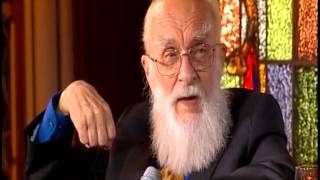
In the website "For Good Reason" (interview program hosted by D.J. Grothe, who is the President of the James Randi Educational Foundation), you can read an article entitled "A Skeptic Comes Out at 81", in which you can read:
James Randi comes out as gay. He discusses his life as a closeted gay man, and why he is now at age 81 coming out, and why he hasn’t been publicly open about his sexuality sooner. He describes the possible impact his coming out may have on his tireless work advancing skepticism and critical thinking. He discusses his atheism, and whether it, or his sexual orientation, influences the mission of the James Randi Educational Foundation. He talks about gay rights issues such as marriage equality. He discusses his detractors and what they might make of the news of his homosexuality. And he explores the relevance of gay rights to the skeptical movement
In a previous post, I commented that Tim Bolen (an experienced critic of pseudoskeptics), has suggested, according to his research, that there exists a strong connection between homosexuality and organized skepticism. Bolen says that these organizations have a large number of (in Bolen's words) "angry male homosexuals" and also that "the skeptics particularly like to attack women", , the latter being the kind of misogyny that I've discussed in a another post (see here).
Despite of Randi's declared homosexuality, I cannot draw yet any reliable conclusion about the statistical prevalence of homosexuality among male "skeptics", but this is a topic what we'll have to research in depth..
I ask the readers to read this post carefully, because some complex philosophical concepts will be discussed. Some ideas will seem to be hard to grasp, but actually you will get them if you read the post carefully. This is fully necessary to expose one of the most common skeptical objections.
Intellectual honesty implies that we have to understand objections to our positions accurately, in order to address them objectively. For example, if you think that the evidence for psi is good, you have to understand exactly why the skeptical objections against it fails. You have to fully understand the objections against psi posed by professional critics and skeptics.
If you are familiar with the pseudo-skeptical literature, you will know that the principle Extraordinary Claims Require Extraordinary Evidence, is often used in order to explain away any evidence for PSI presented by parapsychologists. No matter that evidence they present, the skeptic will say that such evidence is insufficient, because the psi claim is extraordinary and hence it requires much more scientific evidence than the one provided by the parapsychologists. Therefore (so conclude the skeptic), we have to conclude that no (sufficient) evidence for psi exists.
This skeptical principle is extremely comfortable and appealing, psychologically speaking, to skeptics, allowing them to keep their skepticism even in the face of positive evidence against their position.
The most egregious example of this approach can be seen in Richard Wiseman, who candidly conceded that the evidence for ESP meets the standards of any other area of science, but given the extraordinary nature of ESP, extraordinary evidence for it is needed. In Wiseman's words: "Because remote viewing is such an outlandish claim that will revolutionise the world, we need overwhelming evidence before we draw any conclusions. Right now we don't have that evidence"
Wiseman is saying that given the extraordinary nature of the claim for remote viewing, the evidence for it has to be equally extraordinary in order to be scientifically acceptable.
Most critics of pseudoskepticism ignore that the above skeptical objection is a modern version of Hume's Argument against Miracles, an argument that in his original formulation has been refutedand exposed as fallaciousby philosophers in the 19th century. In his book An Inquiry Concerning Human Understanding, Hume argued: "A miracle is a violation of the laws of nature; and as a firm and unalterable experience has established those laws, the proof against a miracle, from the same nature of the fact, is as entire as any argument from experience can possibly be imagined
In other words, the uniformity of experience about as the world works suggests that certain exceptional events which contradict such uniformity (e.g. miracles or, for example, outslandish cases of remote viewing or the paranormal) cannot happenor at least they're so extraordinary and unlikely (compared with the "uniform experience"), that any evidence for such extraordinary claim has to be equally extraordinary in order to be accepted.
Can you understand the Hume's objection? Can you see the structural equivalence with Wiseman's objection? I assume most of the readers can.
An event is extraordinary in relation with a previous background considered as ordinary (= Hume's "uniform experience"). For example, if experience shows that consciousness is always connected with the brain, then the claim "consciousness exists independently of the brain" is extraordinary (and unlikely) in that context. This is why materialists reject near-death experiences.
Philosophers of religion deal with Hume's argument because many religions claim the historicity of miraculous events (e.g. the resurrection of Jesus). So, if the uniform experience (or ordinary knowledge) shows that dead people cannot back to life (i.e. cannot be resurrected), then any claim for a resurrection is extraordinary on that context and the evidence for it has to be extraordinary too. This is why liberal New Testament scholars don't address the resurrection and cannot accept any evidence for it.
So, the property of being "extrarordinary" is a function which is established in relation with the previous accepted knowledge of how the world works. Against the background of given accepted knowledge, any piece of evidence can be considered "ordinary" (if it fits with the background) or "extraordinary" (if it doesn't fit well or is at variance with the background).
Note that the structure of Hume's objection is the same structure of the argument used by contemporary skeptics (like Wiseman) against paranormal claims (Not suprisingly, Chris Carter addressed Hume's argument against miracles in his book Science and Psychic Phenomena, precisely because as a trained philosopher Carter understood the structural logical equivalence of both arguments)
BAYES' THEOREM, MIRACLES AND THE PARANORMAL
Bayes' theorem was devoloped by probability theorists in order to evaluate how much evidence is needed in order to accept a given explanatory hypothesis for a set of data (or evidence). Keep in mind that this theorem was developed AFTER Hume wrote. Roughly, the theorem is the following:
Nonetheless, I think there is the germ of a serious objection in Allison’s remarks to the historical argument for Jesus’ resurrection. The so-called “odds form” of Bayes’ Theorem states:
Pr(R/E&B)
Pr(R/B)
Pr(E/R&B)
_________
=
_________
⊆
_________
Pr(not-R/E&B)
Pr(not-R/B)
Pr(E/not-R&B)
The odds form of Bayes Theorem gives us the ratio of the probability of the resurrection on the total evidence and the probability of the resurrection’s not occurring on
In the above graphic, you can see how the overall probability of a given hypothesis is calculated.
P(h/D) is called "posterior probability" of h (where "h" is the hypothesis), because it is the probability obtained after (posterior to) the evaluation of all the factors in the theorem. This is the overall probability of a given hypothesis.
P(h) is the prior probability of the hypothesis, that is, the probability of the hypothesis considered in relation with the background knoweldge alone (that is, regardless of the specific evidence for the hypothesis). This is called "prior" because it is the probability PREVIOUS to the examination of the evidence.
Astute observers will have realized that Hume's argument (and the skeptical contemporary version of it) is a statement of P(h) or prior probability, but P(h) is just ONE of the factors to be considered in the evaluation of any hypothesis, and not the most importat one.
In fact, one of the most important factors of Bayes' Theorem (and one omitted by Hume, Wiseman and skeptics) is the factor P (D/h), that is, the probability of observing the evidence D given the hypothesis h. This factor is so important that it could outbalance any prior/intrinsic improbability.
For example: suppose that a given explanatory hypothesis (e.g. remote viewing) is improbable regarding our background information alone, it still could be the case that it is very probable given the specific evidence for it (e.g the.SAIC experiments). In other words, the probability of getting positive evidence in the SAIC experiments given the hypothesis of remote viewing could outbalance any prior or intrinsic improbability of the same hypothesis (prior improbability = the improbability of remote viewing given the background information alone, that is, prior to the SAIC experiments), making very high the overall probability of the hypothesis of remote viewing.
Can you see now where Hume's (and Wiseman) argument goes wrong? The Humean principle that extraordinary claims require extraordinary evidence fails because it only takes into account just one factor (the prior/intrinsic probability) to assess the probability of a given hypothesis. But it doesn't take into account the key factor P (D/h), that is, the probability of observing the specific evidence D given the hypothesis H.
So, according to Bayes' Theorem, Hume's argument is mathematically fallacious and demostrably wrong.
As consequence, I'm astonished by "skeptics" who keep repeating the Humean mantra, without realizing that, despite the appearences, it is a technically wrong objection and easily answerable.
And this is not just the case in parapsychology, I've seen the same fallacious argument being used by skeptics in New Testament Studies (for example, regarding Jesus' resurrection).
Regardless of whether Jesus' resurrection was historical or not (this is besides the point in this moment), it is true that the skeptical objections against it based on Hume's argument are demostrably wrong, exactly by the same reasons that such objection is wrong regarding parapsychology.
For example, in his debate against William Lane Craig, skeptic Bart Ehrman argued that Jesus' resurrection, being a miracle, is by definition, the "most improbable event". And since historians can only claim what is historically probable, they can't never accept any miracle as being historical.
With the above explanations about Bayes' Theorem, you are in position to see where Ehrmar's error lies (he's conflating the prior probability of the resurrection hypothesis, which could be improbable in relation with the background information alone, with theprobability of the resurrection hypothesis given the evidence for the empty tomb, Jesus' post-mortem apparitions and the origin of disciples' belief. The latter probability could be very high, even if the prior probability of the resurrection hypothesis is low, making the overall probability of the resurrection hypothesis very high).
In his reply to Ehrman, Craig showed exactly where Ehrman's error lies (which Craig calls Ehrman's egregious error and Bart's blunder) based on Bayes' theorem:
Ehrman's reply was saying that he was impressed with Craig presenting a mathematical argument for God's existence!
Ehrman's reply is astonishingly inept. Craig wasn't even arguing for God, he was clearly reconstructing Ehrman's objection to the resurrection in the light of Bayes' Theorem in order to show where Ehrman's blunder lies, but Ehrman didn't even understand that!
This kind of extremely low intellectual sophistication plus atheistic-materialistic prejudices underly the skeptical claim that extraordinary claims require extraordinary evidence.
This is another example of atheistic deception, pseudo-intellectualism and charlatanism, and I consider intellectuals who uncritically accept such a principle to be intellectually unprepared for sophisticated discussion of complex topics.
The most sophisticated technical discussion of Hume's argument in the light of Bayes' Theorem can be read in the book "Hume's Abject Failure" by an agnostic philosopher of science called John Earman, which I strongly suggest to you:
CONCLUSION
The main skeptical objection against "extraordinary claims" have been shown to be demostrably, mathematically, fallacious. Don't be fooled by the skeptical suggestion that even if such argument is fallacious regarding miracles, it could be true regarding the paranormal. The logical structure of the argument, as constructed by Bayes' Theorem, is exactly the same, and the reasons for it being fallacious stand regarding whether we're discussing miracles, the paranormal or even extraordinarily rare non-paranormal events.
Also, the key insight in this discussion is to realize that the skeptical principle doesn't take into account the P (D/h) factor, which is a very important factor which could counterbalance and even outbalance any putative intrinsic or prior improbability. In the minute 1:02 of the following brief video, Craig summarizes the whole point like this: "You must consider more than simply the inherent probability of that event, you also have to take into account the probability of the evidence being just as it is IF that event has NOT taken place".
In other words, if you're critically examining the evidence for remote viewing for example, you have to consider not only the prior probability of remote viewing given our background information (a probability which according to skeptics like Wiseman is extremely, amazingly low), but ALSO the probability of getting positive evidence in the SAIC experiments IF remote viewing is NOT true. This latter factor could outbalance any prior or inherent improbability of the hypothesis of remote viewing, making the OVERALL probability of remote viewing given the total evidence and factors very high.
Don't be misled by bad skeptical arguments anymore.
As I documented in a previous post, there is solid evidence which suggests that organized hard-core atheists and skeptics have a personal problem with women and girls. These skeptics tend, as a rule, to dislike females. They simply don't like to have many women and girls among them. They have a clear tendency to be sexists and specially misogynists.
The evidence suggests not only that they ignore women (this fact alone would be already objectionable), but that they tend to actively mistreat and disrespect them. They see girls as inferior beings, unworhty of belonging to the highly elitistic group of super-intellectual atheistic male beings.
I've received some e-mails asking for my opinion about the causes or motives of such a weird attitude. And in all honesty, I have to say simply I DON'T KNOW.
Jime's Iron Law provides me with the resources to not being surprised at all by the most egregious forms of irrationality and stupidity on the part of "skeptics" and hard-core atheists. Moreover, Jime's Iron Law predicts many of the atheistic irrationalism and bigotry (e.g. vicious attacks, unjust and mean-spirited comments against honest parapsychologists, spiritualists, religious people, etc.).
But I have to confess that my law doesn't predict specifically misogyny on the part of hard-core atheists. So, as far as my law goes, the prevalence of misogyny among organized atheists/skeptics is simply inexplicable to me for the moment. We have to research more this aspect of the hard-core atheistic mindset and, eventually, it could be incorporated into Jime's Iron Law.
Just for the record: not all atheists are misogynists. We have to be accurate in the reading of the evidence and don't overstate it: It is only a certain kind of atheist, the hard-core militant/radical/fanatical one who is member or active supporter of "organized skepticism" or "secular humanist groups", who is, statistically likely, to be a misogynist. Obviously, there are atheists not interested in atheisic propaganda or ideological indoctrination, who treat women with the due respect and admiration that they deserve.
But we could speculate about the causes of it, and some people have provided some suggestions:
For example, Tim Bolen, an experienced critic of organized debunking, suggests that the members of organized skeptic groups are mainly angry male homosexuals. In his words: "he so-called "skeptics" are a misinformation campaign run by angry male homosexuals masquerading as atheists whose management has a significant interest in pedophilia, its promotion and protection... Skeptic work is little more than employment of young homosexual men whose anger, self-loathing, and bitterness at the Judeo/Christian world and its handling of homosexuality issues normally makes them virtually unemployable in society. So, they have available time - and a computer. They are taught to use that time to focus their self-loathing outward, Using anonymity, lashing out viciously at those targets they are organized to attack, by "Skeptic Central" on the internet"
I don't know if Bolen is right or not on some of these points.
But some comments are in order. Personally, I haven't found any connection between homosexuality and hard-core atheism or pseudoskepticism. But I haven't searched for it either... It is true that atheists tend to be defenders of the rights of homosexuals, but I suspect that it is for strategical reasons: Atheists need to support other minories in order to create a social force which makes them socially recognized. As such, this kind of social action is not objectionable.
Moreover, Bolen is not talking about homosexuality as such, but about ANGRY male homosexuals. So, someone could suggest that the "angry" plus "male" aspect of the equation (and not simply homosexuality, which could be female homosexuality), if correct, could explain some of the atheists' mistreating of women (perhaps the atheistic male's dislike of women is due to fear of having a potential sexual competition for the alpha male?).
More research about it is needed.
Bolen mentions that these skeptics have interest in pedophilia, its promotion and justification. Certainly, as I've explained in detail in this post, some leading atheistic intellectuals promote or at least justifies pedophilia, infanticide, abortion, and so forth. In fact, Richard Dawkins is sympathetic to the view that killing infants with incurable diseases is morally acceptable:
Dawkins also thinks that evolutionary biology makes "rape" morally arbitrary (and hence, not morally objectionable under any objective and universal standard of morality):
Dawkins's view is not properly a promotion of rape or infanticide, but a moral justification of it based on evolution and atheistic materialism (a justification which most people would consider a moral atrocity).
In my opinion, the militant atheists' sympatheties for these moral atrocities derive from the realization that, given atheistic naturalism, there is not reason to believe in objective morality. Morality is not a dimension of the physical or material world, but a spiritual dimension of reality (which a consistent materialistic atheist cannot countenance).
In any case, this evidence supports Bolen's view about the sympathies of some atheists for moral atrocities like infancticide or pedophilia.
But regarding homosexuality, I don't see any clear connection or correlation between being a "hard-core" atheist and being homosexual.
But I promise to research this aspect of organized skepticism. Stay tuned.
It is a source of fascination to me to know in depth the mental framework and spiritual nature of hard-core atheists and pseudoskeptics!
Dean Radin, one of the world's leading experimental parapsychologists, has provided a cogent explanation of the scientific structure and propertiesof valid and invalid criticisms. In this article, Radin comments:
It is commonly thought that all criticisms in science are equal. This is not so. In fact, criticisms must have two properties to be valid. First, it must becontrolled, meaning that the criticism cannot also apply to well-accepted scientific disciplines. In other words, we cannot use a double standard and apply one set of criticisms to fledgling topics and an entirely different set for established disciplines. If we did, nothing new could ever be accepted as legitimate. Second, a criticism must be testable, meaning that a critic has to specify the conditions under which the research could avoid the criticism, otherwise the objection is just a philosophical argument that falls outside the realm of science.
Keep in mind that Radin is postulating two properties which are necessary and sufficient for a criticism to be valid, namely, that it be controlled and testable. As consequence, a criticism will be invalid it doesn't satisfy at least one of both conditions.
So, Radin comments "Some skeptics have protested that “It’s impossible to distinguish between psi and chance effects even in a successful experiment without the use of statistics.” This criticism is invalid because the same can be said for almost all experiments in biology, psychology, sociology and biomedicine"
Technically, we could define the concept of an invalid criticism like this: A criticism is invalid, if and only if, it is uncontrolled and/or untestable.
It is uncontrolled if the criticism also applies to well-accepted scientific disciplines or hypotheses.
It is untestable if it doesn't specify the conditions under the which the criticism would fail.
Most of the professional skeptics' objections to the scientific evidence for psi are invalid criticisms. The most egregious example of this is Richard Wiseman's concession that the evidence for ESP satisfies the standards of any other are of science, but it is still unacceptable to parapsychology. (See more evidence in this link)
INVALID CRITICISMS IN OTHER FIELDS OF RESEARCH AND INQUIRY
Radin's insight also applies to other fields of rational inquiry, for example in philosophy. Here I'll mention just one example:
Richard Dawkins' "main" criticism against the hypothesis "God explains why something exists rather nothing" is an egregious example of invalid criticism, because it is "uncontrolled", namely, it also applies to many well-accepted scientific hypothesis.
Dawkins' criticism is that if we posit God as an explanation for the existence of the universe (or for the complexity or apparent design of it) we explain absolutely nothing, because the existence of God himself remains unexplained. Watch it for yourself:
Dawkins' criticism implies that no scientific hypothesis could be ever accepted, because each time you posit some explanatory entity E for explaining the fact X, you will need an explanation for the explanation (otherwise, your explanation couldn't be accepted). This is obviously false, and if accepted, it would lead to an infinite regress of explanations and science would be destroyed.
Sophisticated philosophers have exposed Dawkins' invalid criticisms. For example, Daniel Came, an atheist philosopher from Oxford University, comments "Dawkins maintains that we're not justified in inferring a designer as the best explanation of the appearance of design in the universe because then a new problem surfaces: who designed the designer? This argument is as old as the hills and as any reasonably competent first-year undergraduate could point out is patently invalid. For an explanation to be successful we do not need an explanation of the explanation. One might as well say that evolution by natural selection explains nothing because it does nothing to explain why there were living organisms on earth in the first place; or that the big bang fails to explain the cosmic background radiation because the big bang is itself inexplicable."
On Radin's criteria, Dawkins' criticism is demostrably invalid, because it is uncontrolled.
Radin's thoughtful insight about the structure of invalid criticisms is a fruitful one. It doesn't apply to science alone, but also to other fields of rational inquiry, like philosophy or history (for example, atheist Richard Carrier's obscurantist views on the non-historicity of Jesus is an invalid criticism, because it is uncontrolled: most of such skeptical criticisms also apply to other individuals in ancient history, like Socrates, Buddha or Julius Caesar, individuals that no serious professional historian or scholar denies).
If you master the structure of invalid criticisms, you can easily recognize that most of the common objections posed by atheists and "skeptics" are demostrably invalid criticisms and hence worthless.
I suggest you to think in deep about the structure of invalid criticisms, and find your own examples of them in the atheistic and pseudoskeptical literature.
In Ehrman's recent works, he provides excellent refutations of atheistic obscurantists like Richard Carrier and Jesus Seminar member Robert Price who, by mainly ideological reasons (atheistic wishful thinking and extreme personal animus against Christianity) deny the existence of Jesus in order to make Christianity a non-starter religion. Ehrman calls them "mythicists", but I prefer the name "atheistic obscurantists", since they're trying to suppress knowledge, in this case, the historical knowledge that Jesus actually existed. They're trying to manipulate the historical evidence in order to make it fit with their atheistic and anti-Christian prejudices.
In this lecture, Ehrman summarizes some of his historical arguments for the existence of Jesus.
I think people like Carrier, who knows that a large part of internet atheists are his "fans", is trying to create a new generation of internet atheists who, convinced by Carrier's mythicist and obscurantist arguments, will think that Jesus didn't exist. With this strategy, the new generation of atheists will argue against Christianity, not on the grounds of whether the resurrection happened or not, but on the grounds of whether Jesus existed or not.
In order to block and counter this new, clever and astute way of atheistic deception, I would suggest the following strategy:
1-Let's don't call them "mythicists", but atheistic obscurantists.
2-Prove that their obscurantist view is widely rejected by mainstream atheistic, secular and agnostic historians and scholars who have specialized in the study of Jesus.
3-Prove that all the historical data that we have about Jesus and Christianity, including the origin of the disciples' belief in the resurrection, is overwhelmingly better explained by Jesus' existence than by Jesus' non-existence.
In fact, Carrier has defended a theory about the origin of the disciples' belief in the resurrection, which entails Jesus' existence. In his debate with Mike Licona, Carrier said "There are many theories contrary to what Mr. Licona has argued, but there isn’t time tonight to look at them all. I will instead present the one theory I think is most probablycorrect, which I only have time to summarize. Shortly after the death of Jesus, his disciples prayed, meditated, and searched the scriptures for some meaning to justify the tragedy and some way to preserve and promote the noble program of moral reform Jesus had died for. As a result, some had prophetic dreams or visions in which Jesus appeared to them, reassuring them, and telling them just what they wanted to hear" (Richard Carrier and Mike Licona, On the Resurrection of Jesus Christ (The Veritas Forum, 2004).
If Jesus didn't exist, then his "death" was impossible. Therefore, it is also impossible for the disciples (of a non-existing person?) to pray, meditate or search the scriptures in order to explain a non-factual event and find some meaning to justify the tragedy of the death of a person who never existed.
Carrier's theory, if a plausible and realistic one, implies Jesus' existence. Therefore, if Jesus didn't exist, then his theory is not correct, and Carrier's belief it it as the "most probably correct" one is irrational and without any historical basis.
If Jesus didn't exist, historians will have a massive problem to account for the historical evidence about the first Christians and the Christian movement.
4-Prove that if we deny Jesus' existence, then (on the consistent application of the same criteria) we would have to deny the existence of many other ancient people for whom we have even less evidence than for Jesus (like greek philosopher Socrates, for example), but that any secular historian accepts.
Carrier's objections to the existence of Jesus are examples of invalid criticisms.
To be honest, I think that Carrier has destroyed forever his academic credibility adopting such a fringe position. Scholars won't take him seriously anymore.
Perhaps Carrier's strategy will be sucessful between internet atheists (mostly teens and young angry atheists), but it wiil be a failure among professional scholars and secular historians.
This is what happens when ideology blinds us.
Carrier's name and scholarly legacy will be strongly linked to an eccentric position which virtually all professional historians and New Testament scholars reject, and will be considered evidence on how extreme forms of atheisms can be so anti-intellectual and dangerous like religious fundamentalism.
Before you read this post, you have to be absolutely familiar with my series of posts on atheism and morality, in which I provide strong evidence for the philosophical view of leading contemporary atheistic intellectuals on morality. These posts were not intended to defend that atheists are immoral, but to argue that atheism (as a worldview) cannot ground ontologically nor rationally the existence of objective morality. This is a philosophical fact which has absolutely nothing to do with whether atheists are good or bad.
But this post is different. In this post, I'll provide evidence for certain kinds of immoral behaviour which are common (not merely exceptional) on the part of militant "skeptics" and atheists, which suggests that their purely philosophical views on moral subjectivism, relativism and nihilism has PRACTICAL consequences on their own lives as hard-core atheists. This fact has to be understood in the context of the philosophical fact mentioned above.
It is well known that in USA and other countries, certain social beliefs and stereotypes exist about atheists as being immoral. Some polls suggest that atheists are the most distrusted minority in America and the standard response by atheists to it is saying that it is due to religious bigotry. However, as I've argued in this post, I think religious bigotry is not the only factor to consider: The own behaviour and philosophical beliefs promoted by atheists is, for a large extension, responsible for that extreme distrust by the overwhelming majority of society (for example, this kind of irrational, childish and emotional behaviour).
This post will provide more evidence for that contention.
I'll focus on just two proven aspects of consistent immorality shown by militant atheists andhard-core skeptics: Misogyny and Sexism.
Misogynyand Sexism:
Misogyny is defined as "the hatred or dislike of women or girls".
Sexism is defined as "prejudice or discrimination based on sex or gender; or conditions or attitudes that foster stereotypes of social roles based on sex"
The question is whether misogyny and sexism, as defined above, are common among atheistic pseudoskeptics.
"One demographic skeptics are particularly uncomfortable with is the female of the species. It's an increasingly acknowledged fact that the skeptic community is rife with sexism... Women are a small minority in the skeptic world, and the few who get involved get shit thrown at them constantly by their skeptic peers. Every day, they suffer the whole gamut of attitudes from sneering to leering.
Bond's observation of his former fellows skeptics imply not only sexism on the part of skeptics, but misogyny too, since they feel uncomfortable with the presence of females among them and, in addition, the few women who are part of the skeptical groups GET SHIT thrown at them. This clearly satisfies the definition of misogyny mentioned above.
Bond's testimony is important because he belonged to skeptical groups, so he's talking as a first-hand eyewitness, as an insider.
In confirmation of Bond's accurate observations as an insider, we get independent evidence for the discomfort felt by "skeptics" towards women and girls from people who have studied the history of pseudoskepticism from a more detached scholarly perspective.
A third distinguishing feature is that the vast majority in CSICOP are male, and this has affected the tone and demeanor of the group... CSICOP is heavily dominated by men, and until 1991 there were no women at all on the Executive Council. A reporter for New Scientist described CSICOP as “white,” “male,” and “slightly geriatric” (Anderson, 1987, p. 51). The inside covers of recent issues of SIdisplay the gender imbalance; the results are summarized in Table 2. The predominance of men characterizes the local affiliates as well. Of the 40 listed local leaders, only two are women. Certainly academia is predominantly male, and so it is not surprising that a majority of CSICOP’s members are men. However, the percentage does seem disproportionate.
Not all the local groups are totally dominated by men, and a CSICOP manual prepared for local groups encouraged the involvement of women. The East Bay Skeptics in California reported that 27% of its members were women (“Members Elect First Board,” 1988), and in a 1990 election of the National Capital Area Skeptics, 3 of 11 listed candidates were women. Despite these efforts, the debunking movement is overwhelmingly run by men.
The perceived demeanor. Some have perceived the gender imbalance as
Table 2 DISTRIBUTION OF MEN AND WOMEN IN SKEPTICS’ GROUPS
Fellows Scientific and Leaders of Technical Consultants Local Groups Men 53 52 38 Women 3 4 2 Figures based on pages 447-48 and the inside covers of the Summer 1990 issue of the Skeptical Inquirer.
If as Bond suggested above, sexism and misogyny is very common among pseudoskeptics and atheist groups, then we'd expect precisely what we find: skeptical and atheist organized groups are, as a rule, "overwhelmingly run by men", as Hansen observed. Women and girls are seen with extreme suspicion and even hostility by most "skeptics", and hence not prominent (or at least egalitarian) status is conceded to them among atheistic "skeptics". Hansen's statistical data tells us a lot about the mindset of "skeptics" regarding women and girls.
Hansen's observation provides an independent confirmation of Bond's own observations as an insider and former skeptic.
But we have more independent evidence of sexism and misogyny among atheistic pseudoskeptics in the case of SKEPCHICK (her real name is Rebecca Watson), a beautiful pseudoskeptic girl who, according to wikipedia, "described an experience at a skeptical conference, concerning an approach by a man in an elevator, who invited her to his room for coffee and a conversation late at night, after she had talked extensively about disliking being sexualized at atheist conferences.[19] In a video blog, among other things, she stated that incident made her feel sexualized and uncomfortable and advised, "Guys, don't do that".[20] Her statement sparked a controversy among the skeptic community.[21] Her critics said she was overreacting to a trivial incident, most notably Richard Dawkins, who wrote a satirical letter to an imaginary Muslim woman, sarcastically contrasting her plight to Watson's complaint. This in turn caused him to be criticized by those supporting her on the issue, including several figures in the community.[22][23] Watson announced that she would not buy or endorse Dawkins's books and lectures in the future.[22] She also wrote that, as a result of Dawkins's criticism, her Wikipedia article was vandalised and offensive images were posted on her Facebook page"
According to the Mail and Guardian website, the skepchick case triggered "a fairly useful debate about feminism, sexism and appropriate sexual boundaries between men and women descended into all out troll warfare and an attendant witch-hunt to persecute sexists in the atheist community."
Watson published in youtube a video commenting on the case:
Moreover, Watson has commented on the bigotry of some "skeptics" in this article.
In order to understand clearly why some skeptics and atheists are like that, I suggest to carefully read:
Tim Bolen is a consumer advocate and defender of alternative methods of health, and critic of skeptic Stephen Barrett.
Recently, Bolen has focused himself in the analysis of organized pseudoskepticism, and has created a whole section in his website dealing specifically with pseudoskeptics.
In one of his articles, Bolen argues that organized pseudoskeptics are also an organized HATE GROUP.
Bolen's articles on pseudoskeptics are worth reading.