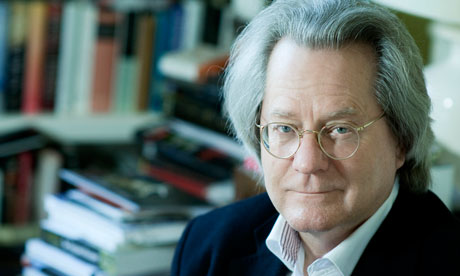
Elliot Benjamin, Ph.D., describes his experiences in a variety of new age spiritual organizations, most of which are psychology-based groups. He describes each group and offers his ratings based on three academic scales in use since the 1970s: the Anthony Typology, the Wilber Integral Model, and the Bonewits Cult Danger Scale. He then places the groups on a spectrum that ranges from favorable and benign to high cult danger. The first hundred pages of the book familiarize the reader with the scales and Dr. Benjamin’s method of rating.
Developing a reliable rating method is useful, since it emphasizes the differences between groups, and would prevent journalists and casual researchers from lumping all new age spiritual organizations in the same category of danger. Along with the more notorious groups such as Scientology and Avatar, Dr. Benjamin rates about a dozen groups that he considers benign. This may help researchers who study group dynamics to recognize what makes a group dangerous. It may also inform religious leaders who want to fall on the favorable-benign side of the spectrum.
Researchers will find plentiful information on lesser known groups. Since many of the groups described in the book are small, or not considered dangerous, until now they may have been ignored in the cultic studies literature. Hopefully, the information on benign groups will put some people’s minds at ease. As the director of Steamboats.com, a website dedicated to historic preservation, I once received a letter from a concerned mother questioning her son’s employment as a deckhand on the Delta Queen Steamboat. I assured her that it was most likely a positive experience for her son that would look good on his resumé.
Dr. Benjamin’s descriptions may bring similar peace of mind to friends and relatives of people who dabble in the benign groups he covers.
A Closer Look at the Rating Scales
The Anthony Typology, developed by Dick Anthony, analyzes a group on the scope of its beliefs, whether it is charismatic, and whether it is antagonistic toward the outside world. The Wilber Integral Model, developed by Ken Wilber, rates a group according to how controlling it is, and whether its philosophy has a rational or traditional basis. The Bonewits scale, developed by Isaac Bonewits, assigns a number between one (low danger) and ten (high danger) on fifteen traits, such as the leader’s(s’) claim of wisdom, the amount of wisdom attributed (blind followers), and rigidity of dogma. Bonewits rates on how much a group is interested in money and political power; as well as the common hallmarks of a dangerous cult: sexual abuse, censorship, endorsement of violence, paranoia, lack of sense of humor about itself, internal control of members, and surrender of will. The ratings are added up and divided by fifteen to come up with an average cult danger rating.
Dr. Benjamin describes each group, then rates each on the three scales, and follows with his rationalization for why he rated each group as he did. He admits that his ratings are purely subjective, based on his experiences. Individual researchers will certainly disagree with some of Dr. Benjamin’s ratings, and certainly the groups themselves will disagree if they have a bad rating.
One of the weaknesses of rating organizations is that it is difficult to see what is going on behind the scenes. A researcher would have to stumble into the inner circle of any group to find out what is really going on. Therefore, there is a danger of falsely giving a group a benign rating. Even a homeowners association or bridge club may have the potential to inflict extreme emotional, financial, or other abuses, which a casual observer may not notice. Also, it must be kept in mind that groups can change. They may reform themselves or turn sinister, based on who is in the group, and whether the system is ripe for abuse, or ready for healing. In addition, once a group has been stained by sexual or other violent forms of abuse, it may have a difficult time getting its reputation back. Therefore high ratings on the Sexual Manipulation and Endorsement of Violence scales need to be more heavily weighted to get an accurate picture of a group’s overall danger rating.
Another note is that it would be a mistake to apply the Bonewits scale to political groups, as Dr. Benjamin has in essays outside of this volume. All political groups would score high on several of the scales, such as Wisdom Claimed, Wisdom Credited, and Dogma; and certainly they would score high on the Wealth and Political Power scales. Since these five scales would be elevated, it would be unfair to compare the average of a political group’s rating to the average of a new age spiritual organization. To obtain a more accurate rating of political organizations, a researcher would need to remove those five items, and add five items to rate the group’s integrity. Does the group lie for political gain? This would say more about whether a political group is dangerous than if they want wealth. Needing money is built into the game of politics these days.
A Closer Look at the Author
In chapters two and three, Dr. Benjamin presents a collection of essays he wrote at the time he was going through his group encounters. The essays are presented in two sections, first the late 1990s and early 2000s; then the 1970s.
Dr. Benjamin took about fifteen years off in between to earn his Ph.D. in mathematics and establish himself as a college professor with a specialization in pure mathematics. He describes his academic pursuits as part of his spiritual search, since he spent years working on pure mathematics for several hours each morning as a meditation.
Dr. Benjamin’s essays in chapters two and three read like journal entries, written in the moment. Many of these entries begin when he is enamored with a new group he is exploring, then in a subsequent entry, he denounces the group and explains what he dislikes about it. He seems to have a cast iron stomach for unusual group experiences. Many ex-cult members and researchers may experience the gack factor (feeing repulsed) by some of Dr. Benjamin’s realizations as a naïve follower.
As an ex-member of an Eastern guru group, I have avoided all new age religious organizations except a very few. The Philosophical Research Society, founded by Manly Hall in 1934, was a short walk from where I lived in Los Angeles in the early 2000s. I attended many lectures, workshops, and even a tai chi class there with no adverse reactions. However, once in the late 1990s, I attended a house party put on by members of a group Dr. Benjamin would rate as mild. At one point, they got everyone’s attention to do a group meditation. Everyone joined hands in a circle in the living room. This was an unbearable trigger for me and I waited out in the front yard until the ceremony was over. In my experience, I would have found most of the situations Dr. Benjamin lived through as undesirable for myself.
Dr. Benjamin describes his deepest and most conflicted affiliation in chapter four: Encounters with Scientology. In a series of his characteristic journal-like essays, he reveals little-known details about the group, such as how they get people to join and what goes on in an auditing session. As a researcher, I never knew much about Scientology before, but the book has given me a substantial education on the group’s inner workings. Since Scientology is a highly secretive group, I believe this is one of the book’s greatest contributions.
One of the most terrifying aspects of Dr. Benjamin’s experience was the amount of money he invested in the various groups he joined. His non-cult friends and family must have found themselves exasperated trying to prevent him from wasting yet more of his hard-earned money chasing the next great thing.
Dr. Benjamin repeats a similar pattern in each group: he becomes intrigued, gets involved, gets hoodwinked for a sum of money, becomes disenchanted, and leaves. He discusses the financial hardships of group involvement quite extensively, which will be informative for seekers who are considering a similar path.
Publishing this book is a milestone for Dr. Benjamin, since it is the culmination of his nearly forty years of writing about alternative spiritual organizations. In essence, Dr. B. is an unapologetic cult-hopper, revealing in chapter five his disappointment with the Jewish religion of his ancestors and the loss of his father at the age of two as factors that may have led him to search for meaning through new age group involvement. He also admits that he joined particular groups after falling in love with women involved in the groups.
After describing and rating all of his group experiences, the book seems to point to the need for a creative non-fiction rendering. It would be refreshing to read a memoir by
Dr. Benjamin that goes in chronological order, offering selected scenes from his journey. He has already told us what he really thinks. Now all that is left to do is to show us the worlds he has discovered sans any further analysis.
Links of interest:
-Elliot's book is available at www.lulu.com
-My subversive interview with Elliot.
-Elliot's articles in the Integral World website.
Developing a reliable rating method is useful, since it emphasizes the differences between groups, and would prevent journalists and casual researchers from lumping all new age spiritual organizations in the same category of danger. Along with the more notorious groups such as Scientology and Avatar, Dr. Benjamin rates about a dozen groups that he considers benign. This may help researchers who study group dynamics to recognize what makes a group dangerous. It may also inform religious leaders who want to fall on the favorable-benign side of the spectrum.
Researchers will find plentiful information on lesser known groups. Since many of the groups described in the book are small, or not considered dangerous, until now they may have been ignored in the cultic studies literature. Hopefully, the information on benign groups will put some people’s minds at ease. As the director of Steamboats.com, a website dedicated to historic preservation, I once received a letter from a concerned mother questioning her son’s employment as a deckhand on the Delta Queen Steamboat. I assured her that it was most likely a positive experience for her son that would look good on his resumé.
Dr. Benjamin’s descriptions may bring similar peace of mind to friends and relatives of people who dabble in the benign groups he covers.
A Closer Look at the Rating Scales
The Anthony Typology, developed by Dick Anthony, analyzes a group on the scope of its beliefs, whether it is charismatic, and whether it is antagonistic toward the outside world. The Wilber Integral Model, developed by Ken Wilber, rates a group according to how controlling it is, and whether its philosophy has a rational or traditional basis. The Bonewits scale, developed by Isaac Bonewits, assigns a number between one (low danger) and ten (high danger) on fifteen traits, such as the leader’s(s’) claim of wisdom, the amount of wisdom attributed (blind followers), and rigidity of dogma. Bonewits rates on how much a group is interested in money and political power; as well as the common hallmarks of a dangerous cult: sexual abuse, censorship, endorsement of violence, paranoia, lack of sense of humor about itself, internal control of members, and surrender of will. The ratings are added up and divided by fifteen to come up with an average cult danger rating.
Dr. Benjamin describes each group, then rates each on the three scales, and follows with his rationalization for why he rated each group as he did. He admits that his ratings are purely subjective, based on his experiences. Individual researchers will certainly disagree with some of Dr. Benjamin’s ratings, and certainly the groups themselves will disagree if they have a bad rating.
One of the weaknesses of rating organizations is that it is difficult to see what is going on behind the scenes. A researcher would have to stumble into the inner circle of any group to find out what is really going on. Therefore, there is a danger of falsely giving a group a benign rating. Even a homeowners association or bridge club may have the potential to inflict extreme emotional, financial, or other abuses, which a casual observer may not notice. Also, it must be kept in mind that groups can change. They may reform themselves or turn sinister, based on who is in the group, and whether the system is ripe for abuse, or ready for healing. In addition, once a group has been stained by sexual or other violent forms of abuse, it may have a difficult time getting its reputation back. Therefore high ratings on the Sexual Manipulation and Endorsement of Violence scales need to be more heavily weighted to get an accurate picture of a group’s overall danger rating.
Another note is that it would be a mistake to apply the Bonewits scale to political groups, as Dr. Benjamin has in essays outside of this volume. All political groups would score high on several of the scales, such as Wisdom Claimed, Wisdom Credited, and Dogma; and certainly they would score high on the Wealth and Political Power scales. Since these five scales would be elevated, it would be unfair to compare the average of a political group’s rating to the average of a new age spiritual organization. To obtain a more accurate rating of political organizations, a researcher would need to remove those five items, and add five items to rate the group’s integrity. Does the group lie for political gain? This would say more about whether a political group is dangerous than if they want wealth. Needing money is built into the game of politics these days.
A Closer Look at the Author
In chapters two and three, Dr. Benjamin presents a collection of essays he wrote at the time he was going through his group encounters. The essays are presented in two sections, first the late 1990s and early 2000s; then the 1970s.
Dr. Benjamin took about fifteen years off in between to earn his Ph.D. in mathematics and establish himself as a college professor with a specialization in pure mathematics. He describes his academic pursuits as part of his spiritual search, since he spent years working on pure mathematics for several hours each morning as a meditation.
Dr. Benjamin’s essays in chapters two and three read like journal entries, written in the moment. Many of these entries begin when he is enamored with a new group he is exploring, then in a subsequent entry, he denounces the group and explains what he dislikes about it. He seems to have a cast iron stomach for unusual group experiences. Many ex-cult members and researchers may experience the gack factor (feeing repulsed) by some of Dr. Benjamin’s realizations as a naïve follower.
As an ex-member of an Eastern guru group, I have avoided all new age religious organizations except a very few. The Philosophical Research Society, founded by Manly Hall in 1934, was a short walk from where I lived in Los Angeles in the early 2000s. I attended many lectures, workshops, and even a tai chi class there with no adverse reactions. However, once in the late 1990s, I attended a house party put on by members of a group Dr. Benjamin would rate as mild. At one point, they got everyone’s attention to do a group meditation. Everyone joined hands in a circle in the living room. This was an unbearable trigger for me and I waited out in the front yard until the ceremony was over. In my experience, I would have found most of the situations Dr. Benjamin lived through as undesirable for myself.
Dr. Benjamin describes his deepest and most conflicted affiliation in chapter four: Encounters with Scientology. In a series of his characteristic journal-like essays, he reveals little-known details about the group, such as how they get people to join and what goes on in an auditing session. As a researcher, I never knew much about Scientology before, but the book has given me a substantial education on the group’s inner workings. Since Scientology is a highly secretive group, I believe this is one of the book’s greatest contributions.
One of the most terrifying aspects of Dr. Benjamin’s experience was the amount of money he invested in the various groups he joined. His non-cult friends and family must have found themselves exasperated trying to prevent him from wasting yet more of his hard-earned money chasing the next great thing.
Dr. Benjamin repeats a similar pattern in each group: he becomes intrigued, gets involved, gets hoodwinked for a sum of money, becomes disenchanted, and leaves. He discusses the financial hardships of group involvement quite extensively, which will be informative for seekers who are considering a similar path.
Publishing this book is a milestone for Dr. Benjamin, since it is the culmination of his nearly forty years of writing about alternative spiritual organizations. In essence, Dr. B. is an unapologetic cult-hopper, revealing in chapter five his disappointment with the Jewish religion of his ancestors and the loss of his father at the age of two as factors that may have led him to search for meaning through new age group involvement. He also admits that he joined particular groups after falling in love with women involved in the groups.
After describing and rating all of his group experiences, the book seems to point to the need for a creative non-fiction rendering. It would be refreshing to read a memoir by
Dr. Benjamin that goes in chronological order, offering selected scenes from his journey. He has already told us what he really thinks. Now all that is left to do is to show us the worlds he has discovered sans any further analysis.
Links of interest:
-Elliot's book is available at www.lulu.com
-My subversive interview with Elliot.
-Elliot's articles in the Integral World website.