Wednesday, July 24, 2013

Daniel Drasin's new website, Dean Radin's SHOW ME, website, and other interesting stuff

Daniel Drasin has informed me about his new website.

Also, check the new link about his widely read anti-pseudoskeptical article "Zen and the Art of Debunking"

Read an interview with Daniel published in my blog here.

Also, Dean Radin has created a website entitled SHOW ME, in order to provide open-minded skeptics and other people interested in parapsychology some of the best evidence and research of the field.

Sunday, July 21, 2013

A brief comparison between the High Christology of the Gospel of Thomas and the Gospel of John about Jesus as the "The Light of the World"


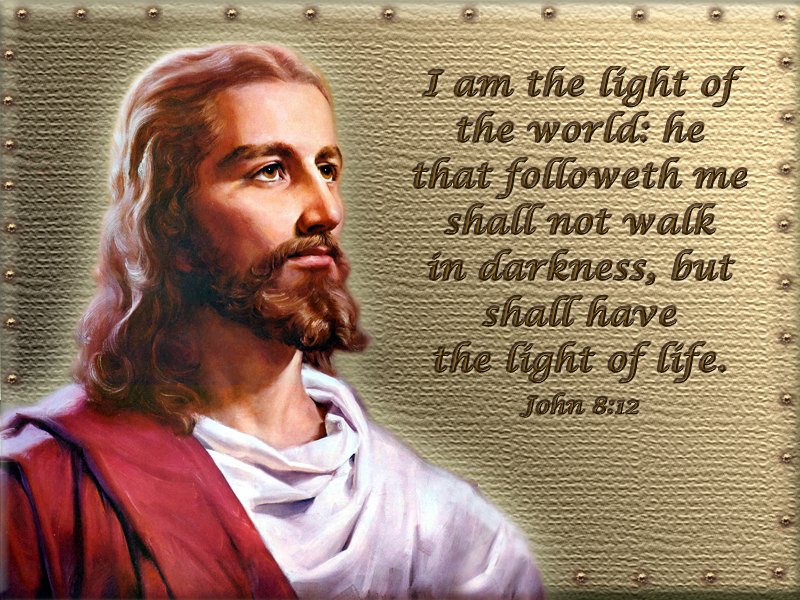
In the Gospel of John (8:12), Jesus says "I'm the light of the world". Such kind of claims are considered typically as expressing "Christology", that is, claims implying a divine self-understanding or self-perception of the historical Jesus. This understanding is the distinctive Christian view about Jesus.

Given the cultural influence of contemporary of atheism, secularism, scientific naturalism and religious pluralism in our society, many people are uncomfortable with the religious exclusivism implied by such kind of sayings. Such emotional and cultural discomfort produces a very strong psychological predisposition which is then rationalized by such people, making them ideologically sympathetic to and biased in favour of alternative, more palatable, non-exclusivistic interpretations of Jesus (hence the receptivity of many people to the radical revisionism of the Jesus Seminar and to non-scholarly, New Age "sources" like The Urantia Book, A Course in Miracles, The Aquarian Gospel of Jesus, etc.), a phenomenon which is characteristic of the culture of the United States of America as I've explained here (but with ramifications in all over the world, since what happens in USA tends to impact on the rest of the world). 

These alternative sources offer a Jesus who (surprise!) is extremely palatable to and "fit well with" contemporary postmodernist sensibilities about religious matters, and above all, provide emotional relief and subjective liberation from negative feelings of many Americans (mainly strong emotions fear, guilty and hatred which developed often, but not exclusively, when they were young people) connected with evangelical Christianity.

"Truth" becomes a secondary matter, "feeling good" becomes an emotional and existential priority (in fact, "feeling good" and compatibility with contemporary sensibilities become itself a kind of criterion of truth about the historical Jesus. So any view about Jesus incompatible with religious pluralism and other contemporary and culturally acceptable beliefs become suspicious and are distrusted on a priori grounds).

Many scholars (specially American scholars) have felt the same discomfort. Given the metaphysical naturalism and atheism which controls the academic world, these scholars have tried to avoid the controversial paranormal sources about Jesus (like A Course in Miracles), and have attempted to find alternative, non-exclusivistic, non-Christological sources about Jesus in historical documents, which is a more convincing and promising approach for academic purposes.

Among such documents are the second century's Apocryphal Gospels (all of which are temporally later in comparison with the first century's canonical Gospels, being the exception perhaps the Gospel of Thomas, which could contain some traditions of the first century, even though most scholars seem to be skeptics of it).

The Gospel of Thomas offers a mostly Gnostic interpretation of Jesus, a view about him which is most palatable to contemporary readers, specially the ones culturally influenced by mystical, New Age and Eastern philosophies.

But even such Thomas' Jesus contain evidence of high Christology, and hence (to that extension), confirms the traditional, Christian, divine self-perception of Jesus.

Remember that in the Gospel of John, Jesus is reported to having said "I am the light of the world".

But look what happen when we examine the Gospel of Thomas.  In Saying 77, we can read:  "Jesus said, "I am the light that is over all things. I am all: from me all came forth, and to me all attained.
Split a piece of wood; I am there.
Lift up the stone, and you will find me there"

Is Jesus claiming in Thomas something different than in John's? In both Gospels and regarding this particular point, he's claiming basically the same, namely, to be THE light which is OVER everything that exists (=the world or "all things", which is precisely what the word "world" means). Note that the property of being "above all things" is precisely what God is supposed to be: The ultimate LIGHT which is metaphysically senior and more fundamental regarding everything else.

Note very carefully that, to the extent to which we consider the traditions of the Gospel of Thomas to be independent and reliable, the saying of Jesus being "The Ultimate Light" becomes argueably an example of MULTIPLE ATTESTATION, because it is found in two independent sources, the Gospel of John and the Gospel of Thomas. Therefore, it is likely to be historical.

Note, moreover, that in Thomas, Jesus is claiming another exclusive divine property, namely, OMNIPRESENCE. In addition to being the senior light (like in John's), Thomas' Jesus is saying that Jesus is in every place (=omnipresent). 

So, saying 77 provides multiple attestation of the view that Jesus is the "senior light", but also provide additional High-Christological features of Jesus like the divine property of being omnipresent.

With more or less similar terminology, both Gospels are attributing to Jesus divine properties. Far from supporting religious pluralism, this puts Jesus in the same exalted, exclusivistic, divine status that some scholars have tried with everything they got to avoid. What other plausible interpretation could be given to Thomas' Jesus saying "I am all; from me all came forth, and to me all attained"? What more evidence do scholars need to accept a high Christology in Thomas, and hence a confirmation of the canonical Gospels regarding such exalted divine status of Jesus?

All of this brings back the initial discomfort felt by many scholars. They were interested in Thomas precisely as a way to find a different Jesus than the divine one portrayed in the New Testament, but in close examination they got a confirmation of the divine self-understanding of Jesus already present in the canonical Gospels, the crucial aspect about Jesus that these scholars wanted to avoid in the first place!

Further discussion of the Christological aspects of the Gospel of Thomas can be found in this post

Most people, I'd say the overwhelming majority of them, are slaves of their emotions and desires. They don't follow the evidence wherever it leads. They select, twist and reinterpret the evidence in terms emotionally and intellectually palatable to them (sometimes this occurs unintentionally). Truth, specially spiritual truths, becomes a matter shaped by emotions and a priori convictions about how spiritual things "are supposed to be" or "must be".

In spiritual matters, I think such irrationalistic apriorism and emotionalism is the most dangerous path that one could ever take.

Many readers have asked me why I do stress so much the point that the best historical evidence supports that Jesus' actual self-perception was exalted, divine and exclusivistic, if such a thing is "clear" when reading the Gospels. Asking such a thing is equivalent to asking why some blogs (including mine) do stress so much the evidence for the paranormal, if "everybody" knows that the paranormal exists.

This question reveals the unfamiliarity of such readers regarding the scholarly world about the historical Jesus (and parapsychology, in the second example). Like in the case of parapsychology, the topic of the historical Jesus touches FUNDAMENTAL beliefs, that is, important metaphysical and theological beliefs strongly rooted in our personality and emotional structure, and hence many people with beliefs incompatible with a Jesus as portrayed in the Gospel will be tempted (even unintentionally) to dismiss, reject, twist or reinterpret the evidence to make it fit their own worldview.

This seems to be part of human nature.

Fully aware of this flawed aspect of human nature, I intentionally employ a different approach: I try to constantly actualize and adjust my worldview according to my findings and studies. If the evidence for a given claim is good, I try to incorporate it into my worldview. If it doesn't fit with my worldview, I try to change my worldview in order to make room for the evidence. This way I'm constantly developing and perfecting my own worldview.

In New Testament studies, a bunch of scholars (mainly the liberal ones) have tried hard and by all the means imaginable to deny, misrepresent, dismiss or reinterpret the evidence of Jesus' exclusivistic self-perception and teachings implying his own perception of having divinity authority (key in this approach is their misuse of the criteria of authenticity. More recently, a few of scholars have posited a new clever strategy: they claim that such criteria themselves are "worthless"!... precisely, because they realize that when you apply them correctly, the evidence supports Jesus' exclusivistic and exalted self-perception, in addition to supporting traditions related to the resurrection, like the empty tomb).

This is why I do stress this aspect in my discussions about the historical Jesus.

In future posts, I'm going to analyze critically the arguments of these "new liberal scholars" who are skeptical of the criteria of authenticity in historical Jesus studies, as a new clever way to block any inference about the historical Jesus based upon the proper application of the criteria of authenticity.

Saturday, July 20, 2013

Further considerations about the criteria of authenticity and their uses and misuses in Historical Jesus studies


 Before discussing the main topic of this post, I want to do a preliminary (and off-topic) comment:

One problem that one often encounters on the internet is that many people are superficial, biased and utltimately incompetent readers. They interpret a post or article based upon their own prejudices, instead of accurately grasping the author's own purpose, meaning or intention. (Sometimes the author's style of writing is guilty of it and I'm sure I'm not an exception, but often are the readers themselves who misrepresent the article, due to their own prejudices or strong emotions about the matter). 

Moreover, they tend to like a website mainly when the author says things that the readers want to hear, which is telling not just of their prejudices and unability to think "outside the box", but of the largely emotional driving of their "feels good approach": Instead of searching for the truth (whatever it is and wherever it can lead us), they are searching mainly an emotional validation and confirmation of their worldview and belief-system, or a relief of their cognitive dissonance.

Based upon some e-mail correspondence that I've received, I've gotten the impression that the topic of Historical Jesus studies is very often misundertood, specially by people who has absolutely not idea about this field. The most common egregious example of this is when some readers conflate historical reflections or arguments about the Jesus with theological claims or conclusions about him.

For example, one reader asked me (about one of my posts on Antonio Piñero) "Are you saying that the criteria of authenticity made Jesus the Son of God?". Another one argued: "Even if Jesus said he was the Son of God, it doesn't mean he was something like that".

These comments reveal the confusion mentioned above and I'm shocked that so many people seem to be victim of such egregious confusion.

The discussion about the criteria of authenticity and their application about Jesus traditions is a HISTORICAL and METHODOLOGICAL problem, e.g. a problem of trying to figure out whether the traditions about Jesus pass positively the criteria of authenticity and hence warrant our conclusions about their historicity. By themselves, they have nothing to do with theology, religion or metaphysics. (Obviosuly, metaphysical, religious and theological reflections about Jesus have to take into account such historical data; otherwise, they're mere fantasies or unfounded speculations).

For example, in one of my post on Piñero, my main and underlying argument was that some liberal historical Jesus scholars misuse the criteria of authenticity in order to create a portrait of Jesus which is at variance with the Christian one. In order to provide hard and irrefutable evidence for this important claim, I use a prestigious New Testament scholar like Piñero as a concrete, specific example of the misuses of such criteria. Note that I'm doing a factual judgment about the historical methodology of Piñero, not a theological argument about Jesus' actual nature. I'm doing mainly an exercise on historical analysis and criticism of the New Testament material in the light of the scholarly work of an author whom I respect.

The purpose of such post was not to argue that Jesus was or was not the Son of God (that would be a theological argument), and my blog is not mainly interested in theology (although I sometimes discuss purely theological matters, like my post on divine simplicity). 

Also (and this could be a motive of confusion), I tend to use conditional arguments (e.g. arguments of the form "If X, then Y...") as a way to explore the implications of a given position and for purposes of critical evaluation of it..., for example arguing that If the resurrection happened, THEN the Christian view about Jesus (and Jesus's claims about his divine sonship and exclusivism, some of which pass positively the criteria of authenticity) are likely to be true. For example, on the post on the Old Testament concept of Savior and its possible connection with Jesus, I wrote: "If Jesus' resurrection was historical and the basic facts of his life mentioned above are veridical, I think the Christian interpretation of Jesus' death having an atoning function in terms of Isaiah 53 is very likely to be correct. Jesus' life was as God predicted in the Old Testament prophecies, and God's will and overall plan was actualized by Jesus' ministry and life"

Note the conditional structure of the argument. IF (Jesus' resurrection plues certain New Testament claims about his life are historical) THEN (the Christian interpretation of Jesus' death having an atoning function in terms of Isaiah 53 makes sense and is likely to be correct). This is not a categorical claim but a conditional one.

I use often such conditional claims assuming that my readers are intelligent enough to understand the logical and conceptual difference between a conditional and categorical claim.
 
But some people, due to their strong negative feelings and emotional wounds (specially feelings of fear, guilty, hatred) connected with their experiences or interpretations of Christianity, are so obsessed to deny the theological view that Jesus was the Son of God (or God's ultimate revelation to humankind and the religious exclusivism implied), that they even cannot understand historical arguments about the historical Jesus, nor discern them from theological reflections or considerations about him. 

But let's return to the main topic of this post:

Considerations about the criteria of authenticity in Historical Jesus studies

1-The criteria of authenticity are positive criteria which help us to establish what is historical about Jesus' traditions. They are NOT criteria for establishing what is non-historical (i.e. they are not criteria of non-historicity). 

In fact, it is hard to see what would count as a criteria of non-historicity: How the hell would you establish directly what DIDN'T happened in the past? At most, you can establish what happened and from there to infer indirectly what didn't happened (e.g. when a given claim is incompatible with what has been positively established as historical... for example, you can argue that Socretes wasn't a student of Aristotle, since the positive evidence shows that Socrates was the master of Plato and Plato the master of Aristotle...).

The implication of this is that if a tradition about Jesus doesn't pass any criteria at all, it doesn't make such tradition a false or unhistorical one, nor a product of "mythmaking". It simply means that such a tradition is one that we cannot establish positively as historical in the light of such criteria. But it still could be a veridical tradition.

2-Given point one, being "criteria FOR authenticity...", they say nothing about what is non-authentic or product of a fabrication.

3-Therefore, in order to reach conclusions about non-historicity, some scholars are forced to MISUSE such criteria. It is absolutely crucial to understand exactly how such misuse is done.

I've have detected several ways in which the criteria are misused, but the most common one is this:

Using the criteria as necessary conditions for historicity

This is the most common misuse of such criteria.

According for this misuse,  in order to a Jesus tradition to be historical, it HAS to pass one or several of such criteria. The most egregious and extreme examples of this can be found in the works of the Jesus Seminar and also in the works of scholars like John Dominic Crossan (who misuses the criterion of multiple attestation in order to deny important Christian-supporting traditions about Jesus), Bart Ehrman and many others. 

For example, Q scholar Burton Mack misuses the criterion of date (the criterion according to which, all conditions being the same, a tradition about Jesus which is early is more likely to be historical than the same tradition if it were later). 

For example, in his book The Lost Gospel: The Book of Q and the Christian origins, Mack writes:

The first followeres of Jesus did not known about or imagine any of the dramatic events upon which the narrative gospels hinge. These includes the baptism of Jesus; his conflict with Jewish authorities and their plot to kill him; Jesus' instruction to the disciples; Jesus' transfiguration, march to Jerusalem, last supper, trial, and crucifixion as the King of Jews; and finally, his resurrection from the dead and the stories of the empty tomb. All of these events must and can be accounted for mythmaking in the Jesus movements, with a little of help from the martyrology of Christ, in the period adter the Roman-Jewish war. Thus the story of Q demostrates that the narrative gospels have no claim as historical accounts" (p.247)

Please, note very carefully that Mack infers the non-historicity of events like Jesus' baptism or the empty tomb simply because they don't pass the criterion of date posited by the Q material. In other words, Mack is using the criterion of date provided by the Q material as a necessary condition for historicity.

But this is obviously a flawed historical methodology, because in addition to the criterion of date, we have many other criteria (like mutiple attestation, dissimilarity or embarassment) which events like Jesus' baptism and the empty tomb pass positively.

Moreover, Jesus surely said and did many things which are not recorded in the Q material (for example, the events in the life of Jesus when  he was 18 years old were not recorded in Q nor in any other historical document). Does it mean that they didn't happened? It would absurd and false to claim that, since the Q material is not an exhaustive collection of the events in the life of Jesus, and for sure many events in the life of Jesus are historical even when they weren't recorded in Q (nor in any other historical document, for that matter).

If you (mis) apply (as Mack does) the criterion of date for other historical figures, you would destroy history as a rational study and would have an extremely limited caricature of the actual, complex, living figures who lived and acted in the past.

But Mack NEEDS to misuse the criteria in order to deny the historicity of the distinctive aspects of the Christian interpretation of the historical Jesus.

Moreover, Jesus' self-understanding as the Son of God and the exclusive intermediary between God and humankind pass (among others) the criteria of date provided by Q, as I've shown here

But obviously such evidence is unacceptable for liberal scholars (even if the evidence meets their own, flawedly applied, criteria), because they have decided long before, in advance, that it cannot be accepted. Their personal ideology, theological preferences and personal desires determine in advance the results of their methodology.

The criterion of date is an important one, because early sources are temporally closer to the events in comparison with later ones. But this criterion is not the only one. The Gospel of John, for example, is considered as the latest one among canonical Gospels, and by the criterion of date alone, other Gospels would be more reliable. But the traditions of John can pass other criteria which would make them historically reliable. (Note by the way that some people skeptically laugh and dismiss and condescendenly reject as unreliable John's Gospel because it is the latest one among the first century's canonical Gospels, but simultaneously and sympathetically accept extremely late, 20th century "sources" of information about Jesus like The Uratian Book, A Course in Miracles, The Aquarian Gospel of Jesus and so forth, an approach which is not only inconsistent, pseudoscientific and unscholarly but mad from the point of view of serious historical Jesus  methodology).

When studying the evidence for the historical Jesus, we need to have a deep, accurate understanding of the criteria of authenticity and their uses and misuses, fully aware of the fact that many things about Jesus (or any other historical figure) are historical even whether we cannot prove them in the light of such criteria (because such events were not recorded at all).

Beware of using the criteria improperly, in order to reach conclusions congenial with your prejudices about Jesus.

Saturday, July 13, 2013

Summary of my criticisms to Ken Wilber's metaphysics: Tension with the possibility of survival of consciousness, the afterlife, abstract objects, the Big Bang Cosmology and the existence of God


In two previous posts, this and this (which I suggest you to read carefully), I argued that the metaphysics of Ken Wilber is in tension with  number of things agreed by most people (including some of Wilber's readers), namely:

1)With the possibility of survival of consciousness (specially in an unembodied form, like suggested by the best cases of NDEs) and the afterlife.

2)With the existence of abstract objets (like numbers or propositions), provided they're not just subjective and useful concepts in our minds.

3)With the theory of the Big Bang, which implies the absolute origin of matter, energy and space-time (i.e. the absolute origin and coming into being of nature itself).

4)With the existence of God.

Just for the record: My main and underlying argument in both posts is NOT that Wilber's metaphysics is false (although I think it is), but that they're in tension with the existence, or possible existence, of at least the 4 categories of beings, events or phenomena mentioned above.

Why is that important? Because Wilber's ideas are shared by a lot of "New Age" fans and students (specially those with certain intellectual interests) and such people also tend to share all or some of the above 4 beliefs, at least implicitly.

Therefore, if I'm right in my critique of Wilber, people who holds one of the above 4 beliefs have to either abandon them, or reject Wilber's metaphysics.

In my opinion, Wilber's metaphysics can be useful to understand the evolution of material systems, but not to understand the origin of matter/nature itself, let alone spiritual problems. His view is highly similar to emergent materialism, with the difference that Wilber uses a spiritualistic terminology (e.g. "consciousness") and a kind of Hegelian mindset.

Ultimately, Wilber's system seems to imply the same kind of impersonalistic worldview (=a worldview based ultimately and fundamentally on non-personal forces, processes or entities) than materialism or scientific naturalism, which is at variance with the objective existence (as part of the fabric of reality) of basic and intrinsic person-relative/person-dependent features like rationality, intentionality, free will, moral responsability, etc. 

In impersonalistic worldviews, "persons" (if they exist at all) are later by-products of more fundamental, non-personal forces, entities, events or processes (e.g. subatomic particles, fields of forces, the law of entropy or gravity, natural selection, "universal consciousness" or "cosmic energy", and so forth). In some New Age doctrines, person-relative properties are "reified" (=assumed to be individual things and not properties of things), like "love" (without lover), or "intelligence" (without a person who exercises it) and other abstract "energies" which being impersonal behave as persons... so, these people can say "the universe is intelligent", or "the universe is love" or "the universe cares of you",  without realizing that they are positing person-dependent features to non-personal realities.

Impersonalistic worldviews, at the bottom, tend to ultimately nullify, limit and undermine the distinctive features of persons on behalf of (supposedly) most important, fundamental and senior impersonal forces and processes (think about the "dissolution of the self" so common in the Eastern and New Age literature... a dissolution which, if true, will ultimately destroy any sense of rationality, free will, personal agency, moral responsability, etc. since the existence of a individual free and rational "self" is a necessary condition of these person-relative features. Not surprinsingly, many of these impersonalistic worldviews say that things like "good and evil are mere illusions based upon dualistic thinking" or "there is not justice nor injustice in the creation but only love..." which obviously is the negation of the objective existence of a rational, moral and just realm in which we are ultimately accountable for our free decisions and deeds, specially if our conscious, spiritual and moral life extends beyond this physical existence).

A given worldview is either personal or non-personal, that is, rooted ultimately in a person or persons, or in non-personal forces. This is why the most plausible cadidates are theism (personal worldview) or scientific naturalism (impersonal worldview based on natural science).

Postulating a spiritual dimesion fit well with theism, since God is a spiritual being. But a spiritual dimension of souls and finite conscious beings don't fit well in a worldview which is impersonalistic, like naturalism. (This is why naturalists are critical and debunkers of spiritual matters).

Monistic metaphysics (like Wilber's) don't escape from this. Either, such unitary principle is a person or not. If it is a person, then everything that exists is a expression of such person (and some version of theism seems implied) and person-dependent features find a secure place in that worldview. If not, and the root of reality is a non-personal principle or entitiy ("undifferentiate consciousness", "cosmic energy", "loving universe", the quantum vacuum, "abstract intelligence", numbers, etc.), then "persons" seem to be secondary by-products, contingent, more or less accidental, non-fundamental realities, and person-dependent features have not a fundamental place in it, only a secondary and temporal one.

Wilber's view uses a person-dependent language (e.g. "The Spirit"), but in examination such principle seems to be a non-personal energy or entity. Such Spirit far from being "free", is subject to a bunch of metaphysical laws which imply a continuous progression of developmental process through the material world and eventually evolving to personal minds.

For the reasons explained in my two posts on Wilber, I find his metaphysics at variance with phenomena which fit better with theism.

Wednesday, July 10, 2013

A review of Jiu-Jitsu in the South Zone, 1997-2008. The Astonishing True Story of One Man’s Eleven Year Journey from White to Black Belt in the Jiu-Jitsu Academies of the South Zone of Rio de Janeiro, Brazil, 1997-2008 by Roberto Pedreira


The book "Jiu-Jitsu in the South Zone, 1997-2008" by BJJ Black Belt Roberto Pedreira is a must read for martial artists in general, and practitioners of Brazilian Jiu-Jitsu (BJJ) in particular.

Pedreira trained in the "Mecca" of BJJ, namely, Brazil, with the best instructors of this martial art. 

The book tells Pedreira's experiences and anecdotes training with these masters, and provides interesting insights and pieces of information about the history of BJJ (a history which, sadly, has been written in most sources according to the interests of certain persons).

Of particular interest to me was Pedreira's meeting with Judo master George Kastriot Mehdi. According to this master, Gracie Jiu-Jitsu is actually a version of Judo.

According to the standard story (promoted mainly by Rorion Gracie), Helio Gracie learnt jiu-jitsu from his brother Carlos, who in turn learnt form Mitsuyo Maeda, a japanese jiu-jitsu master. However, as evidence shows, Maeda was mainly a JUDOKA, not a jiu-jitsu master (it is true that Maeda trained in jiu-jitsu too, but he was a member of the new Kodokan group founded by Jigoro Kano, a group which reformed traditional jiu-jitsu into a more sport-oriented form of combat).

Not surprinsingly, ALL the techniques used in traditional Gracie Jiu-Jitsu exist in Judo (certainly, the Gracies have improved the transitions among the techniques and talented BJJ sport competitors have possibly created new ones for sporting purposes and adapted to the rules of BJJ tournaments). On the other hand the distinctive features of traditional jiu-jitsu (like stand up striking to vital points, nerve and pressure points attacks, finger locks, wrist locks etc.) are not stressed in BJJ (exactly as occured in Judo, because such techniques were precisely the ones that Jigoro Kano excluded from Judo due to their dangerous nature... leaving them as part of the most advanced curriculum of self-defense of Judo).

So, Mehdi is, after all, probably right about BJJ being a form of "judo" (an incomplete form, Mehdi would suggest).

Pedreira met with many others notable BJJ figures like Ricardo de la Riva, Murillo Bustamante or Reyson Gracie.

Pedreira's writing style is good, balanced and objective, and I look forward to read more of his works.

Clarifying the history of BJJ

Not topic in BJJ is so obscure as the history of the art itself. Although Pedreira's book provides some interesting comments and passing notes about the history of the art, we need a through research about it (which, as far I know, is not available yet, at least not in English).

In particular, specific answers to the following questions are needed:

1-Exactly what techniques Mitsuyo Maeda taught to Carlos Gracie?

BJJ is commonly divided into 3 areas: Self-defense (mostly standing up), Vale Tudo and sport BJJ.  

Did Maeda teach only the self-defense aspect? Or the Vale Tudo one? Or both? (Sport BJJ seems to be a later creation by the Gracies...).

2-Exactly what techniques Helio Gracie improved and which are exactly such improvements?

Most people, including Carlos Gracie Jr., agree that Helio Gracie modified the judo/jiu-jitsu that he received from Carlos. Some of them suggest that Helio added the "defensive mindset" to the purely offensive one which Carlos supposedly taught.

But when asking for Helio's specific improvements, we get pure generalities like "Helio modified the techniques to make them less reliable on strengh". Fine, but exactly what are such modifications? Is the rear naked choke from Helio different from the way in which it is done in Judo and traditional jiu-jitsu? In what exactly Helio's basic Americana armlock from the mount or lapel choke differs from the Judo's versions of it?

I have to confess that, after careful examination, I don't see where or how exactly Helio modified such techniques. Having trained in both Judo and BJJ myself, I don't see any substantive or distinctive difference in the application of the techniques when individually considered (obviously, differences exist in the transitions and overall combat philosophy as previously mentioned). Like Mehdi says, they are simply the same old Judo techniques.

3-BJJ practitioners claim that BJJ is superior to other forms of martial arts, and Royce Gracie victories in the early UFC are the primary evidence for this claim (other evidences, like the Gracie Challenge, etc. are often mentioned too).

But note that, at most, this evidence shows that the VALE TUDO part of the BJJ is superior (i.e. that in a vale tudo context, BJJ is superior than other arts due to the BJJ's overall strategy and advanced form of ground fighting). It doesn't show that the SELF-DEFENSE aspect of the art (which is mostly standing up) is superior than other arts.

Some Gracies have tried to argue from the success of BJJ's ground work in Vale Tudo to the overall efficacy of the system for street self-defense, which is a non-sequitur.

For example, are the BJJ's techniques for disarming gun and knife superior than Krav Maga's? It hasn't been proved at all, let alone from Royce's impressive victories in the UFC (because weapons weren't part of such competition).

In conclusion, we cannot infer the superiority of BJJ as a overall street self-defense art from the success of BJJ in Vale Tudo competitions, because the techniques and enviroment are different.

4-The fact that many of the BJJ techniques for self-defense are different from the Vale Tudo techniques is seen when examining carefully the Gracie material and the BJJ curriculum.

For example, in Helio Gracie's video "Episode One" (and in Royce Gracie's book on BJJ self-defense), a defense from a standing front choke against a wall consists in a FINGER LOCK finishing hold. But in  Vale Tudo, the Gracies never teach finger locks as part of their combat arsenal (and consequently, never use them).

Another example, in Royce's book on self-defense even a pressure point using the knucles is taught to escape from a grab. But in Vale Tudo, pressure points are not taught by them.

In fact, when BJJ instructors (including the Gracies) are asked about finger locks and pressure points techniques, their standard reply is "they don't work".

But if they don't work,  why the hell such techniques are taught as part of the classical stand up self-defense program of Helio's BJJ? I cannot understand it.

Perhaps the most charitable interpretation is to suggest that such self-defense techniques work against untrained opponents (which are the most likely attackers), not against trained fighters. 

But then the unqualified claim that such techniques "don't work" is false: They don't work against trained fighters, but they work against the untrained ones.

And if this point is conceded, then the claim that other martial arts don't work (because Royce kicked the butt of representatives of these arts in the UFC) is also false, because at most such victories by Royce and others BJJ experts only shows that such martial arts don't work against BJJ or against trained fighters... but perhaps (like the BJJ's finger lock to escape a front choke) such techniques will work against untrained street attackers... after all, is BJJ better in finger locks than Wally Jay's Small Circle Jujitsu or Yang Wing Ming's Chin Na? I don't think so...

Obscurities, fallacies, implicit assumptions and unwarranted extrapolations are part of the world of BJJ (this also happens in other martial arts, by the way).

We need a more scholarly approach to the history and philosophy of BJJ... I wish that Pedreira (and other qualified and objective researchers) will address these problems specifically in future works.

Alvin Plantinga on Why Darwinist Materialism is Wrong: A review of atheist philosopher Thomas Nagel's book Mind and Cosmos


Alvin Plantinga

Thomas Nagel


Thomas Nagel is an atheistic philosopher of exceptional intellectual honesty and integrity. At variance with other scientific naturalists, Nagel is not acritical nor credulous when it comes to the problems of materialism and Darwinism. On the contrary, he explicitly submits these fashionable metaphysical assumptions of contemporary atheism to rigurous philosophical criticisms. (Please read this post on Nagel, atheistic wishful thinking and the "Fear of God").

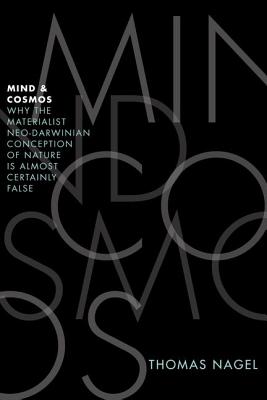
Nagel has shocked the philosophical community with his recent book "Mind and Cosmos", in which he argues that the Neo-Darwinian materialist conception of nature is probably false.

Philosopher Alvin Plantinga wrote a review of this book, published in "New Republic" website:

Why Darwinist Materialism is Wrong
by Alvin Plantinga

ACCORDING TO a semi-established consensus among the intellectual elite in the West, there is no such person as God or any other supernatural being. Life on our planet arose by way of ill-understood but completely naturalistic processes involving only the working of natural law. Given life, natural selection has taken over, and produced all the enormous variety that we find in the living world. Human beings, like the rest of the world, are material objects through and through; they have no soul or ego or self of any immaterial sort. At bottom, what there is in our world are the elementary particles described in physics, together with things composed of these particles.

I say that this is a semi-established consensus, but of course there are some people, scientists and others, who disagree. There are also agnostics, who hold no opinion one way or the other on one or another of the above theses. And there are variations on the above themes, and also halfway houses of one sort or another. Still, by and large those are the views of academics and intellectuals in America now. Call this constellation of views scientific naturalism—or don’t call it that, since there is nothing particularly scientific about it, except that those who champion it tend to wrap themselves in science like a politician in the flag. By any name, however, we could call it the orthodoxy of the academy—or if not the orthodoxy, certainly the majority opinion.

The eminent philosopher Thomas Nagel would call it something else: an idol of the academic tribe, perhaps, or a sacred cow: “I find this view antecedently unbelievable—a heroic triumph of ideological theory over common sense. ... I would be willing to bet that the present right-thinking consensus will come to seem laughable in a generation or two.” Nagel is an atheist; even so, however, he does not accept the above consensus, which he calls materialist naturalism; far from it. His important new book is a brief but powerful assault on materialist naturalism.

NAGEL IS NOT AFRAID to take unpopular positions, and he does not seem to mind the obloquy that goes with that territory. “In the present climate of a dominant scientific naturalism,” he writes, “heavily dependent on speculative Darwinian explanations of practically everything, and armed to the teeth against attacks from religion, I have thought it useful to speculate about possible alternatives. Above all, I would like to extend the boundaries of what is not regarded as unthinkable, in light of how little we really understand about the world.” Nagel has endorsed the negative conclusions of the much-maligned Intelligent Design movement, and he has defended it from the charge that it is inherently unscientific. In 2009 he even went so far as to recommend Stephen Meyer’s book Signature in the Cell: DNA and the Evidence for Intelligent Design, a flagship declaration of Intelligent Design, as a book of the year. For that piece of blasphemy Nagel paid the predictable price; he was said to be arrogant, dangerous to children, a disgrace, hypocritical, ignorant, mind-polluting, reprehensible, stupid, unscientific, and in general a less than wholly upstanding citizen of the republic of letters.

His new book will probably call forth similar denunciations: except for atheism, Nagel rejects nearly every contention of materialist naturalism. Mind and Cosmos rejects, first, the claim that life has come to be just by the workings of the laws of physics and chemistry. As Nagel points out, this is extremely improbable, at least given current evidence: no one has suggested any reasonably plausible process whereby this could have happened. As Nagel remarks, “It is an assumption governing the scientific project rather than a well-confirmed scientific hypothesis.”

The second plank of materialist naturalism that Nagel rejects is the idea that, once life was established on our planet, all the enormous variety of contemporary life came to be by way of the processes evolutionary science tells us about: natural selection operating on genetic mutation, but also genetic drift, and perhaps other processes as well. These processes, moreover, are unguided: neither God nor any other being has directed or orchestrated them. Nagel seems a bit less doubtful of this plank than of the first; but still he thinks it incredible that the fantastic diversity of life, including we human beings, should have come to be in this way: “the more details we learn about the chemical basis of life and the intricacy of the genetic code, the more unbelievable the standard historical account becomes.” Nagel supports the commonsense view that the probability of this happening in the time available is extremely low, and he believes that nothing like sufficient evidence to overturn this verdict has been produced.

So far Nagel seems to me to be right on target. The probability, with respect to our current evidence, that life has somehow come to be from non-life just by the working of the laws of physics and chemistry is vanishingly small. And given the existence of a primitive life form, the probability that all the current variety of life should have come to be by unguided evolution, while perhaps not quite as small, is nevertheless minuscule. These two conceptions of materialist naturalism are very likely false.

But, someone will say, the improbable happens all the time. It is not at all improbable that something improbable should happen. Consider an example. You play a rubber of bridge involving, say, five deals. The probability that the cards should fall just as they do for those five deals is tiny—something like one out of ten to the 140th power. Still, they did. Right. It happened. The improbable does indeed happen. In any fair lottery, each ticket is unlikely to win; but it is certain that one of them will win, and so it is certain that something improbable will happen. But how is this relevant in the present context? In a fit of unbridled optimism, I claim that I will win the Nobel Prize in chemistry. You quite sensibly point out that this is extremely unlikely, given that I have never studied chemistry and know nothing about the subject. Could I defend my belief by pointing out that the improbable regularly happens? Of course not: you cannot sensibly hold a belief that is improbable with respect to all of your evidence.

NAGEL GOES ON: he thinks it is especially improbable that consciousness and reason should come to be if materialist naturalism is true. “Consciousness is the most conspicuous obstacle to a comprehensive naturalism that relies only on the resources of physical science.” Why so? Nagel’s point seems to be that the physical sciences—physics, chemistry, biology, neurology—cannot explain or account for the fact that we human beings and presumably some other animals are conscious. Physical science can explain the tides, and why birds have hollow bones, and why the sky is blue; but it cannot explain consciousness. Physical science can perhaps demonstrate correlations between physical conditions of one sort or another and conscious states of one sort or another; but of course this is not to explain consciousness. Correlation is not explanation. As Nagel puts it, “The appearance of animal consciousness is evidently the result of biological evolution, but this well-supported empirical fact is not yet an explanation—it does not provide understanding, or enable us to see why the result was to be expected or how it came about.”

Nagel next turns his attention to belief and cognition: “the problem that I want to take up now concerns mental functions such as thought, reasoning, and evaluation that are limited to humans, though their beginnings may be found in a few other species.” We human beings and perhaps some other animals are not merely conscious, we also hold beliefs, many of which are in fact true. It is one thing to feel pain; it is quite another to believe, say, that pain can be a useful signal of dysfunction. According to Nagel, materialist naturalism has great difficulty with consciousness, but it has even greater difficulty with cognition. He thinks it monumentally unlikely that unguided natural selection should have “generated creatures with the capacity to discover by reason the truth about a reality that extends vastly beyond the initial appearances.” He is thinking in particular of science itself.

Natural selection is interested in behavior, not in the truth of belief, except as that latter is related to behavior. So concede for the moment that natural selection might perhaps be expected to produce creatures with cognitive faculties that are reliable when it comes to beliefs about the physical environment: beliefs, for example, about the presence of predators, or food, or potential mates. But what about beliefs that go far beyond anything with survival value? What about physics, or neurology, or molecular biology, or evolutionary theory? What is the probability, given materialist naturalism, that our cognitive faculties should be reliable in such areas? It is very small indeed. It follows—in a wonderful irony—that a materialistic naturalist should be skeptical about science, or at any rate about those parts of it far removed from everyday life.

This certainly seems right, and perhaps we can go even further. Perhaps it is not initially implausible to think that unguided natural selection could have produced creatures with cognitive faculties who are reliable about matters relevant to survival and reproduction. But what about metaphysical beliefs, such as theism, or determinism, or materialism, or atheism? Such beliefs have little bearing on behavior related to survival and reproduction, and unguided natural selection couldn’t care less about them or their truth-value. After all, it is only the occasional member of the Young Humanist Society whose reproductive prospects are enhanced by accepting atheism. Given materialist naturalism, the probability that my cognitive faculties are reliable with respect to metaphysical beliefs would be low. So take any metaphysical belief I have: the probability that it is true, given materialist naturalism, cannot be much above .5. But of course materialist naturalism is itself a metaphysical belief. So the materialistic naturalist should think the probability of materialist naturalism is about .5. But that means that she cannot sensibly believe her own doctrine. If she believes it, she shouldn’t believe it. In this way materialist naturalism is self-defeating.

II.
THE NEGATIVE CASE that Nagel makes against materialist naturalism seems to me to be strong and persuasive. I do have the occasional reservation. Most materialists apparently believe that mental states are caused by physical states. According to Nagel, however, the materialistic naturalist cannot stop there. Why not? Because the idea that there is such a causal connection between the physical and the mental doesn’t really explain the occurrence of the mental in a physical world. It doesn’t make the mental intelligible. It doesn’t show that the existence of the mental is probable, given our physical world.

Some materialists, however, seek to evade this difficulty by suggesting that there is some sort of logical connection between physical states and mental states. It is a logically necessary truth, they say, that when a given physical state occurs, a certain mental state also occurs. If this is true, then the existence of the mental is certainly probable, given our physical world; indeed, its existence is necessary. Nagel himself suggests that there are such necessary connections. So wouldn’t that be enough to make intelligible the occurrence of the mental in our physical world?

I suspect that his answer would be no. Perhaps the reason would be that we cannot just see these alleged necessities, in the way we can just see that 2+1=3. These postulated necessary connections are not self-evident to us. And the existence of the mental would be intelligible only if those connections were self-evident. But isn’t this a bit too strong? Why think that the mental is intelligible, understandable, only if there are self-evident necessary connections between the physical and the mental? Doesn’t that require too much? And if intelligibility does require that sort of connection between the physical and the mental, why think the world is intelligible in that extremely strong sense?

Now you might think someone with Nagel’s views would be sympathetic to theism, the belief that there is such a person as the God of the Abrahamic religions. Materialist naturalism, says Nagel, cannot account for the appearance of life, or the variety we find in the living world, or consciousness, or cognition, or mind—but theism has no problem accounting for any of these. As for life, God himself is living, and in one way or another has created the biological life to be found on Earth (and perhaps elsewhere as well). As for the diversity of life: God has brought that about, whether through a guided process of evolution or in some other way. As for consciousness, again theism has no problem: according to theism the fundamental and basic reality is God, who is conscious. And what about the existence of creatures with cognition and reason, creatures who, like us, are capable of scientific investigation of our world? Well, according to theism, God has created us human beings in his image; part of being in the image of God (Aquinas thought it the most important part) is being able to know something about ourselves and our world and God himself, just as God does. Hence theism implies that the world is indeed intelligible to us, even if not quite intelligible in Nagel’s glorified sense. Indeed, modern empirical science was nurtured in the womb of Christian theism, which implies that there is a certain match or fit between the world and our cognitive faculties.

Given theism, there is no surprise at all that there should be creatures like us who are capable of atomic physics, relativity theory, quantum mechanics, and the like. Materialist naturalism, on the other hand, as Nagel points out, has great difficulty accounting for the existence of such creatures. For this and other reasons, theism is vastly more welcoming to science than materialist naturalism. So theism would seem to be a natural alternative to the materialist naturalism Nagel rejects: it has virtues where the latter has vices, and we might therefore expect Nagel, at least on these grounds, to be sympathetic to theism.

SADLY ENOUGH (at least for me), Nagel rejects theism. “I confess to an ungrounded assumption of my own, in not finding it possible to regard the design alternative [i.e., theism] as a real option. I lack the sensus divinitatis that enables—indeed, compels so many people to see in the world the expression of divine purpose.” But it isn’t just that Nagel is more or less neutral about theism but lacks that sensus divinitatis. In The Last Word, which appeared in 1997, he offered a candid account of his philosophical inclinations:
I am talking about something much deeper—namely, the fear of religion itself. I speak from experience, being strongly subject to this fear myself: I want atheism to be true and am made uneasy by the fact that some of the most intelligent and well-informed people I know are religious believers.... It isn’t just that I don’t believe in God and, naturally, hope that I’m right in my belief. It’s that I hope there is no God! I don’t want there to be a God; I don’t want the universe to be like that.
Here we have discomfort and distress at the thought that there might be such a being as God; but this discomfort seems more emotional than philosophical or rational.

So is there a strictly philosophical problem with theism, according to Nagel? As far as I can see, the main substantive objection that he offers is an appeal to that notion of unity. A successful worldview will see the world as intelligible; and intelligibility, as Nagel conceives it, involves a high degree of unity. The world is intelligible only if there are no fundamental breaks in it, only if it contains no fundamentally different kinds of things. Descartes, that great dualist, thought that the world displays two quite different sorts of things: matter and mind, neither reducible to the other. Nagel rejects this dualism: his reason is just that such dualism fails to secure the unity necessary for the world’s being intelligible.

Yet is there any reason to think that the world really is intelligible in this very strong sense—any good reason to think that there is fundamentally just one kind of thing, with everything being an example of that kind, or reducible to things that are? Here three considerations seem to be necessary. First, we need to know more about this requirement: what is it to say that fundamentally there is just one kind of thing? It is not obvious how this is to be understood. Aren’t there many different sorts of things: houses, horses, hawks, and handsaws? Well, perhaps they are not fundamentally different. But what does “fundamentally” mean here? Is the idea that the world is intelligible only if there is some important property that houses, horses, hawks, and handsaws all share? What kind of property?

Second, how much plausibility is there to the claim that this sort of unity really is required for intelligibility? Clearly we cannot claim that Descartes’s dualism is literally unintelligible—after all, even if you reject it, you can understand it. (How else could you reject it?) Is it really true that the world is more intelligible, in some important sense of “intelligible,” if it does not contain two or more fundamentally different kinds of things? I see little reason to think so.

And third, suppose we concede that the world is genuinely intelligible only if it displays this sort of monistic unity: why should we think that the world really does display such a unity? We might hope that the world would display such unity, but is there any reason to think the world will cooperate? Suppose intelligibility requires that kind of unity: why should we think our world is intelligible in that sense? Is it reasonable to say to a theist, “Well, if theism were true, there would be two quite different sorts of things: God on the one hand, and the creatures he has created on the other. But that cannot really be true: for if it were, the world would not display the sort of unity required for intelligibility”? Won’t the theist be quite properly content to forgo that sort of intelligibility?

III.
I COME FINALLY to Nagel’s positive thesis. Materialist naturalism, he shows, is false, but what does he propose to put in its place? Here he is a little diffident. He thinks that it may take centuries to work out a satisfactory alternative to materialist naturalism (given that theism is not acceptable); he is content to propose a suggestive sketch. He does so in a spirit of modesty: “I am certain that my own attempt to explore alternatives is far too unimaginative. An understanding of the universe as basically prone to generate life and mind will probably require a much more radical departure from the familiar forms of naturalistic explanation than I am at present able to conceive.”

There are two main elements to Nagel’s sketch. There is panpsychism, or the idea that there is mind, or proto-mind, or something like mind, all the way down. In this view, mind never emerges in the universe: it is present from the start, in that even the most elementary particles display some kind of mindedness. The thought is not, of course, that elementary particles are able to do mathematical calculations, or that they are self-conscious; but they do enjoy some kind of mentality. In this way Nagel proposes to avoid the lack of intelligibility he finds in dualism.

Of course someone might wonder how much of a gain there is, from the point of view of unity, in rejecting two fundamentally different kinds of objects in favor of two fundamentally different kinds of properties. And as Nagel recognizes, there is still a problem for him about the existence of minds like ours, minds capable of understanding a fair amount about the universe. We can see (to some degree, anyway) how more complex material objects can be built out of simpler ones: ordinary physical objects are composed of molecules, which are composed of atoms, which are composed of electrons and quarks (at this point things get less than totally clear). But we haven’t the faintest idea how a being with a mind like ours can be composed of or constructed out of smaller entities that have some kind of mindedness. How do those elementary minds get combined into a less than elementary mind?

The second element of Nagel’s sketch is what we can call natural teleology.His idea seems to be something like this. At each stage in the development of our universe (perhaps we can think of that development as starting with the big bang), there are several different possibilities as to what will happen next. Some of these possibilities are steps on the way toward the existence of creatures with minds like ours; others are not. According to Nagel’s natural teleology, there is a sort of intrinsic bias in the universe toward those possibilities that lead to minds. Or perhaps there was an intrinsic bias in the universe toward the sorts of initial conditions that would lead to the existence of minds like ours. Nagel does not elaborate or develop these suggestions. Still, he is not to be criticized for this: he is probably right in believing that it will take a lot of thought and a long time to develop these suggestions into a truly viable alternative to both materialist naturalism and theism.

I SAID ABOVE THAT Nagel applauds the negative side of Intelligent Design but is doubtful about the positive part; and I find myself in much the same position with respect to Mind and Cosmos. I applaud his formidable attack on materialist naturalism; I am dubious about panpsychism and natural teleology. As Nagel sees, mind could not arise in our world if materialist naturalism were true—but how does it help to suppose that elementary particles in some sense have minds? How does that make it intelligible that there should be creatures capable of physics and philosophy? And of poetry, art, and music?

As for natural teleology: does it really make sense to suppose that the world in itself, without the presence of God, should be doing something we could sensibly call “aiming at” some states of affairs rather than others—that it has as a goal the actuality of some states of affairs as opposed to others? Here the problem isn’t just that this seems fantastic; it does not even make clear sense. A teleological explanation of a state of affairs will refer to some being that aims at this state of affairs and acts in such a way as to bring it about. But a world without God does not aim at states of affairs or anything else. How, then, can we think of this alleged natural teleology?

When it comes to accommodating life and mind, theism seems to do better. According to theism, mind is fundamental in the universe: God himself is the premier person and the premier mind; and he has always existed, and indeed exists necessarily. God could have desired that there be creatures with whom he could be in fellowship. Hence he could have created finite persons in his own image: creatures capable of love, of knowing something about themselves and their world, of science, literature, poetry, music, art, and all the rest. Given theism, this makes eminently good sense. As Nagel points out, the same cannot be said about materialist naturalism. But do panpsychism and natural teleology do much better?

Nagel’s rejection of theism does not seem to be fundamentally philosophical. My guess is this antipathy to theism is rather widely shared. Theism severely limits human autonomy. According to theism, we human beings are also at best very junior partners in the world of mind. We are not autonomous, not a law unto ourselves; we are completely dependent upon God for our being and even for our next breath. Still further, some will find in theism a sort of intolerable invasion of privacy: God knows my every thought, and indeed knows what I will think before I think it. Perhaps hints of this discomfort may be found even in the Bible itself

Before a word is on my tongue, you know it completely, oh Lord....
Where can I go from your Spirit?
Where can I flee from your presence?
If I go up to the heavens, you are there;
If I make my bed in Sheol, you are there.

This discomfort with theism is to some extent understandable, even to a theist. Still, if Nagel followed his own methodological prescriptions and requirements for sound philosophy, if he followed his own arguments wherever they lead, if he ignored his emotional antipathy to belief in God, then (or so I think) he would wind up a theist. But wherever he winds up, he has already performed an important service with his withering critical examination of some of the most common and oppressive dogmas of our age.

Alvin Plantinga is professor of philosophy emeritus at the University of Notre Dame and is the author, most recently, of Where the Conflict Really Lies: Science, Religion, and Naturalism (Oxford University Press). This article appeared in the December 6,  2012 issue of the magazine under the headline “A Secular Heresy.”

Sunday, June 16, 2013

A.C. Grayling vs Peter S Williams, the God Argument book and the poverty of contemporary atheistic philosophy of religion


I've been delaying posting because, as I explained in my last post, I'm busy in personal projects which include "hands-on" investigation of putative paranormal and supernatural phenomena. The results of this research will be published in the future in a series of posts, or perhaps in a new blog specially created to that effect.

In this moment, I want to comment briefly about a book that I've just finished to read: atheist A.C.Grayling's The God Argument.  

This is one of the worst books that I've read regarding the "God topic". The book is full of fallacies, inconsistences and misunderstandings of the basic arguments for God's existence.

I'll review the book in detail in the future, but just as an example: In page 77, he says:

explaining something by something unexplained amounts, obviously, to no explanation at all

But this is "obviously" and simply false. You can explain X by invoking Y, even if in that moment Y remains unexplained. A couple of examples:

1-AIDS was explained in 1983 as a disease caused by a virus (HIV), but in the time HIV remained unexplained (i.e. its origin and cause was unknown in 1983). Did such fact prevent medical scientists to explain the cause of AIDS in terms of HIV?

2-The Big Bang theory explains the origin of the material universe. But the cause or origin of the big bang is itself still unexplained (in fact, hardly any naturalistic explanation will succeed, because it is nature itself = the material universe itself which began to exist, and you cannot explain the absolute origin of matter appealing to a material cause).

3-Suppose, for the argument's sake, that the afterlife is empirically proven to exist beyond of doubt and to the entire satisfaction of "skeptics" like Randi, Dawkins or Keith Augustine (e.g. in cases of NDEs under laboratory conditions). In this case, "survival of consciousness" would be the best explanation of such NDEs, but consciousness itself would remain unexplained (= where consciousness come from? Why does it survive death? What or who caused it? Is it uncaused? Where it goes after leaving the body? Is consciousness eternal? Is consciousness an emanation from God?). In order to the accept that "survival of consciousness" is the best empirical explanation of NDEs, you don't need an explanation of consciousnss itself.

In other words, you don't need an explanation of the explanation in order to accept an explanation as the best. Otherwise, it would lead to an infinite regress, and nothing whatsoever (including AIDS, the Big Bang, evolution by natural selection, etc.) could in principle to be explained, because nobody possess an infinite number of explanations.

As Oxford atheist philosopher Daniel Came comments:

an explanation to be successful we do not need an explanation of the explanation. One might as well say that evolution by natural selection explains nothing because it does nothing to explain why there were living organisms on earth in the first place; or that the big bang fails to explain the cosmic background radiation because the big bang is itself inexplicable

Grayling's fallacious principle, if applied consistently (and not only against theism) would destroy science. As philosopher William Lane Craig comments (on Dawkins' use of Grayling's fallacious principle, which is rampant among atheist pseudo-intellectuals and other contemporary irrationalists):


Grayling's fallacious principle is a fine example of what researcher Dean Radin has called "uncontrolled criticism":

It is commonly thought that all criticisms in science are equal. This is not so. In fact, criticisms must have two properties to be valid. First, it must be controlled, meaning that the criticism cannot also apply to well-accepted scientific disciplines. In other words, we cannot use a double standard and apply one set of criticisms to fledgling topics and an entirely different set for established disciplines.

Radin's principle of "valid criticisms" apply in general, not only to science. You cannot swallow a bunch of scientific theories which invoke "unexplained" causal entities (e.g. HIV in the case of AIDS in 1983), and in the same time to complain that theism is not an explanation (e.g. of the absolute origin of the material world, of consciousness in the world, of spiritual and religious experiences, of the fine-tuning of the universe, of an objective realm of moral values, etc.) arguing that God itself is an unexplained causal entity.

You don't need an explanation of the explanation in order to accept an explanation as the best.

See other examples of Grayling's reasonings in this short video of a debate with Christian philosopher Peter S. Williams:


Authors like Grayling are telling examples of the intellectual, philosophical and moral poverty of contemporary atheism, and their fate will be, eventually (when the most sophisticated defenses of theism become well-known to the public), permanent extinction and rejection from the literary world.


ban nha mat pho ha noi bán nhà mặt phố hà nội