Showing posts with label videos and documentaries. Show all posts

Friday, December 27, 2013

Rare Footage: Uri Geller and David Copperfield together. Magic, illusionism or psychic phenomena?


Skeptics like to say that Uri Geller (and other putative psychics) don't do their performance in front of magicians and illusionists. Taken literally, this statement is false. 

A lot of magicians have been witness of Geller's performance, and their opinions tend to vary (a few of them, like David Blaine, seem to think Geller has genuine paranormal powers, others are open-minded skeptics like David Copperfield and others like James Randi or Martin Gardner or Criss Angel are extremely hostile, agresssive skeptics regarding Geller's putative paranormal powers).

The above video is a rare video footage from the 70s of Uri Geller and David Copperfield together. Geller tried to do a psychic performance on Copperfield, and the result was... watch the video.

Geller is a controversial individual. Undisputably, he has used magician's tricks in many cases, for example as clearly shown in this video:
 

In the next one, Gellers appears to put something in the thumb prior to his moving of a compass (this is what magicians call the "compass trick"... it is curious that Geller's sleight of hands coheres exactly with what magicians do when performing the same trick):


But Geller has his contemporary defenders too.  In the following video, the author argues that Geller actually WON the challenge put to him by magician Criss Angel:


My current opinion is that Geller is a clever magician, not a psychic. The evidence coming from magicians endorsing Geller's paranormal powers is ambiguous, if we lack a precise knowledge of the conditions in which such performance was done. 

I think the scientific investigation and testing of Geller in the 70s had a number of methodological problems which preventsby  any reasonable conclusion about his putative powers.

Certainly, by itself, the magicians' testimony endorsing Geller's powers counts in favour of Geller, but they have to be counterbalance by the clear evidence which shows that he does tricks. When this is done, the result seems to be agnosticism, perhaps with a slight leaning towards skepticism (which is my own position about this case).

Another possibility which is widely hold in the paranormal community: A psychic could use BOTH tricks (under some circunstances) and actual paranormal powers (under other circunstances). This argument is specially and widely defended by paranormalists regarding some mediums.

This argument is strongly rejected by skeptics, who consider such argument to be dishonest, ridiculous and extremely credulous, and argue that if fraud is proven one single time in a given psychic, then the presumption of fraud overrides the other cases in which fraud or trick was never found or proven in such psychic.

The skeptical argument is this: antencedent improbability of psychic phenomenon plus proven fraud plus not clear straighforward evidence of such powers plus methodological problems of such investigations plus psychic investigators having a vested interest and strong bias in proving the paranormal = strong presumption of fraud over the cases in which no fraud is found or proven.

Even some paranormal researchers, like Vitor Moura, tend to be extremely skeptical of putative psychics or mediums who have proved to use tricks or fraud in a single case.

I think if we agree or disagree with skeptics or paranormalists in this point will depend on our prior philosophical pressupositions about the antecedent improbablity (or probability) of the paranormal, and this has a lot to do with metaphysical considerations about the nature of reality.

A detailed critical examination of this problem is mainly philosophical, not parapsychological and goes beyond the purposes of this post.

Something is sure: Copperfield is a lot more spectacular magician than Geller, just watch this amazing performance:


Saturday, October 26, 2013

Dean Radin: Consciousness influence over matter and physical devices


Tuesday, February 5, 2013

Full video of the debate between American philosophers and scholars William Lane Craig and Alex Rosenberg on the topic Is Faith in God Reasonable? at Purdue University


This debate was widely expected by the scholarly circles in the United States, because both philosophers are very influential in the field of analytic philosophy.

Rosenberg is a widely read and well-known philosopher of science, social sciences and biology. Craig is a world's leading philosopher of religion and theologian, who has worked a lot on philosophy of science too (specially in philosophy of physics and cosmology).

I attended personally and enjoyed that debate, but I was strongly disappointed by Rosenberg's performance, which was very bad as you can watch for yourself and as the post-debate vote results showed.

This debate will be published in a scholarly book called Is Faith in God Reasonable?, which will include contributions by world' leading atheist and theist philosophers, with responses by Craig and Rosenberg.

I look forward to read that book!.

Read the first part of my review of this debate here.

Enjoy.
 

Sunday, January 27, 2013

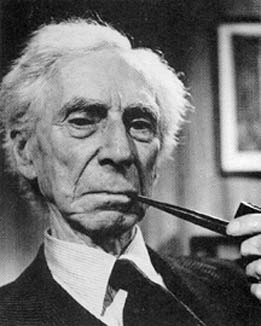
William Lane Craig on Bertrand Russell's teapot analogy: Another bad atheist objection which is based upon the confusion of absence of evidence with the existence of contrary evidence


Many atheists, wholly incapable of formulating solid arguments against the existence of God, are forced to argue for a wholly implausible position, namely that the absence of evidence for God suffices to think that God doesn't exist. They illustrate this point with examples, like "we believe that Flying Pink Elephants don't exist because there is not evidence for these things".

But obviously we don't deny the existence of these things because we lack evidence for them. On the contrary, we deny the existence of such things because our CURRENT knowledge (e.g. about zoology and the biology  and genetics of elephants) implies that it is likely that such animals (e.g. flying  pink elephants) don't exist.

The atheist analogy has this form: "We lack evidence for X, therefore we must believe that X doesn't exist", when actually the examples mentioned by the atheist have this form "Our current knowledge implies that X is unlikely, and given that we don't have positive evidence for X which could counterbalance that, we have to conclude that X's existence is unlikely".

The atheist conflates the cases in which, given our knowledge, it is unlikely that certain entities do exist; with the (wholly different) cases in which there is absolutely not evidence whatsoever for the existence or non-existence of some entity. In the latter case (in contrast with the former), the proper position is agnosticism, because we have no reason at all to believe or disbelieve the thing in question.

Just an example: In this blog, I've never written a post about how to repair PCs or to buy in Amazon. Readers of this blog have absolutely no evidence for the claim that Jime Sayaka knows how to repair PC or buy things in Amazon. Now, are you readers justified in concluding that I don't know how to do these things? Obviously not, your proper position about this question is agnosticism: You don't know if I have such knowledge or not.

Now, suppose that you claim that on your bed  is Pamela Anderson right now. You go to your bed and you don't see her. In this case, the fact that you don't see her is CONTRARY evidence for the claim that she's there. Why? Because if she were there, on your bed, you WOULD see her. And You don't. 

In logic, this is known as modus tollendo tollens (If A, then B, Not-B, then Not-A).

Note that the example of Pamela is, from a logical point of view, wholly different from the example of Jime not posting anything about repairing PCs (my knowledge about how to repair PCs doesn't imply that I'm going to post about it... specially since it is not a blog about PCs).

Summarizing: The atheist objection conflates cases of absolute absence of evidence for X, with cases in which we have, based upon our current knowledge (and the expectations based on this knowledge), CONTRARY evidence for the existence of X.

Atheist "geniuses" and "brights" cannot understand this, and it is a waste of time to try to explain this to them.

That atheists like Richard Dawkins and Lewis Wolpert have used such objection is understable, since they're not sophisticated philosophers nor thinkers. We cannot ask them (nor we can reasonably expect) that they can understand hard philosophical issues or fine and subtle logical matters. But when  trained philosophers like Bertrand Russell or John Shook engage themselves in such sophomoric modes of argumentation, we can only feel a deep dissapoiment and lack of intellectual respect for them, and tell to ourselves: SHAME on them.

Sheer atheistic pseudo-intelectualism, bad philosophy, stupidity and mediocrity on behalf of atheistic wishful thinking.
 

Saturday, January 12, 2013

Alvin Plantinga and William Lane Craig about the problem of suffering and pain

Christian philosophers have developed several defenses against the so-called problem of suffering and evil, namely the problem of the existence of extreme suffering and pain in a world created by a good, loving God. Is the existence of suffering and pain compatible with a God who is reputed to be all-loving and all-good? This is the problem.

Atheists have pressed this point in order to show that such God doesn't exist. However, as consequence of the works of analytical philosophers of religion like Alvin Plantinga, it is currently accepted by mainstream philosophy of religion that there is NOT contradiction between the existence of God and the existence of suffering and pain. In other words, the existence of pain is logically compatible with the existence of all-loving and all-good God.

A specialist in the problem of suffering and pain, atheist philosopher William L. Rowe comments:

Some philosophers have contended that the existence of evil is logically inconsistent with the existence of the theistic God. No one, I think, has succeeded in establishing such an extravagant claim. Indeed, granted incompatibilism, there is a fairly compelling argument for the view that the existence of evil is logically consistent with the existence of the theistic God." ("The Problem of Evil and Some Varieties of Atheism’, American Philosophical Quarterly 16 (1979). Emphasis in blue added)

Currently, the debate about the problem of pain and suffering is posed as a probabilistic argument against the existence of God. That is, it is "probable" that God exists given the existence of so many cases of suffering and pain in the world? This is the current debate among philosophers. (For reasons explained here, I think the probabilistic version of the problem of pain and suffering doesn't affect theism).

In any case, I suggest watching these videos by Alvin Plantinga and William Lane Craig about the problem of suffering and evil:


I find Craig's distinction between the "intellectual problem" of pain and the "emotional problem" of pain very useful, because many people seem to agree or disagree with factual positions (political, religious, philosophical, etc.) based only or mainly in their emotions.

If they find some ideas emotionally unpalatable or disturbing, then they conclude that it is unlikely or false. (This emotionality underlies the sympathies of many people to New Age revisionistic versions of Jesus, which I've called "feels good" spirituality).

Obviously such "emotional criterion" of truth is extremely subjective, unreliable and misleading. What makes you "feel good", can make other people to "feel bad". For examples, bullying makes "feel good" the bully and his followers, but it makes "feel bad" their victims. Going to Church makes "feel good" Christian believers, but makes "feel bad" atheists. The idea of reincarnation is unpalatable to many people, but makes to "feel good" people who wish "another chance", etc. (You can think about your own examples). You cannot settle these factual matters only or mainly appealing to your subjective's emotions and how such ideas, if true, "make you feel".

In the case of the problem of pain, as Craig notes, emotionally the problem is shocking (specially if we're the victims of such pain and suffering). But intellectually, it is hard to see why it is a problem, given that the existence of pain and suffering are logically compatible with God's existence, and the reasons for God permitting such pain could, in many cases, to be beyond our understanding. (Why exactly should God give us a detailed account or explanation of why He allows pain? Or why should us to know or understand, in exact detail, why God allows such things? Perhaps the reasons for God allowing such things have to do with spiritual reasons that we cannot understand yet given our limited perspective or finite intelligence. The point is that our unability for knowing or understanding the reasons of why God allows pain and suffering in the world is a fact about ourselves, about our cognitive and spiritual limitations, not about the existence of God himself).

Monday, December 31, 2012

What caused God? What/Who made God? What created God?: The most common atheistic objection to the Cosmological Argument for God's existence is one of the worst objections in the history of thought. Dramatic evidence for Jime's Iron Law about the atheist's irrationality


Typical atheist genius asking the "What caused God?" question


Just watch these 2 shorts videos (specially the first one):


As shown in the first video, some atheists really think that the "What caused God?" is a good objection to the cosmological argument. But how and why exactly asking for something's cause constitutes a valid refutation of an argument for that something's existence? Just think carefully about it.

Suppose that you argue that "The HIV virus causes AIDS" and try to defend that view appealing to the medical evidence (virus isolation, antibody tests, molecular cloning, statistical correlation between AIDS and HIV, PCR and viral load tests, etc.) for example. Then, an atheist genius comes and says "Well, I have a knockdown objection to the argument that HIV exists and is the cause of AIDS: What caused the HIV?"

Do you think the the above question, by itself, refute your argument for the existence of HIV, or that it causes AIDS? Obviously not, since the existence of HIV causing AIDS doesn't depend on HIV itself having or not having a cause, let alone on you being able to explain or identify the cause of it. Perhaps other viruses cause it. Perhaps it was created in a laboratory by mad scientists. Perhaps it is an endogenous retrovirus. Perhaps it comes from another planet or whatever. Perhaps and per impossibile (a Quentin Smith's fan would suggest) it comes from "Nothingness" or Non-Being. The point is that asking for something's cause does NOTHING to refute an argument for the existence of such something.

Note that the same example could be provided regarding the universe. Suppose that you are arguing for the existence of the physical universe. In that case, is the question "What caused the universe?" a valid objection for your argument that a physical universe exists? Obviously not, since your argument for the existence of the universe doesn't depend on you being able to specify the cause of such universe. The question does nothing to refute or undermine your argument for the existence of the universe.

As an objection against the existence of God, the question "What caused God?" does nothing to refute it. At most, it prompts us to inquiry further about whether God is caused or uncaused, and if caused, what would have caused Him, but God's existence is not in question.

But the atheist question is based on the assumption that the cosmological argument is based on the premise "Everything has a cause". Note that on that premise, the question "What caused God?" is fully justified, because if everything that exists has a cause, and God exists, then God has a cause. But note that even in this case, God's existence is not refuted. At most, what is in question is God's cause, not God's existence. The conclusion of the cosmological argument, namely, that God exists, is not affected by the question.

But the real problem with the atheist question is that it is just IGNORANT. No sophisticated defender of the cosmological argument in the history of philosophy has ever defended such argument on the grounds that "Everyhting has a cause", because they fully know that such ridiculous premise is false and lead to an infinite regress. 

Philosopher of religion Edward Feser explains:

In fact, not one of the best-known defenders of the Cosmological Argument in the history of philosophy ever gave this stupid “everything has a cause” argument—not Plato, not Aristotle, not al-Ghazali, not Maimonides, not Thomas Aquinas, not John Duns Scotus, not G.W. Leibniz, not Samuel Clarke, not Reginald Garrigou-Lagrange, not Mortimer Adler, not William Lane Craig, not Richard Swinburne. And not anyone else either, as far as I know. Perhaps... you think that when trying to refute some of history’s greatest minds, a good strategy would be to attack an argument none of them ever defended

Let's take just one of Feser's examples: Philosopher William Lane Craig.  People familiar with philosophy of religion, or simply with my blog, is familiar with Craig's kalam cosmological argument:


The first premiss of the argument is "Whatever begins to exist has a cause", which is a theologically neutral statement of the principle of causality. Note that this principle is fully compatible with something existing eternally and hence uncaused. The principle doesn't say that everything has a cause, but that everything which BEGINS TO EXIST (or comes into being) has cause, which is fully compatible with the existence of some things which never began to exist (e.g. numbers or propositions, like thought by some Platonistic philosophers; or God which is thought to be a necessary being, and hence an eternal one).

Amazingly, as you can see in the first video, an atheist clearly affected by Jime's Iron Law keeps pressing the question "What caused God?" after Craig's lectures on the kalam. Clearly, this atheist didn't pay attention to the logical formulation of the argument. He seems, in an autistic-like fashion, to be fixed with the "What caused God?" question without realizing that it is based on a inept misunderstanding of the argument.

I'm absolutely sure that such atheist really think his question is a knock-down argument against theism. Jime' Iron Law implies that some atheists, like that guy, are intellectually incapable, intrinisically impaired to understand rationally the difference between:

-Everything has a cause (=everything that exists has a cause)

-Everything which BEGINS TO EXIST has cause.

For atheist geniuses like the guy in the video, the above two propositions are identical, and hence that "What caused God?" objection is valid in both cases.

There is something in the mind of atheists which prevent them to differenciate between the above two propositions. They simply cannot grasp it.
Perhaps you think that the above confusion only exists in sophomoric or ignorant young atheists in college campuses. WRONG.

You can see examples, analyzed by me, of professional atheist writers (including professional philosophers) commiting exactly the same fallacy:


It is deeply dissapointing to read professional philosophers, who should know more, to engage in sophomoric modes of argumentation. I have not respect at all for atheists like that.

But it tells us a lot about the intellectual limitations and mindset of some atheists.

Friday, December 28, 2012

Dean Radin, PhD and Julie Beischel, PhD lecture on Survival of Consciousness


Thursday, December 6, 2012

Edward Feser lectures at the Faith and Reason Institute at Gonzaga University in Spokane, WA


In a previous lecture, Feser has argued (in line with Thomistic philosophy) that natural theology (e.g. arguments for God's existence) must be grounded on philosophy of nature, not on the findings of natural science:


A major problem that I see in Feser's view about philosophy of nature is that the premises of such philosophy will be rejected by contemporary naturalists and other skeptics for God's existence, since these people only believe in natural science. 

Obviously, Feser will reply that such rejections by atheists are irrational and question-begging (and I'll agree with it), and that they should accept such premises.  But the point is that they DON'T, so I think it is useful, for the argument's sake, to take the own premises of naturalists and argue from them.

So, I think the proper use of natural science (without undermining alternative ways for natural theology like Feser's proposal) is not only strategically useful, but also more convincing for people who are skeptics of the Thomistic-Aristotelian metaphysics, and are more sympathetic to contemporary mechanisic, naturalistic approach.

As consequence, an argument like William Lane Craig's Kalam Cosmological Argument is based on premises that, taken in isolation, are widely accepted by atheists and naturalists; but when put together, such premises imply that the universe has a cause, and hence such conclusion tends to force the atheist to deny one of the premises (revealing, by the way, that such  atheists are not truth-seekers who follow the evidence wherever it leads, but ideologues who accept the premises only on the condition that it doesn't lead to conclusion favourable to theism. In other words, it is the prior commitment to the conclusion that atheism is true which tells the atheist what premise he should accept).

This is why Craig's argument, which according to Daniel Dennett is based on "very plausible premises",  has forced atheists to deny the causal principle,  or to suggest (contrary to the principle, essential to naturalism, known as the causal closure of the physical world) that immaterial abstract objects like numbers or sets could be the cause of the universe... a view that no atheist would defend outside debates about God's existence. 

So, the kalam argument is so effective in forcing atheists to hold positions contrary to their own views and exposing their irrationality, then they need to deny theism.

It is crucial to realize that atheists are going to deny ANY evidence or argument for God's existence. No matter what it is. They are prepared even to believe that something can begin from nothing, or that 2+2=5, or that "nothing at all exists", in order to deny theism.

Not understanding that is failing to understand exactly the psychology of atheists.

Tuesday, December 4, 2012

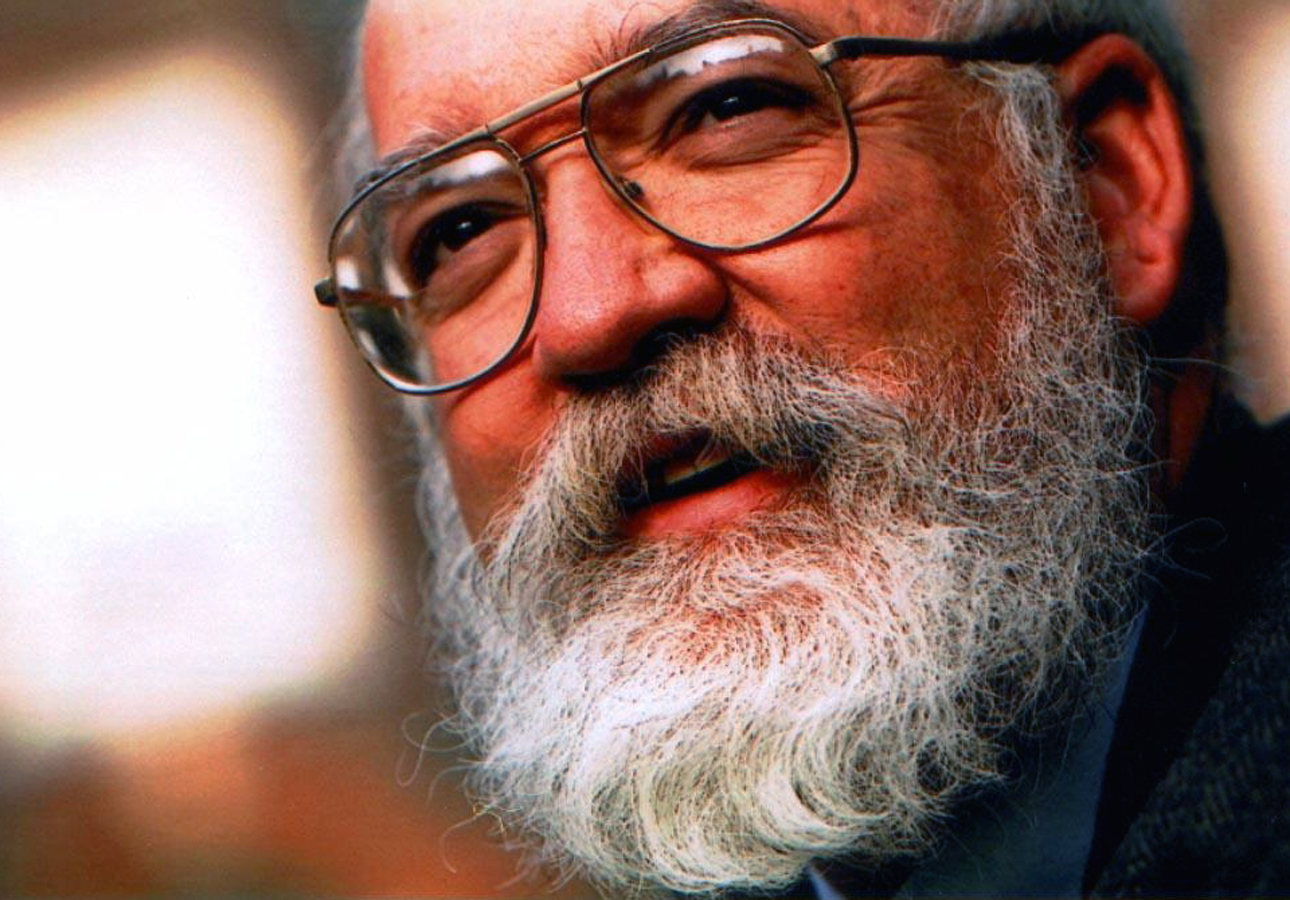
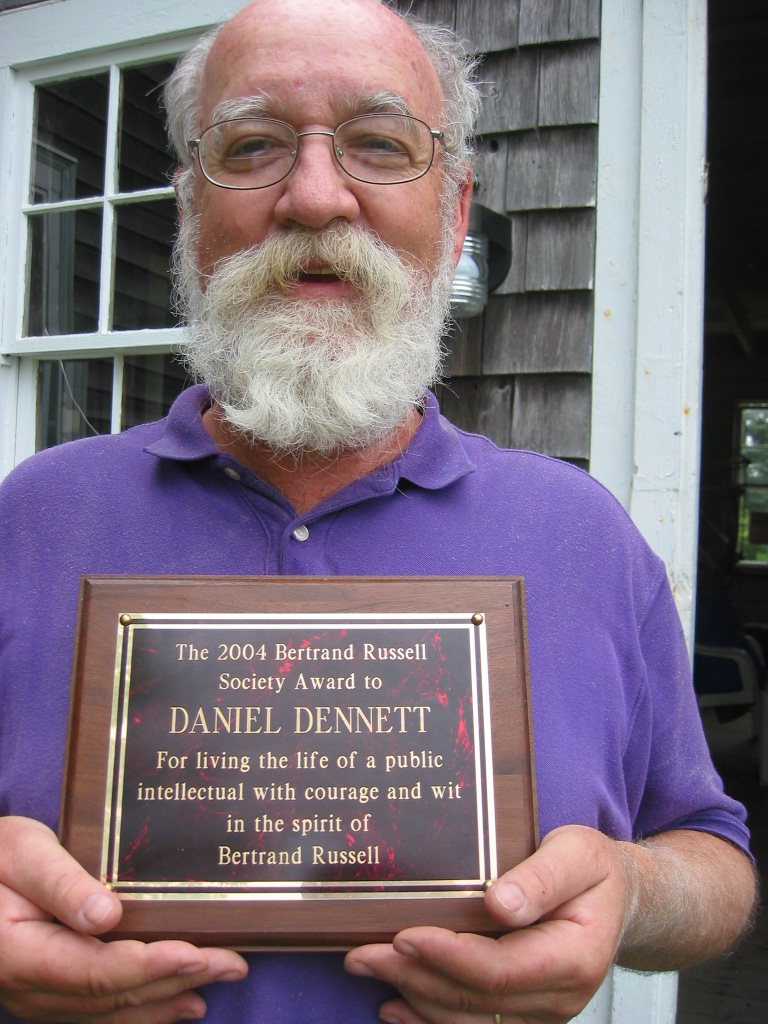
Comments by darwinian philosopher and new atheist Daniel Dennett on William Lane Craig's arguments for God's existence and Craig's reply


Daniel Dennett is one of the world's leading atheistic thinkers. A hard-nosed Darwinist, he's well-known among contemporary philosophers by his work on philosophy of mind or consciousness.

In the following video, you can hear what Daniel Dennett had to say about William Lane Craig's presentation of arguments for God's existence in the same conference in which Dennett participated:


Since it wasn't a debate between Craig and Dennett, Crag hadn't the chance to reply to Dennett's comments. Therefore, Craig replied to him in these videos:


Amazingly, Dennett concedes that Craig's arguments are based on "very plausible premises". Leaving aside such concession, what it is most important is if the DENIAL of such premises is more plausible than the premises themselves. If not, then the premises have to be accepted and therefore the conclusion of the argument too. Period.

Consider the premise "Whatever begins to exist has a cause" which Craig defends. This is known as the principle of causality, which is essential in science's constant pursue of causal explanations for natural phenomena. Such principle it is essential in other fields of inquiry, like forensic science and even in our daily life.

For example, when skeptic Michael Shermer tried to debunk a vedic astrologer in Shermer's own TV show, and (for Shermer's public embarrasment), the astrologer passed positively Shermer's test, debunking the debunker in his own show, such a result must have a cause (either Shermer's scientific-technical incompetence which allowed the astrologer to fool him in his own controlled test; or the astrologer's actual paranormal-astrological powers; or sheer luck):


What is irrational would be to claim that such result came "absolutely uncaused from nothing". Only atheists would think that.

The denial of the principle of causality would be "Not all what begin to exist has a cause = something could begin to exist uncaused from nothing".

Now, leaving aside the debate between atheism vs theism, I ask you: What is more probable to be true: the causal principle, or the atheist's denial of it? I think the answer is obvious for any rational, sane person.

If something can come into being from nothing (which is what the atheist denial of the causal principle entails), then it is absolutely inexplicable why we don't see something or everything coming into being from nothing continuously. Why don't beautiful blonde girls appear from nothing in my room? Why doesn't 1 million dollars appear from nothing in my bank account? Why don't lot of foods appear in Africa? Why the insane atheists and skeptics who offended and insulted atheist girl Rebecca Watson (Skepchick) don't appear with their butts severely kicked "from nothing"?

If something could come from nothing, then it is not impossible that a lamborghini car like the one that you're watching below will appear in your garage "from nothing".


Do you really (I mean, honestly) think that something (e.g. 1 million dollars, a black lamborghini or the physical universe itself) can appear uncaused from absolutely nothing? Well, atheists who deny the causal principle are, in principle, committed to this idea.

Moreover, atheists cannot quote ANY single scientific example of something beginning to exist from absolutely nothing. Often, some atheists deliberately distortion science in order to fool and mislead the public, claiming that virtual particles, coming from the quntum vaccum, comes from "nothing". But as atheist, theoretical physicist and world's leading cosmologist Alexander Vilenkin explains, the quantum vaccum is NOT nothing:


Therefore, the main example quoted by (some) atheists have turned to be a sheer misrepresenation of science on behalf of the atheistic deception and charlatanism.

No evidence whatsoever exists for the claim that something could come from nothing, and ALL the available evidence (from all sciences and common sense) support the proposition that Whatever begins to exist has a cause of its existence.

This poses a problem for atheists, because the universe began to exist. According to atheist comsologist Alan Guth, only "crackpots" deny the beginning of the universe:


And since the unvierse began to exist, it follows that the universe has a cause of its existence. And this leads you to a cause of the universe which has some of the main essential attributes of God:


Dennett says that even if Craig's argument is conceded, God's existence is not proved, because "abstract things" could be the cause too. But abstract objects are, by definition, objects causally non-efficacious. For example, the number 7 doesn't cause anything (your belief in the number 7 could be causally active, but the number 7 considered by itself, as a abstract non-physical object doesn't, among other things because they have no physical powers, i.e. not energy).

Dennett mentions the example of the principle of a triangle, which allows us to construct rigid structures. But here obviously he conflates the principle of the triangle itself with physical structures arranged triangle-wise: What produces the rigidity of such structure are the properties of the concrete material being used (e.g. cement, iron, etc.), not the principle of triangle itself (just try to create a rigid structure using a paper arranged triangle-wise, and you discover what I mean). Just try to make a triangle of paper and see if such triangle is rigid enough to bear the weight of your foot... or try to draw a triangle in a paper and see if such triangle is rigid enough to avoid the destroying influence of water.

Dennett's fallacy is conflating an abstract principle with the concrete instantiations of it (like conflating the number 4, as an abstract object, with the concrete exemplification of  it, like 4 apples for example).

Sheer bad and sophomoric philosophy.

Monday, December 3, 2012

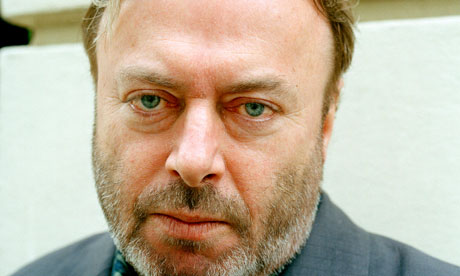
Late best selling author and new atheism defender Christopher Hitchens vs William Lane Craig: Debate on the existence of God


The late atheist and journalist Christopher Hitchens was a very influential author among atheists and people sympathetic to the politcal left. He was also a well versed polemicist and debater, having won several debating matches against intellectuals who defend positions different to his.

But in 2009, he faced philosopher William Lane Craig in a debate about God's existence. As you can watchg for yourself, Hitchens' performance was painfully embarassing. He simply hadn't the level to refute any of Craig's arguments. Hitchens seemed that he couldn't even understand such arguments.

A careful evaluation of this debate reveals that Hitchens' arguments are the popular, village atheist-kind of complains against the Church, Christians institutions, the Inquisition and so forth, all of which are objections irrelevant to the philosophical problem of the existence of God. (It reminds me of the college professors in USA to whom I've asked about their opinion of parapsychology, and they almost always reply with an attack against Uri Geller and magazine horoscopes... WTF).

Hitchens simply had the intellectual preparation nor the technical knowledge to understand, let alone refute, the arguments presented by Craig. The consequence is that he was badly beaten in this debate.

It tells us a lot about the (pseudo) intellectual level of contemporary atheism.


Monday, November 26, 2012

Kari Enqvist: chairman of the scientific advisory board of Skepsis ry (Finnish association of organized skeptics) debates the existence of God with William Lane Craig. One of the the worst debates that I've ever watched


Kari Enqvist is a professor of cosmology and the chairman of the Finnish association of pseudoskeptics known as SKEPSIS RY. (Yeah, atheistic pseudo-skeptics exist in Findland too...).

Since he is a professor of cosmology and one of main arguments for God's existence is the kalam cosmological argument, I expected a lively and entertaining discussion about the cosmological evidence for the universe's beginning in the debate between Enqvist and William Lane Craig, which you can watch here:


But things turned out to be very different.

As you can watch, Enqvist didn't presented any argument for atheism at all, since for him the problem of God's existence is meaningless (note that if Enqvist is right, then atheism is meaningless too, since atheism is the denial or negation of the proposition "God exists", and you cannot affirm or deny a meaningless proposition... just try to affirm or deny the following sentence: dxhsttsiwossp usns doosmsos hahaha). As philosophers of language and semantics and logicians have realized, the meaning of a proposition is a necesary condition for it to have truth-values.

Moreover, Enqvist (like his fellow skeptic and atheist Lawrence Krauss), decided to attack formal logic in order to make his case. Remember that Krauss has embarrassed himself forever as the world's leading atheistic defender of obviously absurd, necessarily false, logically, metaphysically and mathematically impossible and incoherent propositions like 2+2=5 or "the universe came from nothing" or "nothing is unstable":


Since contemporary cosmology has shown beyond any reasonable doubt that the universe had a beginning (which is strongly suggestive that the universe had a trascendent cause of its coming to being), some atheists have changed their strategy: Defeated by empirical science, reason and logic, they are forced challenge the laws of logic and reason itself in order to avoid any inference to theism based on science. Therefore, we cannot be surprised of finding a certain tendency among contemporary atheistic physicists and cosmologists to challenge the laws of logic (this is also evidence for Jime's Iron Law) in order to defeat theism. 

Note that atheists present themselves as the champtions of "logic", "reason", "science" and "critical thinking", but when logic, evidence and critical reasoning support theism over atheism, then... to the hell with logic!. Sheer atheistic deception, rhetoric and charlatanism!


This debate was supposed to be about the existence of God, or more specifically, about whether God is necessary to the universe's existence. 

For everybody's astonishment, the debate turned out to be mainly about the validity of formal logic (Enqvist appealing to physics in order to destroy formal logic, and Craig trying to defend it).

Moreover, the debate was totally one-sided, with Craig being the only person presenting arguments relevant for the topic under discussion. To my astonishment, since Enqvist didn't presented any argument for atheism, Craig was forced to provide arguments for atheism for the sake of the debate!. What a weird situation (just imagine a debate between Dean Radin and James Randi about the evidence for ESP, in which Dean Radin is forced, by Randi's passivity and red herrings, to present evidence and arguments against ESP!). Absurd.

The world's leading philosophical theist posing arguments against the existence of God! Absolutely weird!.

This is one of the worst and most boring debates that I've ever seen in my life.

Sunday, November 11, 2012

Marcus Borg and William Lane Craig: Two different perspectives on religious pluralism and religious exclusivism


The above two lectures show two wholly different perspectives, one in favor of religious pluralism (Borg) and other in favor of religious exclusivism (Craig). Both authors have in common that they're Christians (even though I strongly doubt that Borg is a Christian), but besides that they disagree in almost everything.

I agree with Borg in this: I would like that religious pluralism were true. Why? Because I'd like that all the roads lead to God and that most people, of whichever religion, be saved.

However, I find no convincing evidence at all for religious pluralism and have not idea if it is true.. But I am strongly opposed to a religious pluralism regarding the historical Jesus, because I think the best evidence for Jesus' teachings doesn't support such a view. On the contrary, I think the evidence support an exclusivistic view of Jesus' self-perception (I've briefly discussed some of the reasons here).

I agree with Craig in this: If Jesus' resurrection happened, then (contrary to Borg's inexplicable view that "the bodily resurrection doesn't matter") it tells us a lot about him, if read in the socio-religious-historical context in which his teachings were provided. Also, if Jesus' resurrection didn't happen, then Christianity is false. Period (no sophism about "metaphors" is going to change that). Therefore, an objective investigation about Jesus' resurrection and teachings is absolutely necessary.

Finally, I want to say that the liberal portrait of Jesus by liberal schoalars is, in many cases, a new and astute way of atheistic deception. Many of the most influential liberal scholars ara demostrably atheists (despite of their misleading use of the language of Christianity), and they have found in religious pluralism a politically correct way to destroy and undermine mainstream religions, making them all basically equivalent. This is the basic purpose of atheism and secularism.

Since such liberal scholars don't believe in God, their claim "all roads lead to God", means that your religious beliefs are purely subjective, a personal choice. Since all such a religious claims about God are factually false, their only content is purely metaphorical and autobiographical, that is, they express the believer's own religious experience and spirituality. Hence, there is not reason to be an "exclusivistic" regarding one person's religion over another.

Note that the whole approach is dangerously misleading. Many religions and New-Age Spiritualities make factual claims about the spiritual world, and they contradict each other. Therefore, on pure analytical grounds, we know for sure that at least some of them are false.

You cannot accept the Urantia Book account of the reincarnation while accepting Neale Donal Walsh's Conversations with God, because they contradict each other about it. You cannot accept Eastern philosophies, some of which are impersonalistic (pantheistic, panentheistic or atheistic), while accepting Christianity which is a personalistic worldview.

You cannot accept deism (which excludes revelation) while accepting a religious worldview which is based on a revelation or miracle.

The above matters are obvious, but many people cannot see it because they have a purely emotional, feelings-based approach to religious matters, and these are the feelings exploited by religious pluralists and believers in New-Age religions and spiritualities.

But what is true or false about any objective matter cannot be settled alone by how such a doctrine "make me feel", or based on a bunch of personal nice feelings or how much a given idea is "appealing to me".

Friday, November 9, 2012

Mariano Grimbank (True Free Thinker) on the decline of online interest on the contemporary new atheism, naturalism and materialism: A reflection on the causes of this internet phenomenon


Mariano Grimbank (aka. True Free Thinker) is a Christian who for years has fought the new atheism on the internet. In the above video, Grimbank presents evidence for the decline of online interest in atheism, naturalism and materialism. From this evidence, we cannot conclude anything about whether the number of atheists have increased or decreased, but certainly we can conclude that the online interest (i.e. the interest shown by people who connect themselves to the internet in order to search information about atheism) has decreased in comparison with previous years.

In my opinion, there are a bunch of factors which could explain this phenomenon:

1-The extremely bad and sophomoric philosophical arguments of the new atheists

In their self-contragutalory, arrogant, ego-centered, "smarter-than-you" kind of mindset common among atheists, specially among the new atheists, they didn't realize that taking a public stance in favor of atheism (in a world in which over 90% of human beings are theists of a kind or another) could backfire: Leading and sophisticated defenders of theism would appear to defend theism and expose the sophomoric fallacies of these new atheist "intellectuals".

The result has been that the main arguments of the new atheists have been shown and exposed to be clearly fallacious and even destructive of science itself (if such arguments were consistently employed), not only by theists, but by sophisticated atheists too. Consider Richard Dawkins' main argument against theism:


2-The moral poverty of atheism as a worldview:

Most people, including atheists, have not reflected objectively on the implications of an atheist worldview for topics like morality, consciousness, free will and so forth. They simply take for granted that all of these phenomena are independent of a God-based worldview (this underlies the common sophomoric objection that "You don't need to be religious to be good", or "atheists can be good too", which is clearly irrelevant and not in dispute: What is in dispute if whether the non-personalistic, purely mechanistic-materialistic and blind naturalistic Darwinian worldview of contemporary atheism can ground person-relative properties and phenomena like free will, rationality, consciousness, objective moral values, moral responsability and so forth, which are clearly spiritual in nature and hence in home with theism but strongly at variance with the naturalistic-materialistic metaphysics of atheism).

And this is NOT an insight discovered by theists or "religious" people, but something fully recognized and conceded by atheists themselves (when they are not doing public relations or propaganda for atheism), as I've shown with irrefutable evidence

So, you can watch (and expect) that Richard Dawkins will concede not having non-arbitrary moral grounds for rejecting rape:


The transcript of the above video:

Justin Brierley: When you make a value judgement don't you immediately step yourself outside of this evolutionary process and say that the reason this is good is that it's good. And you don't have any way to stand on that statement.

Richard Dawkins: My value judgement itself could come from my evolutionary past.

Justin Brierley: So therefore it's just as random in a sense as any product of evolution.

Richard Dawkins: You could say that, it doesn't in any case, nothing about it makes it more probable that there is anything supernatural.

Justin Brierley: Ultimately, your belief that rape is wrong is as arbitrary as the fact that we've evolved five fingers rather than six.

Richard Dawkins: You could say that, yeah

.
End of the transcript.

Sophisticated atheist philosophers have articulated Dawkins' insight in a more careful way. So, atheist philosopher of science Alexander Rosenberg comments: "One source of meaning on which many have relied is the intrinsic value, in particular the moral value, of human life. People have also sought moral rules, codes, principles which are supposed to distinguish us from merely biological critters whose lives lack (as much) meaning or value (as ours)... Scientism must reject all of these straws that people have grasped, and it’s not hard to show why. Science has to be nihilistic about ethics and morality. Alex Rosenberg, in his article "The Disenchanted Naturalistic Guide to Reality". Emphasis in blue added

3-The public debates in colleges and universities (and made public on the internet) among atheists and theists have shown not only the extremely bad arguments of atheists, but the intellectual sophistication of theists, who tend to win those debates.

Theistic debaters like William Lane Craig, John Lennox and others tend to win clearly their debates against the new atheists and other atheist professors.

Craig for example has debated all of the new atheists (Dawkins, Harris, Hitchens, Dennett, Wolpert, etc.), and in some cases has forced them to make painfully ridiculous objections and concessions which reveal their pseudo-intellectualism, irrationality, moral deficiences and dishonest sophistry, for example:


Or (look at Wolpert's arrogance and self-assurance while defending a clearly stupid, inept, mentally retarded argument, which was instrumental in my discovery of Jime's Iron Law):


Or:


How can you expect that such kind of atheists would pose a serious challenge for sophisticated forms of theism? They simply have not the intellectual level nor competence for matching it.

Since most people, including some atheists, are smart enough to realize these expressions of intellectual and moral poverty, many have begun to question the basis of their atheism, or at least, if the "new atheists" are the best representatives of the atheistic worldview. So, the decline of online interest in atheism is not surprising.

If you (like me) think that atheism is false and morally dangerous, you have an ethical obligation to help to support this anti-atheistic cause (regardless of your spiritual or religious beliefs). You have to help that these kinds of atheistic charlatanism, pseudo-intellectualism, irrationalism and sophistry be exposed and widely rejected.

The best way to help this cause is sharing in your blog or website the internet debates between leading atheists and the best theistic debaters, and let the people to draw their own conclusions.

They will see by themselves the intellectual and moral poverty of contemporary atheism.

 
ban nha mat pho ha noi bán nhà mặt phố hà nội